E-Paper



‘Karma has struck back’: Assam CM on Rahul Gandhi’s Lok Sabha disqualification
Assam chief minister Himanta Biswa Sarma said Rahul Gandhi himself tore off the ordinance brought by the UPA government in 2013 that was to ensure immediate disqualification doesn’t happen to elected representatives convicted by a court


Assam chief minister Himanta Biswa Sarma on Saturday termed Congress leader Rahul Gandhi’s disqualification from Lok Sabha following his conviction in a court case as an outcome of “karma”.
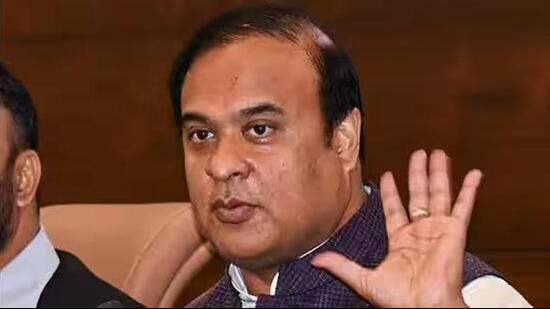
“As far as the issue of disqualification is concerned, Rahul himself tore off the ordinance brought by the United Progressive Alliance (UPA) government in 2013 that was to ensure immediate disqualification doesn’t happen to elected representatives convicted by a court. If karma has struck him back, what’s our fault in that?” Sarma told journalists in Guwahati.
“We are believers of Hinduism and we believe karma will strike you. I don’t think his political career is over. He can seek recourse in higher courts. As a leader of an opposition party there is no ban on him from taking part in public events. He can conduct rallies and more Bharat Jodo Yatras. But he should refrain from making derogatory remarks against any community. It’s not right,” he added.
The former Congress chief was disqualified as a member of the Lok Sabha on Friday after 19 years as a lawmaker, a day after a Surat court pronounced him guilty of criminal defamation for a remark he made ahead of the 2019 general elections about the Modi surname.
In 2019, at a rally in Karnataka, Gandhi asked the crowd, “How come all the thieves have Modi as the common surname?” The reference was to fugitives Lalit Modi and Nirav Modi, and targeted Prime Minister Narendra Modi. Later that year, Gujarat lawmaker Purnesh Modi filed a case against Gandhi in Surat, saying the opposition leader had insulted all members of the Modi community.
Sarma said that Gandhi was held guilty by a court for using unparliamentary and defamatory words against an Other Backward Caste (OBC) community. And he was disqualified from parliament as consequence of that verdict.
The CM said that there’s no political vendetta as it was a judicial process which the court followed and the disqualification was an outcome of the verdict.
“In his election speech in 2019, he abused the OBC community. Consequent to that, cases were filed in various parts of India including one in Arunachal Pradesh as there’s a community called Modi in that state as well. After a prolonged judicial process, he has been held guilty,” said Sarma.
“Judicial recourse is open to him. He can challenge the verdict in high court or Supreme Court. But he should have rendered apology immediately after that speech. Sometimes, slip of tongue happens. It happens with us too. But when that happens, we immediately say sorry,” he added.
Sarma said the matter would have been closed if Gandhi had apologised but the Congress leader didn’t withdraw his comments or sought apology from the community for more than four years. The Assam CM said it proved that comments were not unintentional and they were made to abuse the OBC community.
“He behaved arrogantly. The court has to strike a balance between arrogancy of an individual and pride and prestige of a community. The court decided in favour of the OBC community,” said Sarma.
“The apology was not for Narendra Modi; it was due to the OBC community. Even after the court verdict, Rahul has not apologised and is instead behaving like a fighter jet with the intention of taking on the judiciary. Even members of OBC community who are Congress leaders are not happy with the comments,” he added.
The Wayanad MP’s disqualification sparked a wave of condemnation from Opposition parties, including the Congress that said it will launch a mass movement.