
 E-Paper



Karnataka Cabinet clears proposal on internal quota for SCs
The decision comes nearly a year after the Supreme Court permitted states to sub-classify scheduled castes, noting that the category is socially diverse and that benefits often fail to reach the most backward groups. Dalit Left communities, for instance, had long complained that only a few dominant sub-castes were cornering opportunities

 Prefer HTon Google


Bengaluru: The Karnataka cabinet on Tuesday approved a proposal to divide the Scheduled Castes (SC) reservation benefits internally among three broader sub-categories, in a decision aimed at paving the way for the implementation of internal reservation for Dalits.
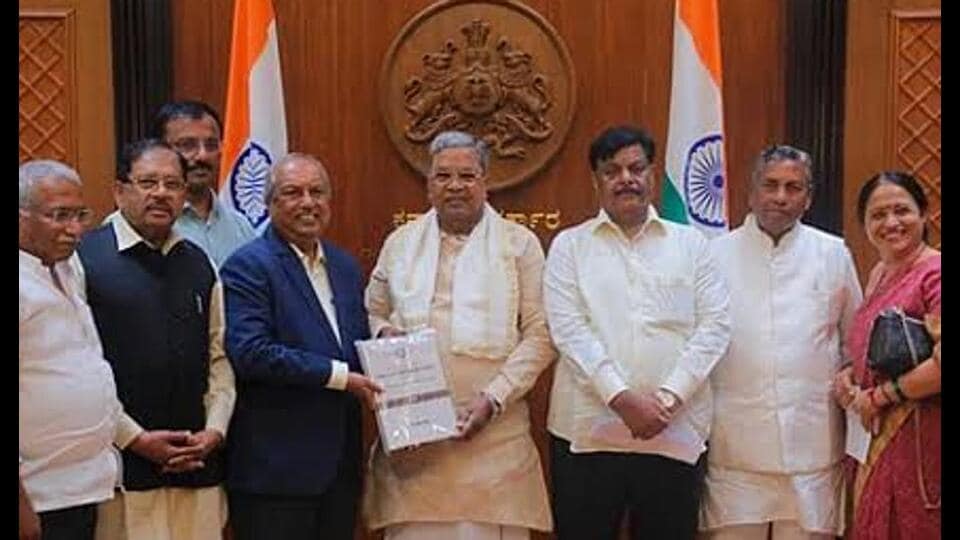
According to the proposal, the state will divide the 17% SC quota among three sub-categories of communities — 6% for Dalit Right (Holeya), 6% for Dalit Left (Madiga), and 5% for Lambanis, Kormas, Korchas, Bhovis and 59 nomadic groups. Once implemented, Karnataka will become only the fourth state after Telangana, Haryana and Andhra Pradesh, to implement internal SC reservations.
“Chief minister Siddaramaiah will make a statement with this regard in the legislature on Wednesday,” law and parliamentary affairs minister HK Patil said.
The decision comes nearly a year after the Supreme Court permitted states to sub-classify scheduled castes, noting that the category is socially diverse and that benefits often fail to reach the most backward groups. Dalit Left communities, for instance, had long complained that only a few dominant sub-castes were cornering opportunities.
The government’s formula differs from the one proposed by retired judge HN Nagmohan Das, who headed a one-man commission that studied the issue. His report, submitted recently, suggested splitting the 17% quota across five groups — 6% for Dalit Left, 5% for Dalit Right, 4% for touchable castes, and 1% each for nomadic groups and Adi Karnataka, Adi Dravida and Adi Andhra.
Instead, the government collapsed the five categories into three, merging nomadic communities with the touchable castes, and placing the Adi groups within Dalit Right.
Defending the consolidation of categories, Kannada and culture and backward classes minister Shivaraj Tangadagi said: “This is a historic decision taken under the leadership of chief minister Siddaramaiah. We are all together. Nobody will be left behind. Earlier, all communities were competing as a pool of 101 castes.”
The commission’s recommendations were based on a two-month survey beginning May 5, which covered 94% of the state’s estimated 11.6 million Scheduled Caste population. But in Bengaluru, it reached just over half of the city’s 1.3 million SC residents.
Sections of Dalit Right and “touchable castes” had opposed earlier proposals, claiming their share would shrink compared to what a 2022 cabinet sub-committee, led by then law minister J Madhuswamy, had suggested.
The special cabinet meeting to seal the decision was originally slated for Saturday but was pushed to Tuesday amid differences within the government.
Home minister G Parameshwar held discussions with five Dalit ministers, and retired officials from Dalit communities also played a role in the consensus-building exercise.
The opposition BJP accused the government of delay. Earlier in the day, state party president BY Vijayendra said: “The Siddaramaiah government has been discussing internal reservation for the last 2.5 years, but still, they have not given any solution. During the previous BJP regime, then chief minister Basavaraj Bommai had increased SC reservation from 15 to 17% and for ST it was increased from 3 to 7%.”
He recalled that just ahead of the 2023 elections, the Bommai cabinet had already recommended a distribution formula to the Centre -- 6% for SC Left, 5.5% for SC Right, 4.5% for touchables, and 1% for others. “BJP’s stand is very clear that whatever the previous BJP government had decided, the same thing has to be implemented by Siddaramaiah and no injustice should happen to any SC community,” Vijayendra added.


