
 E-Paper



‘Get written permission within 15 days or else...’: Karnataka govt's new rules on loudspeaker use
The Karnataka government circular, which comes into effect immediately, stated: “All existing users of loud speakers/ public address system and sound producing instruments shall obtain written permission from the Designated Authority within 15 days.”

 Prefer HTon Google


Karnataka on Tuesday asked all users of “sound-producing instruments” to obtain written permission from authorities within 15 days, as part of a broad set of directions to regulate the use of loudspeakers in the state, in the wake of azaan versus Hanuman Chalisa row.
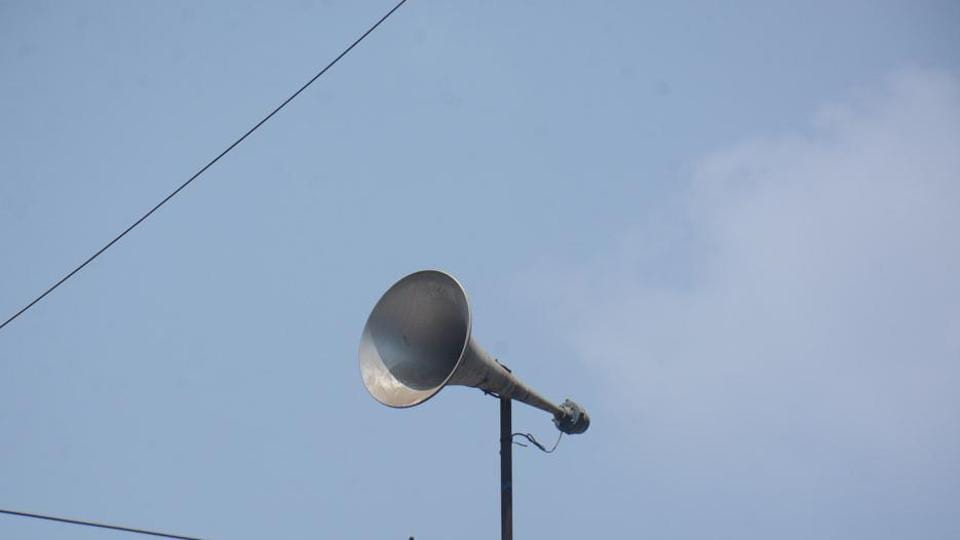
The circular was issued by an under-secretary to the government following a note sent by state chief secretary P Ravi Kumar to additional chief secretary Jawaid Akhtar, department of forest, ecology and environment, to tackle the issue.
The circular, which comes into effect immediately, stated: “All existing users of loud speakers/ public address system and sound producing instruments shall obtain written permission from the Designated Authority within 15 days.”
The circular comes at a time when some right-wing organisations have threatened to intensify their campaign to play the Hanuman Chalisa outside mosques that play azaan (call for prayers) through loudspeakers.
“Those who do not obtain permission, should voluntarily remove loud speakers/public address system and sound producing instruments or else the same shall be removed by the designated authority within 15 days from the deadline given,” the circular added.
The circular comes at a time when some right-wing organisations have threatened to intensify their campaign to play the Hanuman Chalisa outside mosques that play azaan (call for prayers) through loudspeakers.
Citing the Supreme Court ruling dated July 18, 2005 and October 28, 2005 regarding the implementation of the Noise Pollution (Regulation and Control) Rules, 2000, the circular said the loudspeaker or the public address system should not be used except after obtaining permission from the designated authority.
“Non-compliance to the provisions of the Noise Pollution (Regulation and Control) Rules, 2000, Government Order dated August 13, 2002 and directions above shall attract penal action in accordance with Section 15, 19 and 24 of the Environment (Protection) Act, 1986,” the circular said.
The government also listed the permit-approving authorities in urban and rural areas. In police commissionerate areas, the assistant commissioner or police, jurisdictional executive engineer of the city corporation and a representative of pollution control board will be the authority. In all other areas, the deputy superintendent of police, jurisdictional tahsildar and a representative of pollution control board will have the authority to approve and take action against any violation, the circular said.
The development comes following a row from Monday on the issue with some Hindu groups, mainly Sriram Sena, Bajrang Dal and Hindu Janajagruthi Samithi organising Bhajan-Keertan from pre-dawn to counter azaan from mosques.
As the controversy peaked, chief minister Basavaraj Bommai held a meeting on Monday, following which the chief secretary issued a note to Akhtar.
Reacting to the order, Karnataka minister for environment, ecology and tourism Anand Singh said the religious institutions have to abide by the rule. “If they break the law related to restrictions after certain time, then action will be taken,” he told reporters.
“It is applicable to temples, mosques, churches or any marriage ceremony. There are restrictions, which have to be abided by. If any local resident lodges a complaint, action will be taken against them,” the minister added.


