
 E-Paper



Kavitha paves way for differently abled candidates in Tamil Nadu
Kavitha’s father, V R Thangarasu is also a candidate with a disability contesting from the adjacent ward number 3 in the Tamil Nadu village.


A decade after her nomination was rejected due to a hearing impairment, 42-year-old A Kavitha on Wednesday contested as a candidate from the same ward number 4 in Navamal Kapperi village, Villupuram in the Tamil Nadu local body polls. Kavitha is now among 40-other candidates who are contesting for the ward councillor post, more than a dozen of whom are women with disabilities.
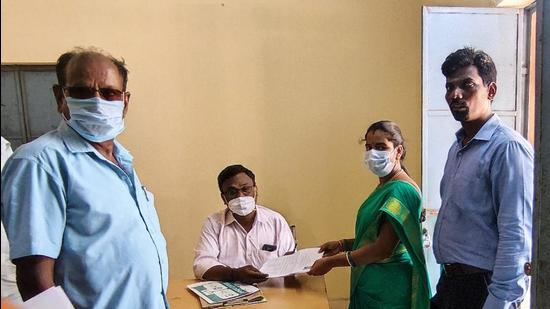
After her nomination in 2011 was rejected by the state election commission citing her disability under Section 33 (3) of the Tamil Nadu Panchayat Act, 1994, Kavitha’s case paved the way for the law to be amended. After several protests and a case in the Madras high court, the legislation was amended in 2012 to allow people with disabilities to contest elections in the state.
Kavitha’s father, V R Thangarasu is also a candidate with a disability contesting from the adjacent ward number 3 in the village. He recalled what has been chronicled from 2011. Their family, along with several disability rights activists laid siege, at the office of the state election commission in Chennai. “Kavitha asked at that time how is it fair that I’m eligible to vote but I’m not eligible to contest,” said Thangarasu. “Why can’t a disabled person contest? That’s our basic question. A year before her nomination was rejected (in 2011), the DMK regime under M Karunanidhi coined the term maatru thirunali (in Tamil meaning differently-abled). So we filed a case in the Madras high court, which came in our favour. The following year, after AIADMK came to power under J Jayalalithaa, they followed the orders and all disabilities, except those with mental illness were allowed to contest in Tamil Nadu.”
Thangarasu is a leper, due to which he is paralysed in his right arm and his vision is affected in one eye. “When I was five years old, they made me sit alone in school. I felt ashamed and stopped going to school after that,” he said.
The bitter experience made Thangarasu send his daughter to a government-run hostel for people with disabilities where she studied up to class 10 but in three places – Cuddalore, Tambaram and Kancheepuram. She now has a diploma in tailoring. With two tailoring machines, Kavitha stitches clothes exclusively for women. “So the people in the ward are extremely familiar with her. Even during campaigning, they are able to communicate with her using their actions,” he said. “I wanted her to be independent and self-made like me.” Kavitha’s husband, who is an electrician, didn’t have a job during the Covid-19 lockdown. “So she was the sole breadwinner and paid fees in a private school for their two sons.”
As an independent candidate, Kavitha’s symbol for the polls is a ‘key’. Communicating over the phone on behalf of his daughter, Thangarasu said that she feels it’s symbolic of breaking open obstructions. “I will be representing people with disabilities. It’s a boost for us. And it will show that we can also work for our communities and we don’t have to be isolated,” she said using sign language.
The 43 people with disabilities, who belong to an NGO, December 3 Movement, are contesting as independent candidates. Their decision to contest in the local body elections and not in assembly or parliamentary elections is deliberate. “This is where true democracy is,” said the founder of the December 3 Movement, TMN Deepak. “A disabled person, who is also poor, can truly understand the issues on the ground.”
Thangarasu, who is 71-years-old now, has been a coolie taking up odd painting jobs. “I was ridiculed and discriminated against because of my condition,” he said. “Having faced all that, I’ve grown to contest in an election in Tamil Nadu. I think she has a better chance of winning. I’m happy that I was even able to contest.”


