
 E-Paper



Kedarnath priest threatens bhoomi samadhi if Uttarakhand doesn’t scrap Char Dham Board
Santosh Trivedi began his protest on June 12 demanding the dissolution of the Char Dham Devasthanam Management Board.

 Prefer HTon Google


After a protest of almost two months against the formation of the Char Dham Devasthanam Management Board, a priest from Kedarnath has now threatened to take bhoomi samadhi (bury himself alive).
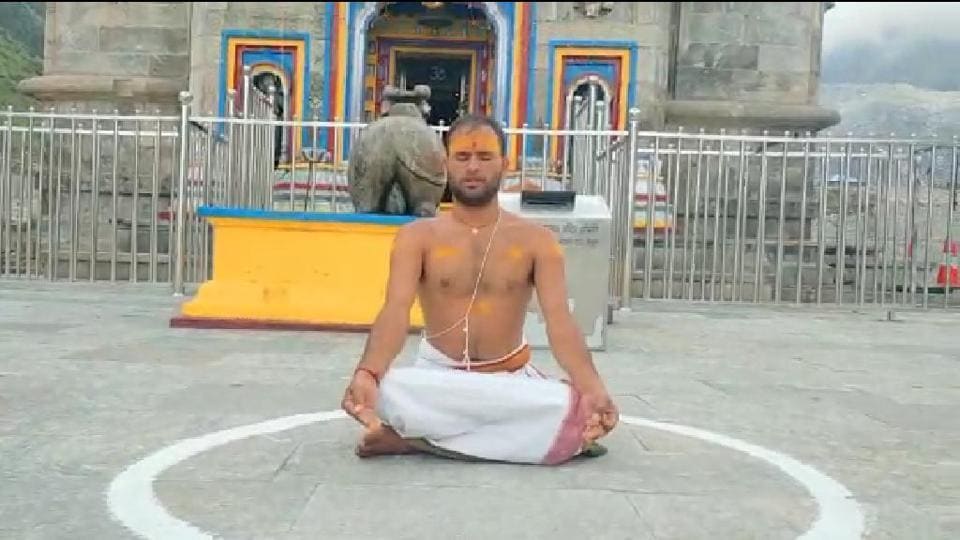
Santosh Trivedi, the priest protesting since June 12 sits outside the temple bare chested and meditates as a sign of dissent, demanding the dissolution of the Board.
The priests’ community in the state has been demanding the dissolution of Devasthanam Board and withdrawal of the Kedarnath master plan.
Brijesh Sati, spokesperson for Devbhoomi Tirtha Purohit Haqhakudhari Mahapanchayat, a priests’ body in the state said that Trivedi has informed all other priests that he will find an auspicious time for bhoomi Samadhi at Kedarnath.
“Upset with the state government’s response towards his protests, with no call for an amicable conversation Acharya Trivedi has decided to take bhoomi samadhi near Shankaracharya’s Samadhi at Kedarnath shrine. He will consult with priests of all the four shrines and find an auspicious time before the bhoomi samadhi,” said Sati.
Vinod Shukla, president of Kedarnath Tirtha Purohit Mahasabha, said, “First the government constituted the Devasthanam Board without the consent of the priests and after that, under the Master Plan, efforts are being made to take over the property of Kedarnath’s priests’ under its control. We will continue to strongly oppose this move.”
Officials from the Char Dham Devasthanam Board, could not be reached for a comment.
On July 21, the Uttarakhand high court dismissed the public interest litigation (PIL) filed by Bharatiya Janata Party’s (BJP) Rajya Sabha member Subramanian Swamy against the state government’s takeover of the Char Dhams and 51 other shrines through the formation of the Char Dham Devasthanam Management Board.
The court ruled that the ownership of the temple properties would vest in Char Dham shrines and power of the Board would be confined only to the administration and management of the properties.
Last December, the Uttarakhand assembly had passed the Char Dham Devasthanam Management Board Bill.
In January, Uttarakhand Governor Baby Rani Maurya gave her assent for the Char Dham Devasthanam Management Act, 2019.
Aggrieved priests had threatened that they would move the HC against the Act, as they claimed to have been kept in the dark about the new law.
They had alleged that the government took the step to ensure its control over shrine-related issues, bypassing the powerful priest community.


