
 E-Paper



Keeping up with UP: UGC equity regulations and political fallout
The University Grants Commission (Promotion of Equity in Higher Education Institutions) Regulations, 2026, were introduced on January 13

 Prefer HTon Google


When the Mandal Commission report, recommending 27% reservation for the Other Backward Castes (OBC), was implemented 10 years after it was submitted, it triggered violent protests in 1990. The protests coincided with the Ram Temple movement and deepened caste divisions, which were somewhat bridged over the years, even as caste remained a major factor in Uttar Pradesh elections.
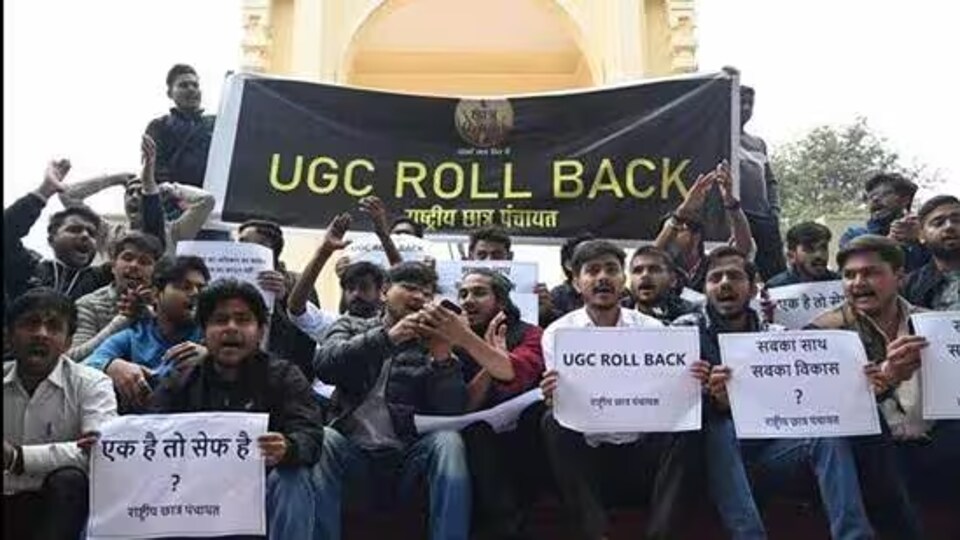
The Bharatiya Janata Party (BJP) would overcome the adverse impact of the Mandir (kamandal) versus Mandal politics by balancing the two. The introduction of the University Grants Commission (Promotion of Equity in Higher Education Institutions) Regulations, 2026 on January 13, tested the BJP’s balancing until the Supreme Court stayed them on January 29.
The regulations reignited the caste rift on campuses, sparking protests across the country. Upper caste groups expressed a sense of betrayal as they have consistently supported the BJP. Brahmins feared victimisation, pointing out the alleged misuse of the Scheduled Castes and the Scheduled Tribes (Prevention of Atrocities) Act during chief minister Mayawati’s rule from 2007 to 2012.
The introduction of the regulations, if aimed at retaining the confidence of the Scheduled Caste (SC), Scheduled Tribes (ST), and OBCs, has also backfired. These groups have been sceptical about the party’s stand on issues such as quotas. Their mistrust is expected to grow as the regulations remain in abeyance. As victims of untouchability, SC and ST communities are seen to be more aware of their rights than the OBCs.
Appeasement of both upper and lower caste groups may not be possible, as some corrections in the regulations are expected. As of now, the general category students have adopted the wait-and-watch stance. SC, ST, and OBCs have formed “Ekta Manch” in universities, holding protests and demonstrations in support of the regulations.
There have been reports of processions and heated exchanges at Banaras Hindu University, Allahabad University, Jawaharlal Nehru University, etc. The supporters of the regulations cite data, claiming an increase in discrimination on campuses. They argue that people from the upper castes head a majority of the universities and colleges.
The BJP cannot alienate its core upper caste voter base, even as the Samajwadi Party (SP) is aggressively pursuing its pichra, Dalit, and alpsankhyak (PDA) formula of consolidating backward, Dalit, and Muslim voters.
The BJP’s rank and file has also split on caste lines. Instead of the grandstanding that follows every such decision, the BJP leaders mostly went into silent mode. Only some Brahmin leaders opposed the regulations publicly.
The Brahmins have felt marginalised in the current dispensation in Uttar Pradesh. They are seen to have opposed the new regulations in what is seen as part of an attempt to reclaim their prime position in the current backward-dominated politics of the party.
Politically, the government wanted to address misgivings among non-upper caste voters, but in the process, angered, if not alienated, the upper castes, especially Brahmins. The BJP needs the support of both the caste blocs, as the 19% Muslims are unlikely to vote for it.
Professor Nishi Pandey of Lucknow University said she failed to understand the need for fresh regulations when various systems were in place to ensure equity. She notes there are committees to address grievances of discrimination. Pandey said the new regulations would have social and political repercussions, as the general category students are unlikely to accept them lying down.
And society, too, would be divided. The upper caste students, so far disorganised, have started grouping up against the SC, ST, and OBC fronts. Pressure tactics from caste groups will cause more caste tensions.
Satish Prakash of Meerut University said the regulations will become a big election issue even though political parties are trying to sidetrack them. “Untouchability is a reality in society and campuses, and there is enough data to substantiate it. Unfortunately, the regulations were not discussed and debated, or else all castes would have welcomed it.”
The Congress and the Bahujan Samaj Party, which are vying for Brahmin and Dalit support, too, preferred to soft-pedal the issue. The SP picked it up as it suits its PDA formula.


