
 E-Paper



Keeping up with UP: Will women help BJP retain power
The BJP began cultivating the women’s vote bank after returning to power at the Centre in 2014, through welfare measures such as Ujjwala

 Prefer HTon Google


In March 2022, Prime Minister Narendra Modi credited women for the Bharatiya Janata Party (BJP)’s victories in Uttar Pradesh, Uttarakhand, Goa, and Manipur assembly elections. “Wherever women voters outnumber men, the BJP has a landslide victory,” he said.
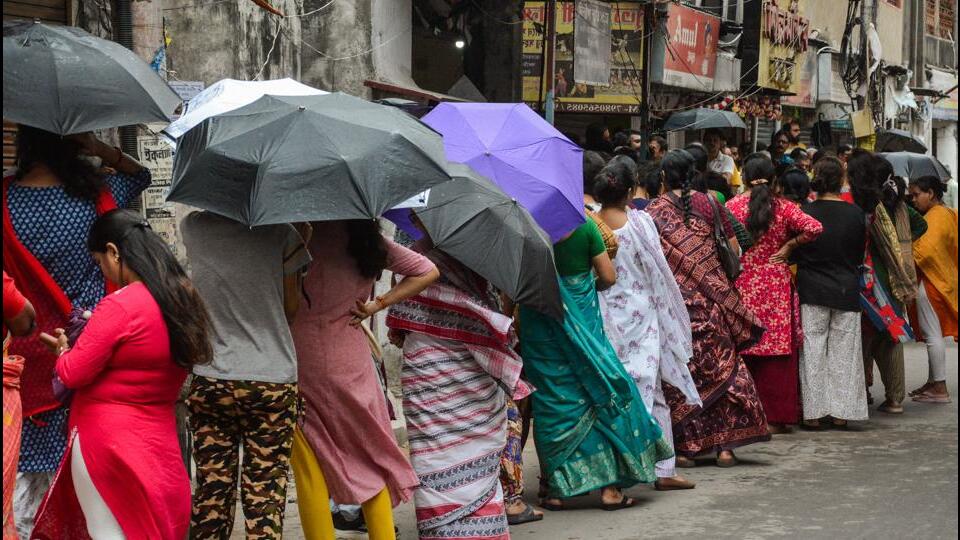
According to Lokniti-CSDS, an overwhelming majority of Hindu upper-caste women voted for the BJP in the 2022 assembly polls. Successive governments launched special welfare schemes for women, but perhaps lacked a strategy to reap electoral benefits. The BJP began cultivating the women’s vote bank after returning to power at the Centre in 2014. The government introduced welfare measures such as Ujjwala (LPG connections for Below Poverty Line families), connected toilets to women’s dignity, and provided free ration, and direct cash transfers. The party’s soldiers went door-to-door with “Modi’s guarantees,” including women’s security.
As women started rewarding the party, the BJP gave more tickets to them in national elections–38 in 2014, 55 in 2019, and 68 in 2024.
Now, the BJP leadership is promoting the party as a champion of women’s empowerment, using the Women’s Reservation Bill as a major plank. The party machinery has gone on the offensive, painting the Opposition as anti-women, even though they opposed linking the women 33% quota with delimitation. The bill was unanimously passed in 2023.
The Opposition voted against the delimitation process and not the quota bill per se. But the BJP leadership has gone on the warpath, holding demonstrations and special sessions in state assemblies to condemn the Opposition.
The bills for fast-tracking the women’s quota were moved amid Tamil Nadu and West Bengal elections, the two states where the BJP has been electorally marginal. Women are also politically proactive there, and the issue did not resonate much.
The issue of the women’s quota will now be tested in the next round of assembly polls in Uttar Pradesh, Punjab, Uttarakhand, Goa, Manipur, Gujarat, and Himachal Pradesh in 2027.
Will the quota become a game-changer, especially in states like Uttar Pradesh, where caste loyalties are well-defined? Can the BJP compensate for the fissures in its Hindu vote bank by consolidating the women? And does the Opposition have any counterplan or narrative to thwart the BJP’s quota ploy?
Experts say women have experienced political empowerment at the panchayat level and understand the value of reservation in state assemblies and the Lok Sabha. But they are equally intelligent to see through the BJP’s strategy.
The Samajwadi Party (SP) is the main challenger to the BJP in Uttar Pradesh. The SP’s PDA formula of consolidating backward, Dalit, and Muslim voters helped it register its best performance, bagging 37 of 80 Lok Sabha seats in Uttar Pradesh in 2024. The BJP’s seats in the state fell from 62 in 2019 to 33, as the party’s overall tally dropped below the majority mark in Parliament.
The BJP has been demolishing the SP’s image by raising issues of women’s safety and security and focusing on issues like “Muslim appeasement”. Will it use 33% reservation to unify the vote bank of women from all castes? Would women vote on a gender issue, or their caste or religion, which have decided elections in the past?
The 2022 Lokniti post-poll survey showed that women do not vote en bloc and their vote is divided in most elections. The survey found that women are no longer dependent voters. The proportion of independent women voters has risen over the years.
The SP has been encouraging young women candidates and promoting PDA women within the party hierarchy. The Congress formula of giving 40% tickets to women in the 2022 polls did not achieve much result as the party remained in a shambles.
SP chief Akhilesh Yadav’s demand for a sub-quota for marginal communities within the 33% quota is resonating. The National Confederation of Dalit and Adivasi Organisation has described the proposal to include women within the existing reserved seats, rather than providing a separate reservation for them, as unjust.
Dalit rights activists say women from marginalised communities remain far from decision-making despite winning elections. They argue that without a subquota, the beneficiary of the 33% quota will be women from politically, economically, and socially strong sections. The government is unlikely to provide a sub-quota without which the consolidation of women will remain incomplete.
Nonetheless, the BJP’s ability to build narratives is matchless. Before the elections in West Bengal concluded, Modi arrived in his Lok Sabha constituency of Varanasi to lead the quota campaign and promised to ensure 33% women’s reservation.
In the 2024 Lok Sabha polls, the turnout of women was higher than that of men in 17 of the 80 constituencies in Uttar Pradesh, compared to six in 2019 and none in 2014.
In the 2022 assembly polls, 62.24% of women voted. The turnout of men was 59.56%. More women voted in 43 districts, compared to 55 in 2017.
The BJP became the first party to retain power in Uttar Pradesh in 2022 in 37 years. Now, it is gearing up for a third win in a row, hoping to be powered by women’s support.


