
 E-Paper



Kovind: 21st Century can be the ‘century of India’
The country is getting ready to make 21st century the “century of India”, outgoing President Ram Nath Kovind said in his address to the nation on his last day in office on Sunday

 Prefer HTon Google


The country is getting ready to make 21st century the “century of India”, outgoing President Ram Nath Kovind said in his address to the nation on his last day in office on Sunday.
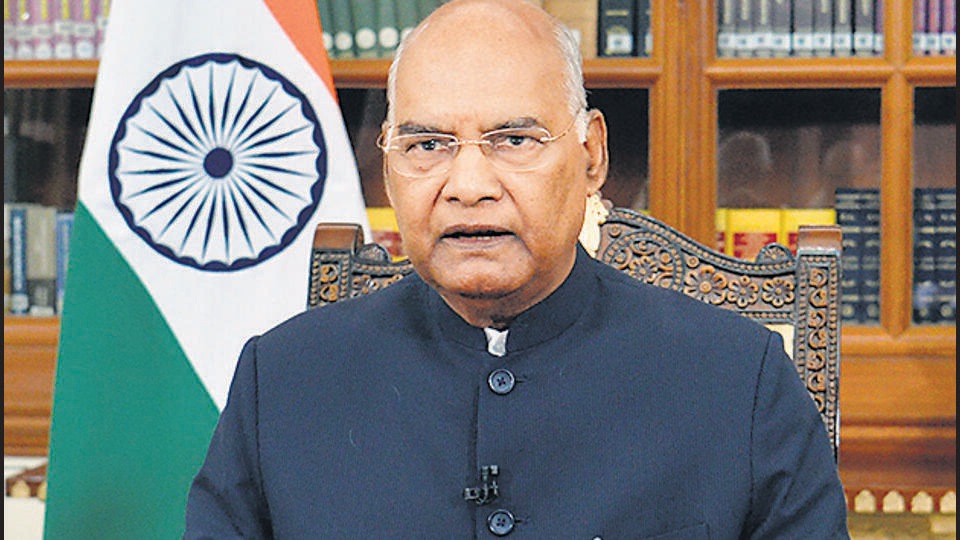
Droupadi Murmu will take oath as India’s 15th President on Monday.
Mother Nature is in “deep agony”, Kovind said, expressing concern over the climate crisis that endangers the very future of the planet.
“We must take care of our environment, our land, air and water, for the sake of our children. In our daily lives and routine choices, we must be more careful to protect our trees, rivers, seas and mountains as well as all other living beings,” he said. “As the first citizen, if I have to give one advice to my fellow citizens, it has to be this.”
Kovind also highlighted the importance of health care and education. “The pandemic has underlined the need to further improve the public health care infrastructure,” he said. “Once education and health care are in place, economic reforms will let citizens find the best course for their lives.”
“I firmly believe that our country is getting equipped to make the 21st century the century of India,” Kovind said.
The National Education Policy 2020 will go a long way in making it possible for young Indians to connect with their heritage and also find their feet in the 21st century, he said.
Kovind also discussed his childhood, when India had just achieved independence. “There was a fresh wave of energy to rebuild the country, there were new dreams,” he said. “I too had a dream that one day I would be able to participate in a meaningful way in this nation-building exercise.”
“A young boy living in a mud house could not have any idea about the highest constitutional office of the republic. But it is the testament to the strength of India’s democracy that it has created pathways to let each citizen take part in the shaping of our collective destiny,” he said. “If that Ram Nath Kovind from village Paraunkh is addressing you today, it is solely thanks to the inherent power of our vibrant democratic institutions.”
During his address, Kovind expressed gratitude towards fellow citizens and elected representatives. He quoted Bhim Rao Ambedkar’s concluding remarks in the constituent assembly before the adoption of the Constitution, when he had pointed out the difference between political and social democracy.
The country is working with the objective of providing better housing and access to drinking water and electricity for every family, he said. “This change has been made possible by the momentum of development and good governance, which knows no discrimination,” Kovind said.
In modern times, the journey of our country started with the awakening of nationalist feelings during colonial rule and the launch of the freedom struggle, he said. “There were many uprisings across the country in the nineteenth century. The names of many of the heroes who brought hopes of a new dawn have long been forgotten,” he pointed out. “Contributions of some of them have come to be appreciated only in recent times. Around the turn of the century, the various struggles were coming together, creating a new consciousness.”
When Mahatma Gandhi returned to India in 1915, the nationalist fervour was gaining momentum, Kovind said. He also mentioned the contributions of Rabindranath Tagore, Bhim Rao Ambedkar and Jawaharlal Nehru, among others.
“From Tilak and Gokhale to Bhagat Singh and Netaji, from Jawaharlal Nehru, Sardar Patel and Syama Prasad Mukherjee to Sarojini Naidu and Kamaladevi Chattopadhyay, nowhere in the history of humankind have so many great minds come together for a common cause,” he said.
In the five years of his term, Kovind had been conscious of being a successor to great icons like Rajendra Prasad, S Radhakrishnan and APJ Abdul Kalam, he said.
“When I entered Rashtrapati Bhavan, my immediate predecessor, Shri Pranab Mukherjee, also shared his wise counsel with me about my duties. Still, whenever I was in doubt, I turned to Gandhiji and his famous talisman, his advice of recalling the face of the poorest man, and asking myself if the step I am about to take will be of any use to him,” he said.
His most memorable moment during his term was to visit home and touching the feet of his teachers in Kanpur to seek their blessings, Kovind said.
“This year, the Prime Minister also honoured my village Paraunkh with his visit. This connection with our roots has been the essence of India,” he said. “I would request the younger generation to continue this tradition of staying connected with their village or town, their schools and teachers.”


