
 E-Paper



Legislature panel suggests splitting BBMP into maximum of 7 bodies
The committee, chaired by Congress MLA Rizwan Arshad, has recommended restructuring the BBMP by splitting it into a maximum of seven city corporations under the Greater Bengaluru Authority.

 Prefer HTon Google


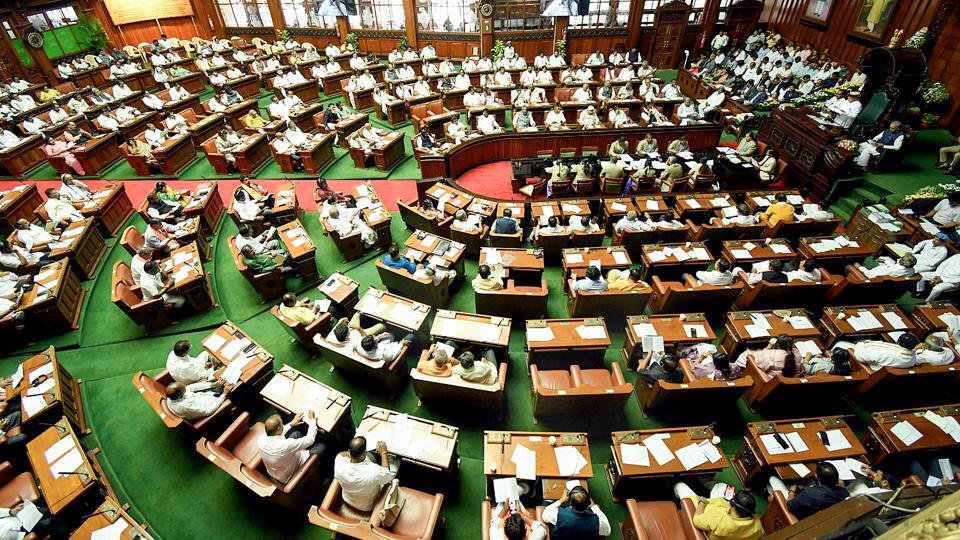
The state government’s plans to introduce the Greater Bengaluru Governance (GBG) Bill in the budget session have gained momentum after a joint legislature committee submitted its review report in the legislative assembly on Wednesday. The committee, chaired by Congress MLA Rizwan Arshad, has recommended restructuring the Bruhat Bengaluru Mahanagara Palike (BBMP) by splitting it into a maximum of seven city corporations under the Greater Bengaluru Authority.
“The 13-member committee was tasked with reviewing the Bill, which was initially introduced in July 2024. Following a series of public consultations, the committee identified 76 changes to the proposed legislation before submitting its report to the Assembly Speaker in February. One of the key recommendations includes decentralising the BBMP to enhance governance efficiency and transparency,” said an official in the know of the development.
The official quoted the report as stating that each new city corporation should have a minimum population of 1 million and a population density of at least 5,000 people per square km. “The revenue generated within each corporation’s jurisdiction should not be less than ₹300 crore per annum, with at least 50% of employment in non-agricultural activities. The restructuring also proposes renaming the newly formed municipal corporations with the common prefix ‘Bengaluru,’ such as Bengaluru South City Corporation and Bengaluru East City Corporation,” the official stated.
Another significant recommendation is extending the tenure of the mayor and deputy mayor to 30 months, with a provision that a no-confidence motion can be moved only after six months. Each corporation will have a mayor, a commissioner, a joint commissioner, standing committees, and ward committees. Additionally, the BBMP and other notified local bodies will cease to exist once the new framework is implemented, according to officials.
The report further stated that the proposed Greater Bengaluru Authority (GBA) will oversee the newly formed corporations and coordinate civic administration.
The proposal stated that the CM will serve as the ex-officio chairperson of the GBA, while the minister for Bengaluru Development will act as the vice-chairperson. The body will also include state ministers representing constituencies in the Greater Bengaluru Area, senior bureaucrats, city mayors, and members from civic and planning agencies. The GBA will meet at least once every three months and be responsible for budget preparation and urban governance coordination.
Despite the government’s push, the Bill has faced strong opposition from the Bharatiya Janata Party (BJP). Bengaluru South MP Tejasvi Surya has criticised the proposal, calling it a “power grab” that undermines local governance. He argued that the Bill contradicts the 74th Constitutional Amendment Act, which emphasises decentralised administration.
“The GBG Bill overturns the very essence of local governance by creating a Greater Bengaluru Authority, an unelected council with the Chief Minister at its helm, rendering elected BBMP corporators powerless,” Surya stated in a series of posts on X. He further alleged that the Bill would allow MLAs and bureaucrats to dominate municipal affairs, sidelining elected representatives and weakening grassroots governance.
Surya also raised concerns over the financial and administrative implications of dividing BBMP into multiple municipal corporations, arguing that it could lead to increased costs, duplication of budgets, and inefficiency. “Splitting BBMP will not solve Bengaluru’s governance issues. Instead, it will lead to higher administrative costs, inefficiency, and confusion over revenue distribution,” he warned.
In response to the criticism, deputy chief minister and Bengaluru development minister DK Shivakumar stated that the government was committed to ensuring thorough public consultations before finalising the bill. “We are not in a hurry to pass the Bill without extensive discussions with all stakeholders,” he said.
Committee chairman Rizwan Arshad, while presenting the report in the Assembly, highlighted the need for decentralisation. “There is centralisation of power in BBMP, there is no transparency, and there is corruption. There is a need for decentralisation of powers, if it doesn’t happen it will lead to corruption and it won’t be possible to provide good, transparent and effective administration. So, we have recommended restructuring of BBMP into various corporations. We have also made a recommendation regarding the tenure of the Mayor, for coordination at all levels between agencies,” he said.
(With PTI inputs)


