E-Paper



Lessons from the accidental launch of a missile in Pakistani territory
For decades, arms control experts have pointed to the sheer lack of time for nuclear-armed India and Pakistan to respond to an accidental launch.

 Prefer HTon Google


The “accidental firing” of an Indian missile that fell in Pakistani territory this week is the stuff of nuclear nightmares. For decades, arms control experts have pointed to the sheer lack of time for nuclear-armed India and Pakistan to respond to an accidental launch.
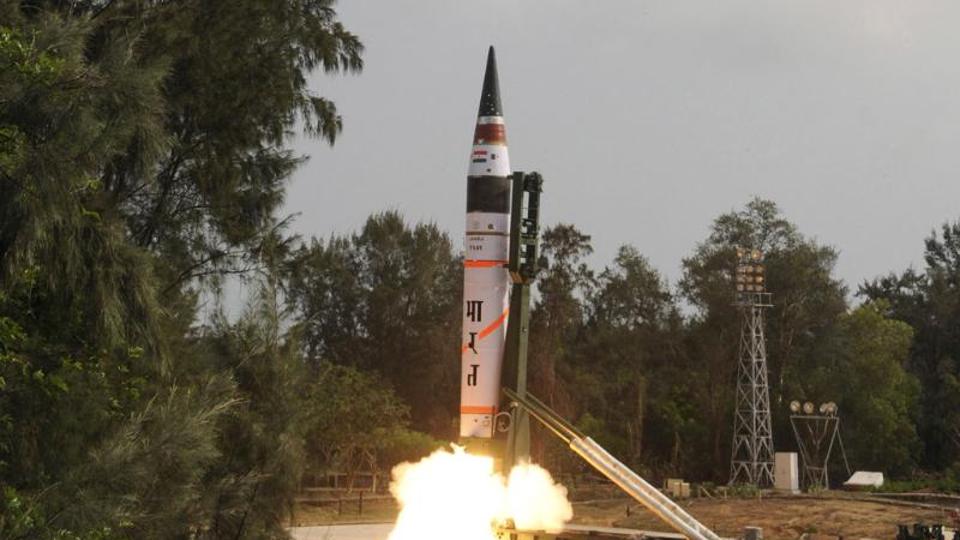
Many aspects of the accidental launch of the missile on March 9 are simply astonishing – according to a Pakistani military briefing, the missile travelled 124 km into Pakistani territory before falling at Mian Channu in Punjab province. Travelling at speeds between Mach 2.5 and Mach 3 and at an altitude of up to 40,000 feet, the missile was within Pakistani airspace for almost four minutes and reportedly could have endangered civilian airliners. Even more miraculously, there were no casualties on the ground.
The world first got to know of the incident from a briefing by Pakistan’s chief military spokesman, Maj Gen Iftikhar Babar, on March 10. Unlike many such briefings focused on India, Babar’s tone at this interaction was very measured as he stuck to stating the facts of the case. The next day, a brief statement from India’s defence ministry acknowledged the accidental firing of the missile was the outcome of a “technical malfunction” during routine maintenance. The statement described the incident as “deeply regrettable” and expressed relief that there had been no loss of life. It also announced an inquiry into the matter.
There has been some grandstanding by unnamed Pakistani officials who have spoken to the Western media, eager to show up what they contend is a failure of India’s command and control system and to question India’s credentials as a responsible nuclear power.
However, commentators such as Vice Admiral (retired) Arun Kumar Singh have noted that the militaries of both countries acted with commendable restraint and maturity. There are also reports that a hotline was activated by India during the incident to alert the Pakistani side. This could perhaps explain the measured position taken by Pakistan’s chief military spokesman, whose briefing then would have been aimed more at getting India to publicly acknowledge the incident.
The Indian side has not named the missile involved in the incident, but most reports and images of the wreckage suggest it is the BrahMos, a supersonic cruise missile that recently became the country’s first major weapon system to bag a foreign order when it was bought by the Philippines earlier this year. The BrahMos is highly regarded for its accuracy and clearly, the inquiry that has been ordered will determine exactly what went wrong.
For years, arms control experts have called on India and Pakistan to include cruise missiles in their arrangements for alerting each other of missile tests. The bilateral agreement on Pre-Notification of Flight Testing of Ballistic Missiles, signed in October 2005 and automatically extended every five years, does not cover missiles such as the BrahMos and Pakistan’s Babur.
Conspiracy theorists have already latched on to some aspects of the incident to peddle certain theories. An initial report in Pakistan’s Dawn newspaper, which erroneously described the missile falling in Mian Channu as a plane crash, has been used by such theorists to surmise that both countries were covering up a missile strike by the Indian side.
But such theories shouldn’t detract from the more important task on hand. India and Pakistan have not held any formal and structured talks since the 2008 Mumbai attacks, though there have been occasional meetings of officials on issues such as sharing of river waters. Perhaps this incident could spur efforts aimed at putting in place a more comprehensive strategic restraint regime.