
 E-Paper



Lethargic, tardy: SC slams Odisha for 11-year delay in pursuing case
The Supreme Court rebuked Odisha for an 11-year delay in a case, calling its excuses "lame" and dismissing its appeal as time-barred.

 Prefer HTon Google


New Delhi
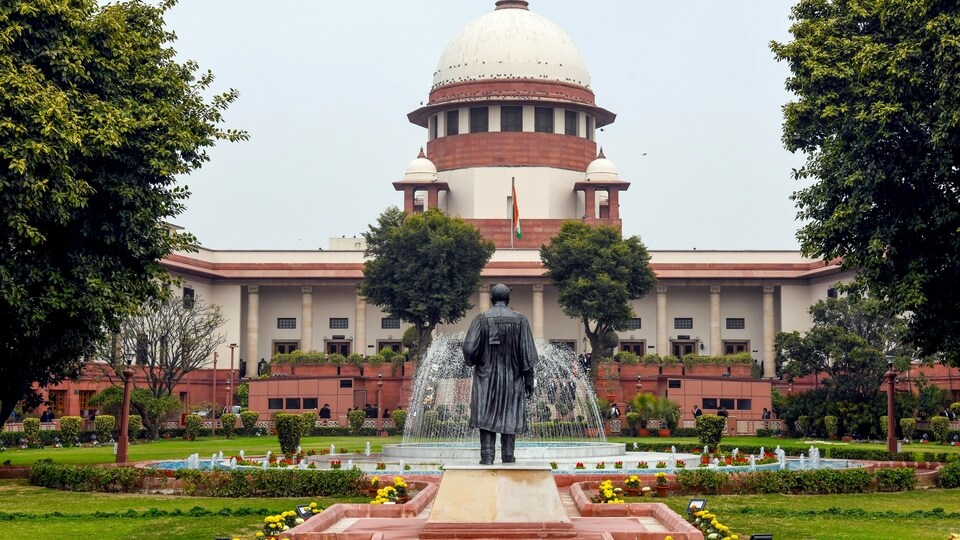
In a sharp rebuke to the Odisha government, the Supreme Court has refused to condone an over eleven-year delay in pursuing a case, describing the state’s conduct as “utterly lethargic, tardy and indolent” and terming the reasons cited for the delay “not an explanation but a lame excuse”.
A bench of justices Dipankar Datta and Satish Chandra Sharma underlined that while courts do show some latitude to the “State” and its instrumentalities, condonation of delay cannot be claimed as a matter of right.
“Despite all the latitude that is shown to a ‘State’, we are of the clear opinion that the cause sought to be shown here by the State of Odisha is not an explanation but a lame excuse,” held the bench in a judgment last week, dismissing the special leave petition as time-barred.
The litigation dates back to a 2013 order of the Odisha Education Tribunal directing the state and the Director of Secondary Education to release grant-in-aid to the teaching and non-teaching staff of Namatara Girls’ High School.
The state challenged the tribunal’s order before the Orissa High Court in October 2015. The appeal itself was filed beyond limitation and, crucially, was not accompanied by a certified copy of the tribunal’s order. For nearly eight years, the state failed to cure this basic defect.
In April 2023, the high court dismissed the appeal for failure to file the certified copy. Only thereafter did the state obtain the certified copy in February 2024 and move an application to recall the dismissal order, along with a plea to condone a 291-day delay.
The high court rejected the plea in February 2025, observing that the delay in effectively presenting the appeal ran into more than 11 years and that the appeal had been inherently defective from the outset.
Challenging this, the state approached the Supreme Court -- again with delays of 123 days in filing and 96 days in re-filing the petition after curing defects. The explanation offered was that the matter had been sent to the law department and that procedural approvals from higher authorities had taken time. The delay, it said, was neither deliberate nor intentional.
The Supreme Court, however, was unimpressed. “No cause, much less sufficient cause, has been shown for exercise of discretion in favour of the State of Odisha,” noted the bench, noting that the nature of the explanation was such that “with much ado, the proceedings could be closed”.
While acknowledging the long line of judgments that advocate a justice-oriented and liberal approach when the State seeks condonation of delay, beginning with Collector, Land Acquisition Vs Katiji (1987), the bench traced how the court’s approach has evolved over time.
In more recent decisions such as Postmaster General Vs Living Media India Ltd. (2012) and University of Delhi Vs Union of India (2020), the Supreme Court has declined to condone substantial delays by government bodies, emphasising that the law of limitation is founded on public policy and aims to prevent litigation from dragging on indefinitely.
The bench also referred to its earlier ruling in Sheo Raj Singh Vs Union of India (2023), where it drew a distinction between an “explanation” and an “excuse” for delay. Reiterating that distinction, the court said that the reasons offered by the Odisha government fell squarely in the latter category.
“Condonation of delay cannot be claimed as a matter of right. It is entirely the discretion of the Court whether or not to condone delay,” said the bench.
Noting that even after its appeal was dismissed as time-barred by the high court, the state waited another four months beyond limitation to approach the Supreme Court, the court concluded that no case for exercise of discretion had been made out, as it dismissed the appeal along with applications for condonation of delay in filing and re-filing the petition.



