E-Paper



Lok Sabha passes pan masala cess bill,
The proposed cess on pan masala is being levied with the twin objectives to strengthen national security initiatives such as the Mission Sudarshan Chakra, and to support public health drives through the states, Union finance minister Nirmala Sitharaman told the Lok Sabha before the House passed the bill on Friday.

 Prefer HTon Google


The proposed cess on pan masala is being levied with the twin objectives of strengthening national security initiatives such as the Mission Sudarshan Chakra (India’s own Iron Dome like shield), and supporting public health initiatives through the states, Union finance minister Nirmala Sitharaman said in the Lok Sabha before the House passed the bill on Friday.
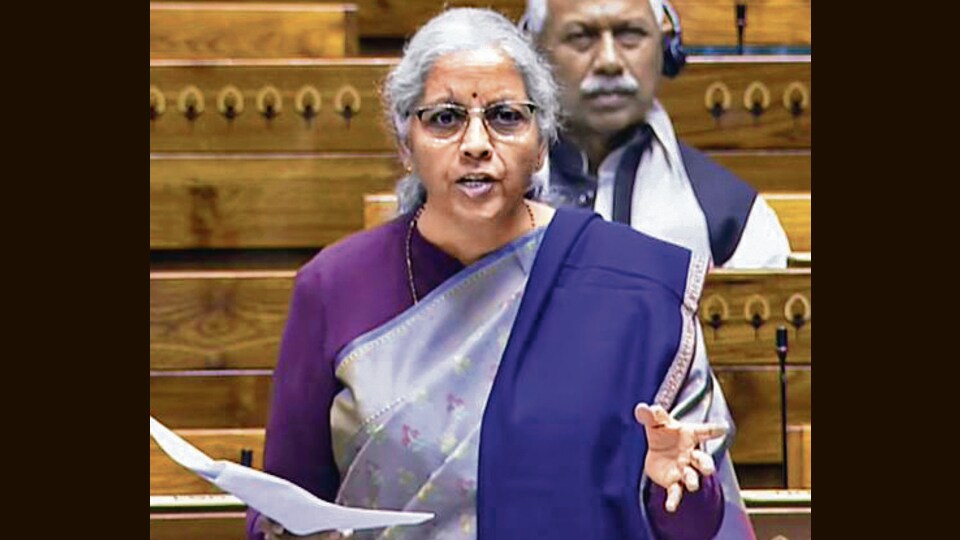
Speaking about the specific objective of collecting revenue through the cess, she said, “Part of this will be spent on public health, and the other part will go for defence-related purposes.”
The minister said imposing the cess on paan masala has become necessary as total tax incidence on it will fall substantially after the Goods and Services Tax compensation cess is phased out completely, making the “highly addictive” demerit good more affordable, which is undesirable. The plan is to impose the new cess to cover the gap that will be left when the GST compensation cess ends, she said.
At present, pan masala attracts 28% GST and 60% compensation cess. As the GST Council decided to impose a maximum 40% tax on demerit goods, after removal of the GST compensation cess, the total tax on pan masala would have a huge 48% gap. The proposed cess is intended to fill this gap.
“We are only taxing demerit goods. This cess is not for anything. Incidence of this tax is going to remain the same as it is prevailing now,” the minister said. According to the proposed “health security to national security” cess, the levy will be ₹101 per month per machine if a facility has a production capacity of 500 units of 2.5-gram pouches per minute per machine. The cess rates will increase with the increase of the production capacity and the pouch size.
Part of the cess revenue will go to states as health initiatives are implemented by them, Sitharaman said, stressing the need for a strong and predictable funding system for national defence as modern warfare is technology-intensive as was proved during Operation Sindoor. While the subject of public health falls in the State List, the national defence is part of the Union List
“In this day and age where credible defence capabilities are absolutely critical, we need to raise resources. Modern conflicts are dominated by precision weapons, space assets, cyber operations, etc... they are becoming capital-intensive,” she said .
Referring to Prime Minister Narendra Modi’s Independence Day speech, Sitharaman stressed that modern warfare requires “a wall of security around the country’s key locations.”
“So, now the warfare is not just in the borders, key locations will have also got to be protected. Industrial and public sector undertakings are all heavily invested in, we need to protect them. So, the enemy should not be given any chance to penetrate. If enemy dares, our Sudarshan Chakra will destroy. That’s the capability we want to bring,” she said.
In his Independence Day address earlier this year, Prime Minister Narendra Modi hailed the armed forces and the prowess of Made-in-India weapons during Operation Sindoor and announced the formation of Mission Sudarshan Chakra, a ballistic missile defence shield aimed at neutralising enemy defence infiltrations and enhancing India’s offensive capabilities.
Sitharaman said the Modi government is committed to defending India unlike the previous regime under which the country’s defence system saw a fund crunch. “A CAG audit report, which was reviewing data up to 2013, found the army’s ammunition reserves at crisis levels. Against the official requirement of stocking 40 days of war reserves, 125 of 170 ammunition types fell below even 20 days’ supply. Shockingly, half of all ammunition types had stocks for less than 10 days of intensive warfare as of March 2013. So, that’s the level to which our armed forces were depleted of resources. We cannot afford that,” she said. The CAG report was published in 2015.
After an intense discussion on the bill from Thursday, the House passed the bill by voice vote. While 30 members of Parliament participated in the debate on Thursday, five more spoke on the matter on Friday.
NEEDS OPPOSITION QUOTE