
 E-Paper



Madhya Pradesh bans protests, slogans in state assembly. Here's why
The directive, issued under Standing Order 94(2), prohibits symbolic displays, including masks, props, placards, horns, and even gestures seen as disruptive.


With the Madhya Pradesh Assembly set to convene on Monday, a political storm has already erupted over Speaker Narendra Tomar's new directive banning protests, slogan-shouting, and symbolic demonstrations within the legislature complex.
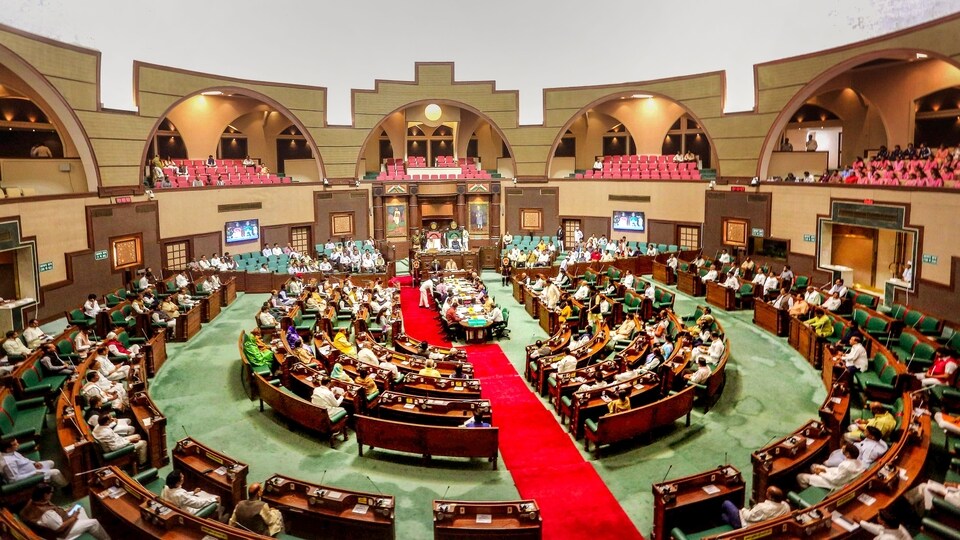
The move that, as per the Secretariat, aims to maintain decorum, has triggered fierce backlash from the opposition Congress, which is calling the directive "authoritarian."
"This is a murder of democracy. The government is neither allowing assembly proceedings to be broadcast live, nor permitting protests, and now even banning slogan-shouting," Leader of Opposition Umang Singhar said in a X post.
The directive, issued under Standing Order 94(2), prohibits symbolic displays, including masks, props, placards, horns, and even gestures seen as disruptive.
Move aims to curb theatrics?
In the last few sessions, Congress turned the Assembly into a dramatic platform for protest. Black masks symbolising government secrecy, fake snakes coiled around demands for jobs, skeleton costumes to decry corruption, and gold bricks waved as a critique of alleged scams — the visuals were striking and often made headlines.
A lone BAP Party MLA even staged a fast at the feet of Gandhi's statue, drawing inspiration from the Mahatma himself. But according to the new directive, all of that is now off-limits.
Assembly principal secretary A P Singh told PTI that a circular containing the standing instruction was issued about a week ago. It was intended to maintain decorum and ensure that healthy debates take place in the House and nobody gets hindered from attending the proceedings, he said.
Opposition demands accountability
LoP Singhar pointed to Article 194 of the Constitution, which guarantees state legislators the freedom to raise public concerns, speak freely in the House, and demand accountability.
"Instead of encouraging transparency, like broadcasting Assembly proceedings live, the Speaker, under the government's pressure, is now preventing legislators from even raising public issues," said Singhar.
"Article 194 of the Constitution grants special powers to legislators, allowing them to raise matters of public interest in the House, express their views, and seek answers from the government," he added.
Hemant Katare, Deputy Leader of the Opposition, went further, calling the directive "authoritarian" and a deliberate attempt to shield the BJP-led government from scrutiny.
"The government presents fabricated data in the Assembly. These new rules are a way to avoid being exposed," Katare said.
BJP's stance
BJP MLA and former Protem Speaker Rameshwar Sharma defended the order, saying the Assembly was meant for serious constitutional discussion, not for "wrestling and chaos."
He said that protests belong in places like Roshanpura or Dussehra grounds, not the Assembly. "The House is not a theatre," he added.
(with PTI inputs)


