
 E-Paper



Madhya Pradesh assembly raises OBC reservation in govt jobs to 27%
Madhya Pradesh, till today, had quota in government jobs capped at 50% -- 14% for Other Backward Classes (OBCs), 16% for Scheduled Castes (SCs) and 20% for Scheduled Tribes (STs)—in line with Supreme Court’s 1992 guidelines.


Madhya Pradesh assembly has unanimously raised the reservation enjoyed by the other backward classes (OBC) in government jobs to 27% from the existing 14%. The amendment passed in Assembly on Tuesday raises the total quota in state government jobs to 73% including the 10% reservation for the economic weaker section (EWS) from the upper castes.
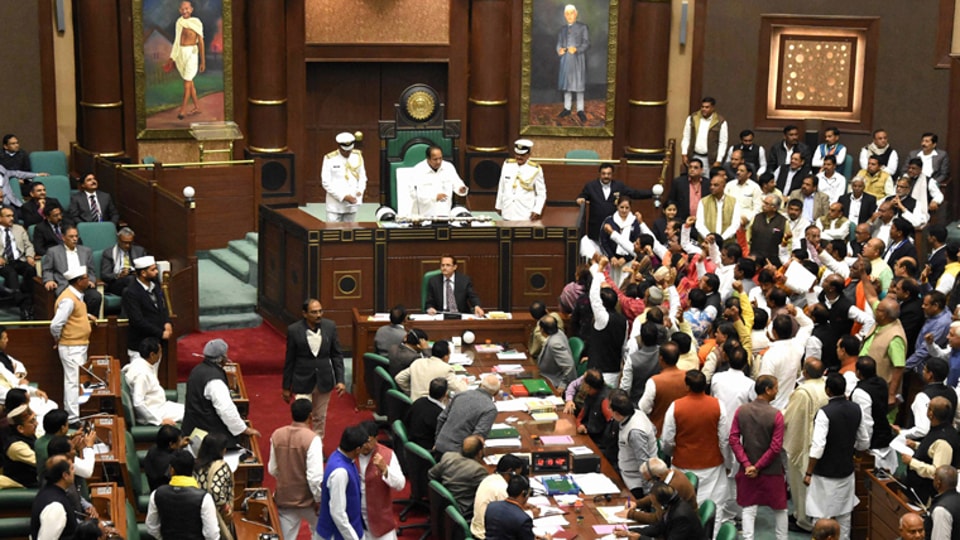
MP till today had quota in government jobs capped at 50% -- 14% for Other Backward Classes (OBCs), 16% for Scheduled Castes (SCs) and 20% for Scheduled Tribes (STs)—in line with Supreme Court’s 1992 guidelines.
Minister for general administration, Govind Singh, suggested that his government was following in the footsteps of states like Tamil Nadu that have successfully breached the 50% limit for caste-based reservations set by the highest court.
“When we saw there were states like Tamil Nadu which had introduced reservation (for SC/ST/OBC) ranging from 67% to 73% without violating the Supreme Court guideline, then we thought it could be done in Madhya Pradesh also,” said the minister.
Leader of the Opposition in the state assembly, Gopal Bhargava, demanded separate reservations for “the affluent” and “the non-affluent” amongst the OBCs. He claimed that the “affluent OBCs” had major share of government jobs while their poorer counterparts didn’t get employed even as peons and where therefore worse-off than even the Scheduled Tribes in the state. The minister agreed that two economic classes within the OBCs existed and indicated that he may consider separate reservations for them in future.
Bhargava claimed the amendment was an eyewash as there were very few jobs in the government sector and wanted to know if the quota will be enforced in the private sector as well.
The minister responded by saying that the government will first fill up the 2 to 2.5 lakh positions lying vacant as such appointments for sanctioned posts would hardly bring any additional financial burden.
The Bombay High Court had last month ruled that the 50% quota cap — imposed in a landmark 1992 SC verdict — can be “extended only in exceptional situations if it is based on quantifiable data”.
Caste-based reservations in Maharashtra stand at 64-65% while Tamil Nadu has 69% reservations protected by a law added to the ninth schedule of the Constitution, which acts as a shield against judicial review.
Reservation to Gujjars in Rajasthan, Jats in Haryana and Patidars in Gujarat has either been challenged or stayed by the higher judiciary in recent years, on the premise that any such quota breached the SC-mandated limit.


