E-Paper



MP govt says schools and colleges must display Modi, Vivekananda portraits
The Opposition criticised the move, saying it was done under pressure from the RSS, the BJP’s ideological fountain. The RSS has been accused of meddling with government affairs, especially policies on education.

 Prefer HTon Google


From schools to universities, all educational institutions in Madhya Pradesh will have to prominently display pictures of Prime Minister Narendra Modi and Swami Vivekananda.
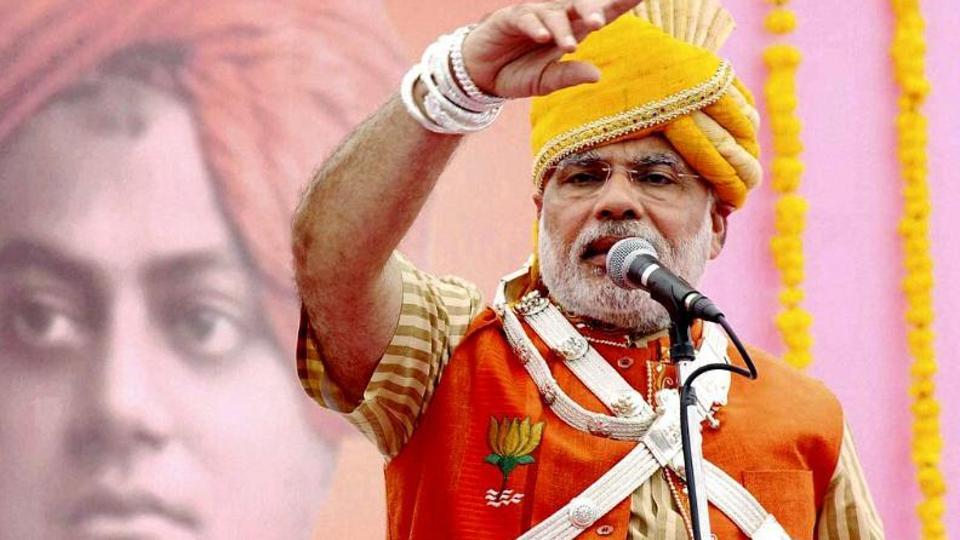
They will face disciplinary action if they defy the latest diktat from the BJP-led government.
Higher education minister Jaibhan Singh Pawaiya ordered institutions and offices to put pictures of five personalities on their premises — Prime Minister Modi, President Pranab Mukherjee, Mahatma Gandhi, Swami Vivekananda and Dr Bhimrao Ambedkar, the architect of India’s Constitution.
The school and higher education departments accordingly sent circulars.
“The minister has made it compulsory to display portraits in all government colleges, universities and offices. There are strict instructions for action against officers disobeying the order,” said Ashish Upadhyaya, the higher education principal secretary.
The Opposition criticised the move, saying it was done under pressure from the RSS, the BJP’s ideological fountain. The RSS has been accused of meddling with government affairs, especially policies on education.
“They are promoting Swami Vivekananda as his ideology suits the RSS,” state Congress spokesperson KK Mishra said.
“In educational institutions, they should display portraits of Sarvepalli Radhakrishnan and Jawaharlal Nehru, who gave new direction to independent India, and great scientist APJ Abdul Kalam.”
Social activists too questioned the logic behind the compulsory display of portraits, especially of Swami Vivekananda, a Hindu monk and religious philosopher.
“If they want to inspire and motivate students, they should include Sarvepalli Radhakrishnan and Savitribai Phulle who contributed a lot to education. Why Swami Vivekananda?” wondered child rights campaigner Prashant Dubey.
A notice on January 7 stated that the portraits can be obtained from information and broadcasting ministry’s photo department in New Delhi.
The school education department referred to a letter from January 2004, released during former Prime Minister Atal Bihari Vajpayee’s rule, to make purchases from the ministry mandatory.
This has put principals of upcountry schools in a fix.
“The portraits can be purchased from a nearby market, but the department has unnecessarily increased our burden. The portrait costs Rs 200, excluding delivery charges. We are trying to get them to save our job,” said the principal of a government middle school, who didn’t wish to be named.