
 E-Paper



Maharaja boards return flight
Tata Sons, the holding company for the autos-to-steel Tata conglomerate, will pay ₹18,000 crore for a 100% stake in Air India, Tuhin Kanta Pandey, secretary of the Department of Investment and Public Asset Management, said at a briefing on Friday.

 Prefer HTon Google


Air India will return to the Tata Group, where it was born as India’s first air service 89 years ago, marking the end of an era in which India ran a national carrier from shortly after Independence, but also the start of a new chapter that could end years of taxpayer-funded life support that kept the airline afloat.
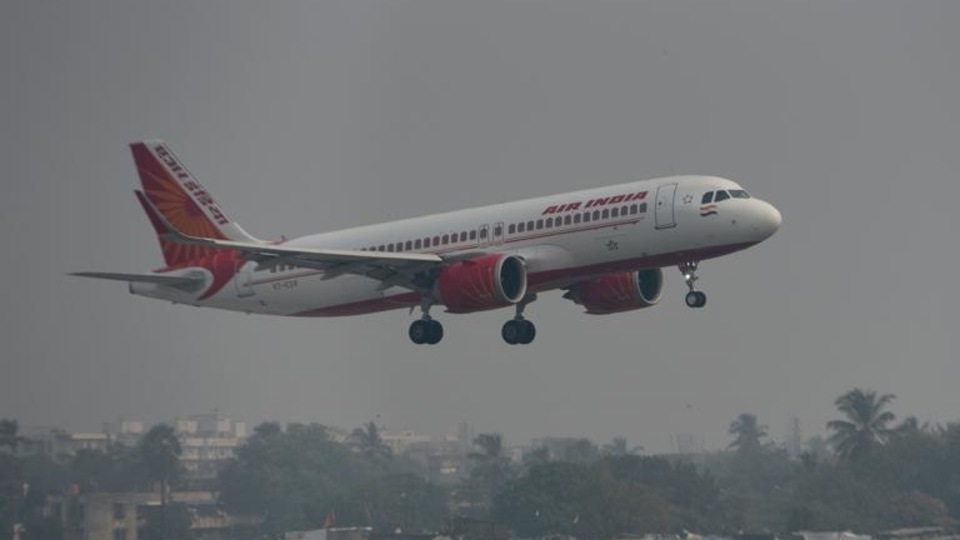
Tata Sons, the holding company for the autos-to-steel Tata conglomerate, will pay ₹18,000 crore for a 100% stake in Air India, Tuhin Kanta Pandey, secretary of the Department of Investment and Public Asset Management, said at a briefing on Friday.
The bid amount includes Tata’s taking on of about ₹15,300 crore of the national flag carrier’s ₹61,562 crore debt. The remaining will be transferred to Air India Assets Holding Limited (AIAHL), Pandey added. AIAHL is a special purpose vehicle formed by the government.
Also Read| Tatas bid 39% more than floor price for Air India
The deal is a big boost for the government’s disinvestment drive, as well as its financial books – it will fetch the Centre ₹2,700 crore in cash in addition to the debt that will now be offloaded. In the 2021 financial year, which was battered by the pandemic, the airline is estimated to have lost ₹27 crore a day.
“Air India’s return to the Tata group marks a new dawn for the airline! My best wishes to the new management, and congratulations to DIPAM secretary and the civil aviation ministry for successfully concluding the difficult task of paving a new runway for the airline to take off!” civil aviation minister Jyotiraditya Scindia said on Twitter on Friday.

“I hope the airline will continue to deliver on its mission of bringing people closer through its successful operations,” he added.
The airline’s current fortunes are far removed from its storied early years. Established by JRD Tata, who was India’s first licensed pilot, the airline originally flew mail in the 1930s between Karachi, in then-undivided British-ruled India, and Bombay, now Mumbai.
It soon turned commercial, began to fly domestic and international destinations, and was taken over when the government nationalised the sector in its entirety in 1953. JRD Tata would continue to steer the carrier – and its domestic wing Indian Airlines which was hived off after the government takeover – for 25 years, without accepting a salary, until a messy dismissal in 1978 when the then Morarji Desai-led government appointed retired Air Chief Marshal Pratap Chandra Lal as the chairman for both airlines.
“Welcome back, Air India,” Ratan Tata, JRD Tata’s successor and chairman emeritus of Tata Sons, said in a tweet on Friday. “On an emotional note, Air India, under the leadership of Mr JRD Tata had at one time gained the reputation of being one of the most prestigious airlines in the world,” Ratan Tata added.
Also Read| ‘Big challenge, as well as strong potential in future’: Ratan Tata on AI bid
In the 1950s, 1960s and 1970s, Air India led the charge of the world’s aviation boom. Those were the golden years for air travel — still considered a luxury and a novelty, not a chore — and Air India’s service, replete with champagne and (for a lucky few first-class passengers) porcelain ashtrays designed by Salvador Dali, was legendary. Its advertising was equally famous; its hoardings in Mumbai (then Bombay) used to make headlines at one time. And even into the 1980s and 1990s, the airline was profitable.
But the advent of private carriers in mid 1990s, a rush of low-cost, no-frills airlines in the mid-2000s, an ill-advised merger (with Indian Airlines), and poor management, Air India lost its edge in both domestic and international markets. The carrier, known for its Maharaja mascot, began to bleed money.
Air India hasn’t turned a profit since its 2007 merger with Indian Airlines.
An empowered ministerial panel — Air India Specific Alternative Mechanism (AISAM) — on October 4 approved the highest price bid of Talace Pvt Ltd, a wholly-owned subsidiary of Tata Sons, for the sale of government’s 100% equity shares in AI, Pandey said.
AISAM is headed by Union home minister Amit Shah. Finance minister Nirmala Sitharaman, commerce minister Piyush Goyal and civil aviation minister Scindia are its members.
The government first announced a plan to sell a part of Air India in 2018, when in March it said it wanted to offer a controlling stake of 76%. In June, having received no interest from bidders, it shelved the plan.
In December 2019, it revised the plan, offering 100% stake and flexible debt assumption terms. On September 15, the finance ministry said it received two bids.
Tata Sons and SpiceJet chairman and managing director Ajay Singh said they were among the bidders. “I congratulate the Tata Group on winning the bid for Air India and wish them all the success. It was my honour and privilege to be shortlisted for bidding for Air India,” Singh said on Friday after the winning bid was announced.
For Tata Group, Air India adds a third airline to its stable – it already holds a majority interest in AirAsia India and Vistara, a joint venture with Singapore Airlines Ltd. It will also fetch the company the prized landing and parking slots. At present, Air India has control of 4,400 domestic and 1,800 international landing and parking slots at domestic airports, as well as 900 slots at airports overseas such as London’s Heathrow.
“While admittedly it will take considerable effort to rebuild Air India, it will hopefully provide a very strong market opportunity to the Tata Group’s presence in the aviation industry,” Ratan Tata said in his statement.
The airline has a 172-strong aircraft fleet at present, with 128 in the Air India colours, 25 that make up the Air India Express fleet and 19 in service for Alliance Air.
The fleet is a mix of narrow body and wide body jets from Boeing and Airbus, configured differently so that it can fly routes as short as Jammu and Srinagar (a distance of 123km) and as long as Delhi-San Francisco (15,300km in the trans-Pacific route).
“This is a major development which will have positive impact on investors’ sentiment and bail out the government from losing taxpayers’ money every day, which accumulated to a total debt of ₹61,562 crore as on August 31. Tatas have both experience and passion to turn it around. It is a prudent decision which will help the Maharaja regain its lost glory,” said Abhishek A Rastogi, partner at law firm Khaitan & Co.


