
 E-Paper



Main accused in Chhattisgarh journalist’s murder arrested from Hyderabad
The body of Mukesh Chandrakar, who went missing on January 1, was discovered in a freshly sealed septic tank at Suresh Chandrakar’s premises on January 3

 Prefer HTon Google


The Chhattisgarh Police on Monday arrested contractor Suresh Chandrakar, the main accused in the murder of 33-year-old journalist Mukesh Chandrakar, from Hyderabad. “Interrogation of the accused [Suresh Chandrakar] is going on,” said police in a statement.
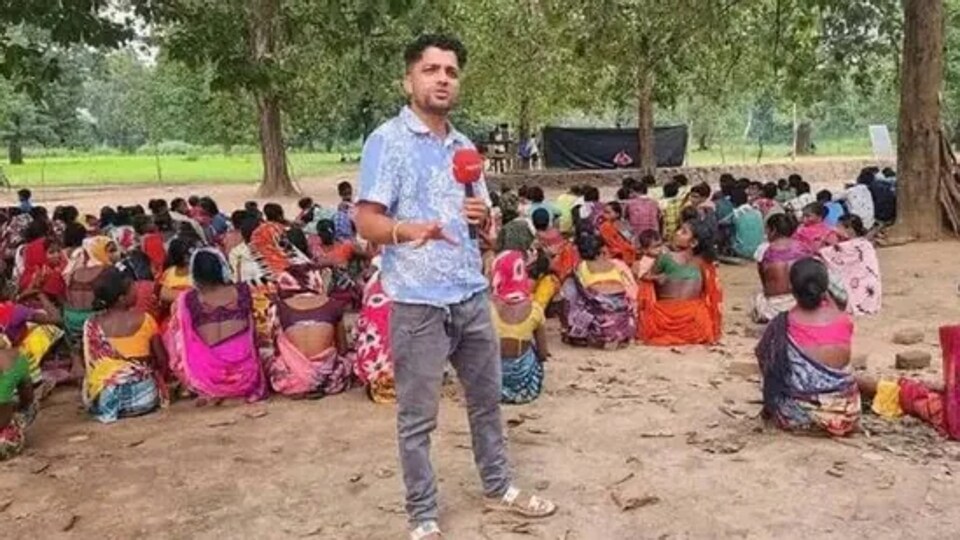
The body of Mukesh Chandrakar, who went missing on January 1, was discovered in a freshly sealed septic tank at Suresh Chandrakar’s premises in Chattan Para on January 3 with injuries on his head, back, stomach, and chest, inflicted by hard and blunt objects, police said.
Mukesh Chandrakar’s brother, Yukesh, reported his disappearance to police on January 2, nearly 24 hours after he was last seen.
Deputy chief minister Vijay Sharma said a news report highlighting alleged corruption in road construction work in Bijapur may have led to the murder. A probe was initiated following the report aired on December 25.
On Saturday, three other accused including Suresh Chandrakar’s brother, Ritesh Chandrakar, Mahendra Ramteke, and Dinesh Chandrakar, were arrested. The same day police formed a Special Investigation Team (SIT) under an additional superintendent for further investigation.
Police cited the probe into the murder and said Mukesh Chandrakar had a heated argument with Ritesh Chandrakar regarding alleged interference in Suresh Chandrakar’s work on January 1.
Sharma said Suresh Chandrakar was as a Congress leader and office bearer. Congress leader Sushil Anand Shukla rejected the claim saying Suresh Chandrakar had joined the ruling Bharatiya Janata Party.
Mukesh Chandrakar worked for NDTV and other news channels and ran a YouTube channel “Bastar Junction” with over 159,000 subscribers. He played a crucial role in securing the release of commando Rakeshwar Singh Manhas from Maoist captivity in April 2021.
Nareshchandra Deonag, a forest officer, was separately arrested in Chhattisgarh’s Dhamtari on Sunday for allegedly threatening Raipur journalist Sandip Shukla for reporting on alleged illegal collection of money at a check post in Borai village under the Udanti-Sitanadi Tiger Reserve. Shukla filed a complaint after allegedly receiving multiple threatening calls from Deonag.
In his complaint, Shukla said he visited the check post on January 1 to document the activities and a report was subsequently aired on his news channel the following day. On January 3, Shukla received abusive and threatening calls from an unidentified number. The caller was later identified himself as Deonag.
-kW0H-U20214218012MgB-250x250%40HT-Web.jpg)


