
 E-Paper



Mallya to Salem: Key SC orders likely today
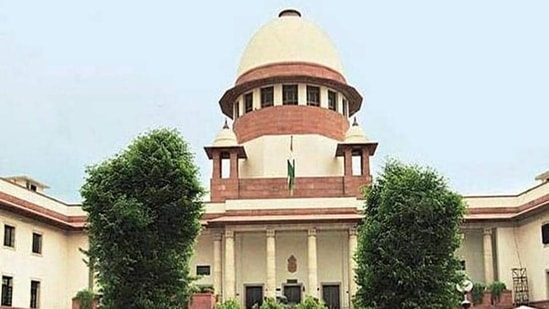
The Supreme Court, which will resume full operation after an almost 50-day summer vacation, will be in for a heavy day on Monday when it is likely to pronounce judgments in several high profile cases.


The Supreme Court, which will resume full operation after an almost 50-day summer vacation, will be in for a heavy action day on Monday when it is likely to pronounce judgments in several high profile cases.
This week, the apex court will also take up hearing in a host of important cases, including bail plea of P Varavara Rao, an accused in the Elgar Parishad case; fate of the newly formed Shiv Sena-BJP coalition government in Maharashtra; and the use of bulldozers by administrations in Uttar Pradesh districts to demolish properties of those allegedly involved in violence during protests over remarks made against Prophet Mohammed by suspended BJP spokesperson Nupur Sharma.
Among the key judgments likely to be pronounced on Monday are one on punishment against former liquor baron Vijay Mallya, who faces a contempt of court case; and another in a case involving gangster Abu Salem, who has sought enforcement of an undertaking given by India not to punish him beyond 25 years following his extradition from Portugal in 2002.
The court had reserved its order against Mallya on a petition filed by State Bank of India in March this year seeking recovery of unpaid loans to the tune of ₹9,000 crore. Mallya was asked to disclose all his financial and immovable assets to the court. However, contempt action was initiated after he failed to disclose receipt of a sum of $40 million from British spirit maker Diageo in February 2016. The fugitive businessman even transferred this amount into the bank accounts of his three children in clear violation of his assurance not to alienate his assets. In May 2017, the top court found him guilty of contempt but despite several dates fixed for him to appear, he failed to show up.
The case was heard at length by a bench of justices UU Lalit, S Ravindra Bhat and PS Narasimha. The apex court appointed senior advocate Jaideep Gupta as amicus curiae (friend of court), who suggested that the matter can proceed as Mallya had sufficient knowledge about this proceeding. His lawyers back in India told the Supreme Court that in January this year, he intimated them about the secret proceeding initiated by him. The court saw it as sufficient indication that Mallya was aware of the contempt proceedings initiated against him.
During the hearing, the Centre informed the apex court that efforts to extradite the fugitive economic offender had met a roadblock as a secret proceeding was initiated by Mallya in London, pending which the authorities in the UK were not willing to extradite him. The government, however, urged the bench to grant exemplary punishment to Mallya for his willful non-participation before the Supreme Court.
The case involving Abu Salem was reserved in May this year and it pertains to a solemn undertaking given by India in 2002 while extraditing the gangster from Portugal in connection with his role in the 1993 Mumbai serial blasts and murder of a businessman Pradeep Jain in 1995. The undertaking said that Salem will not be sentenced to a jail term beyond 25 years while the district courts in India slapped life sentence on him in the two offences.
The bench comprising justices Sanjay Kishan Kaul and MM Sundresh, while hearing the matter, had asked the Centre for its view. An affidavit filed by the Union home secretary in April informed the court that India was bound by its assurance given to Portugal but the question of his release will arise only in November 2030 when the 25-year period will elapse. This period was counted from November 11, 2005 when Salem was extradited from Portugal. However, Salem urged that his period of incarceration in Portugal jail prior to his extradition should also be counted into the 25-year sentence stipulation.
The court explored two options that were before it — to either read down the sentence of life imprisonment to a period of 25 years or direct the Centre to decide on his remission before completion of 25-year sentence. It will be interesting to see if the top court directs India to honour its undertaking going by the principle of comity of nations.
On Monday, the court is also expected to take up a plea for permanent medical bail by 83-year-old Telugu poet and activist P Varavara Rao, who is a prime accused in the Elgar Parishad case for his alleged role in the Bhima Koregaon violence in Pune on January 1, 2018. His prayer for regular bail on medical grounds was rejected by the Bombay high court on April 13 against which he approached the top court. The high court gave him three months to surrender, with the period expiring this month.
In another important case listed on Monday, the apex court will hear a petition filed by a bishop seeking a special investigation team to enquire into alleged hate crimes directed against members of Christian community in the country.
The political crisis in Maharashtra that brought down the Uddhav Thackeray-led government after 39 rebel Shiv Sena MLAs led by Eknath Shinde joined hands with the Bharatiya Janata Party (BJP) and formed the government is also expected to come up before the Supreme Court this week.
While the Shiv Sena has moved disqualification petitions against 16 rebel MLAs, including Shinde, and opposed the decision of governor Bhagat Singh Koshyari to call the rebel Sena faction and the BJP to form a coalition government headed by Shinde as chief minister and Devendra Fadnavis as his deputy, the Supreme Court on June 27 allowed rebel MLAs time till July 12 to reply to their disqualification pleas. The Thackeray camp then approached the top court to stall the floor test ordered by the governor citing pendency of disqualification proceedings. On June 29, the top court allowed the trust vote to proceed. The same day, Thackeray submitted his resignation and a day later Shinde took oath as the new CM.
These petitions were clubbed together and directed by the court to be put up for hearing on July 11 along with other pleas by the Thackeray faction.
On July 13, the top court is expected to take up a plea by the Muslim organisation, Jamiat-Ulama-i-Hind, against the demolitions carried out by the UP administration targeting properties of members of the minority community who the state government claimed were indulged in violence during protests over the derogatory remarks against the Prophet. The matter was adjourned during the vacation to enable the UP government to respond to additional facts presented by Jamiat. However, the state filed an affidavit claiming that the demolition action was taken as per law and had no connection with the violence that took place in Kanpur and Prayagraj districts of the state last month.


