
 E-Paper



Mamata approves 105 trains for 1 month for migrants; Piyush Goyal says state needs 105 daily
This controversy took place when migrants from Bengal stranded in other states started taking the long road back home. On Thursday, Tamil Nadu-based writer and social activist Nityanand Jayaraman posted on Twitter a short video of a batch of migrant workers from Bengal starting for their home state on bicycles, embarking on a nearly 1,700 km journey.


West Bengal chief minister Mamata Banerjee, who has been facing flak from the opposition for going slow on bringing back migrant workers, on Thursday announced that the state had arranged for 105 trains to bring these workers home over the next one month, following which railway minister Puyish Goyal said the state actually needed 105 trains every day.
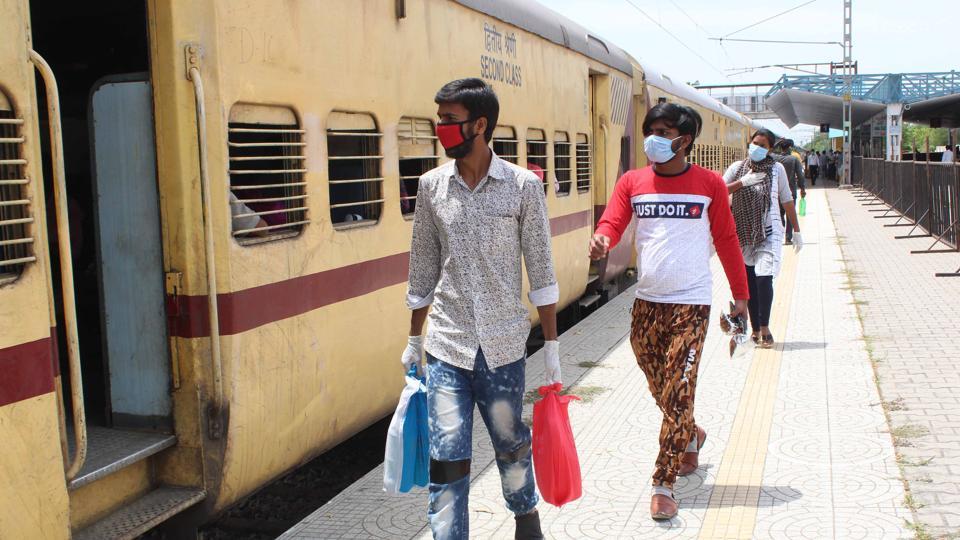
“I am pleased to announce that we have arranged 105 additional special trains,” CM Banerjee announced on Thursday and shared on social media details of the schedule.
In the evening, Goyal responded to Banerjee’s tweet and wrote, “I feel sad that while there is a need for 105 trains per day to bring back migrants to WB, the state is accepting only 105 trains over 30 days. I once again hope for the sake of Bengal’s brothers and sisters in different parts of the country, that WB will accept them back with open arms.”
In another reply to CM Banerjee’s tweet, the railway minister said, “Many migrants want to return to WB and if the state does not accept them then we may find more cases of migrants and even children walking for hundreds of km and resorting to other dangerous means. WB should speed up setting up of adequate arrangements to receive their own migrants.”
This controversy took place when migrants from Bengal stranded in other states started taking the long road back home. On Thursday, Tamil Nadu-based writer and social activist Nityanand Jayaraman posted on Twitter a short video of a batch of migrant workers from Bengal starting for their home on bicycles, embarking on a nearly 1,700 km journey.
“#MigrantsOnTheRoad Chennai-Kolkata Highway. This batch of 20 left Chennai this morning for Murshidabad, WB. 1700 km. No help from govts. Public public partnership only. Courtesy Lorry drivers, dhaba balas, people of India,” Jayaraman wrote on Twitter.
In Bengal, right to food activist Anuradha Talwar, who has been working with stranded migrant workers in different states over the past few weeks, said that migrants from Bengal were initially against taking the walking or cycling route for home and preferred to wait but are of late running out of patience.
“We are in touch with these workers stranded in other states and most of those from Bengal were in favour of waiting for train services to resume. Too few from Bengal actually took the road to walk or to cycle hundreds of km. But they are running out of patience due to lack of clarity over the state government’s initiatives and have recently started making their own arrangements,” said Talwar.
The number of workers from Bengal who migrate to other states is estimated at around 12 lakh. They mostly go to India’s southern states of Kerala, Tamil Nadu and Karnataka and the western states of Maharashtra and Gujarat. They mostly work in construction, zari work, restaurants, sugar mills, jewellery and garment sector.
Bengal has so far seen fewer numbers of people coming back from distant states on their own and they were mostly stray cases. People returned in groups were mostly from the neighbouring states of Jharkhand and Odisha. Among the migrant labourers who came back from several hundred kilometers away was a group of construction workers from Chhattisgarh who walked and hitchhiked to reach Bengal, a middle-aged man from Tamil Nadu and a septuagenarian from Bihar who cycled the distance.
“I exchanged my mobile phone with a security guard at the construction site where I worked. I took his bicycle and a few hundred rupees. Every day I peddled throughout the day and sometimes at night too. I took rest only when I could not take the pain anymore,” said Atiul Shah, a 23-year-old resident of South 24 Parganas district in Bengal, who came back from Salem in Tamil Nadu on April 29.
As of Thursday, 7 trains have brought back stranded migrant workers and pilgrims and several buses brought back students stranded in Kota, Rajasthan.
Chief minister Mamata Banerjee, however, blamed other states for the plight of the migrant workers. “No one stranded in our state is going mad to go back because we have kept them well and truly treated them as our guests. But those from here got stranded in other states did not receive this gesture. We appeal to those who are returning not to go back to those states that did not take care of them amidst this crisis. We’ll find some arrangements for them,” CM Banerjee said.
The CM also said that more than one lakh people have already returned to the state. This includes migrant labourers, tourists, patients and students. “Out of this the maximum - around 90,000 - came on buses, while some arranged their own vehicles to reach the state borders. Some came on foot,” said Banerjee.
Opposition parties, however, accused Banerjee of being apathetic towards the migrants. “The railway minister is right. He personally told me that the railways were ready to allot 100 trains for Bengal every day,” said Adhir Ranjan Chowdhury, Congress’ leader in the Lok Sabha.
Bharatiya Janata Party state unit president Dilip Ghosh said the same. “We have given the government a list of more than 4 lakh migrant workers stranded in different states,” Ghosh said.
Some workers who were fortunate to get trains for their journey back home too were unhappy with the arrangements by the railways. On Thursday, a section of the passengers coming from Bengaluru on a New Jalpaiguri-bound Shramik Special train alleged that they faced acute shortage of drinking water, food and no social distancing on the train. More than 50 passengers got down at Durgapur where the train stopped briefly to change engines and staged a protest.
Later, the railway authorities had to coordinate with the state government to arrange buses for the passengers. The train was sanitized and drinking water was supplied.


