
 E-Paper



Man-made waterbody can’t enjoy protection of wetlands, says SC
The Supreme Court ruled that man-made lakes like Futala in Nagpur aren't protected as wetlands but must be upheld under public trust principles for ecological balance.

 Prefer HTon Google


The Supreme Court on Tuesday held that an artificial lake or man-made waterbody cannot enjoy the statutory protection of wetlands but every government is bound to protect it under the salutary principle of doctrine of public trust in the larger interest of promoting ecology and environment.
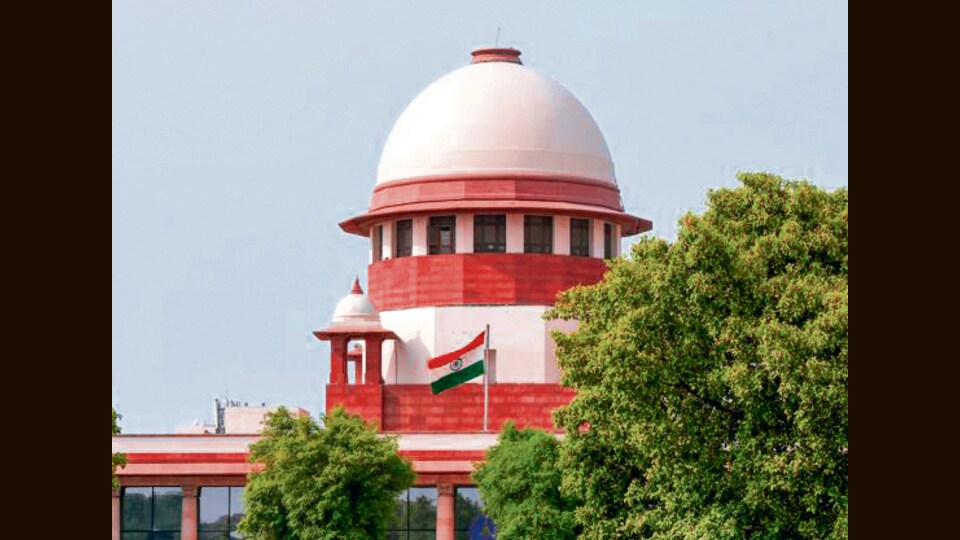
The court passed the order while deciding that the Futala lake in Nagpur is a man-made waterbody and permitted constructions in and around the lake that provided for a plaza, floating restaurant, musical fountain, viewers gallery among other facilities.
A bench of justices K Vinod Chandran and NV Anjaria concluded that the the Futala Tank, also known as Telangkhedi Tank, was constructed in the year 1799 with a catchment area of about 200 hectares by the then ruler of Nagpur to cater to irrigation needs. The court concluded, “Undoubtedly, the lake is a man-made lake for the city of Nagpur.”
At the same time, the bench held the government accountable for its upkeep as it added, “The public trust doctrine (by which natural resources are held by the state in public trust) need not be limited to the natural bodies such as water bodies, wetlands, lakes, rivers which are nature’s gifts, but holds true also with respect to the man-made or artificially created water bodies as well as the things and the objects from nature in order to promote ecology and environment.”
The judgment went on to state, “All those man-made or artificial bodies created from natural resources which contribute to the environment and are eco-friendly in their existence, have to be subject to the doctrine of public trust.”
By its order, the court struck a perfect balance by preserving the man-made lake while at the same time promoting sustainable development. Justice Anjaria, writing the judgment for the bench, said, “It would in ultimate analysis pave way to extend to ensure the availment of right of healthy environment and ecological balance recognized for the citizens under Article 21 of the Constitution. At the same time promoting sustainable development for public good is not alien to it.”
The decision came on an appeal filed by a non-profit organisation Swacch Association Nagpur that had challenged the construction around the lake to be in violation of the Wetlands (Conservation and Management) Rules 2017. The Association’s claim was rejected by the Bombay high court’s Nagpur bench on July 5, 2023 against which they approached the top court.
The court upheld the decision of the HC by declaring that the Futala Lake is a man-made waterbody and is not a ‘wetland’ as defined in Rule 2(1)(g) of the 2017 Rules as this definition excludes human made water bodies and those constructed for irrigation purposes.
But realising the role that these artificial lakes serve in an urban, cosmopolitan setting, the court went on to observe, “It is only proper that this pristine waterbody in the city of Nagpur continues to exist with twin objectives, namely to bring public good for the citizens of the city of Nagpur and also contribute to maintain environment friendliness without causing any ecological damage, both to the waterbody itself as well as to the quality of aqua life.”
While the bench agreed that the statutory protection for wetlands may not be applicable to these man-made lakes, it said, “there is a recognition of precautionary principle and doctrine of public trust, which is a judicial foresight and a salutary approach.”
Wetland Conservation
The issue of wetland conservation is being actively pursued by the top court since 2018 in a bunch of public interest litigations where orders have been issued by the court from time to time asking the states and union territories to carry out the exercise of ground truthing and demarcation of boundaries of these water bodies.
Incidentally, the matter was taken up on Tuesday by a bench of which justice Anjaria was a member. The bench headed by justice Aravind Kumar was informed that pursuant to an order issued in August giving two months time for states/UTs to complete ground truthing exercise, still some states/UTs are in the process of completing the same.
An affidavit filed by Centre on Monday revealed that out of the 231,195 wetlands inventoried in the SAC Atlas 2021, ground-truthing of 189, 270 wetlands has been completed, and boundaries of 112, 460 wetlands have been demarcated.
The court granted time till October 19 for the exercise to be completed for the remaining wetlands and posted the matter for further consideration on October 28.


