
 E-Paper



Covid-19: Masks must in Delhi, 23 ‘zones’ sealed fully
Coronavirus in Delhi: These include buildings (such as the Tablighi Jamaat Markaz in Nizamuddin), neighbourhoods (such as Mandi House, two blocks in Nizamuddin and one in Malviya Nagar), apartment complexes (three in east Delhi, one in Dwarka), and congested alleys in other parts of the city.

 Prefer HTon Google


Authorities in Delhi announced on Wednesday a hard lockdown of 23 neighbourhoods with large number of Covid-19 cases and ordered all citizens to wear masks while stepping out of their homes, tightening curbs to combat the outbreak even as 93 new cases took the total number of infections in the national capital to 669.
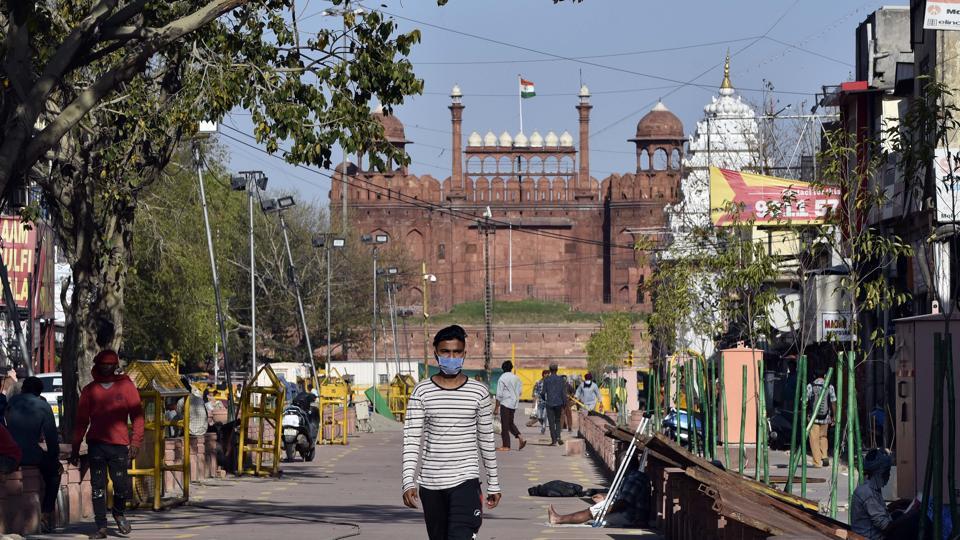
In these zones, people will need to mandatorily keep indoors and all businesses – including grocery stores and banks that have been exempted from curbs as essential services – will be shut. Critical services such as food and medicine will be home-delivered by government personnel.
“There are 20 areas that have become hot spots and are being turned into containment zones. These areas will be completely sealed while the administration will ensure door-to-door delivery of essential items. No one else will be allowed to enter or exit the area,” Delhi’s deputy chief minister Manish Sisodia told reporters following an urgent meeting called by chief minister Arvind Kejriwal with his top officials.
These include buildings (such as the Tablighi Jamaat Markaz in Nizamuddin), neighbourhoods (such as Mandi House, two blocks in Nizamuddin and one in Malviya Nagar), apartment complexes (three in east Delhi, one in Dwarka), and congested alleys in other parts of the city. The curbs will stay in place “till the potential threat of Covid-19 is not ruled out” in the areas, officials said.
Shortly afterwards, three more zones were added to the list after cluster cases were discovered.
The chief secretary of Delhi, who also attended the meeting, separately issued an order mandating wearing of masks by anyone who steps out of their home. The order specified that the rule will also apply while people are in any indoor area outside of their home – such as bank, hospital, or even their offices – or in any type of vehicle.
“Wearing of facial masks can reduce the spread of coronavirus substantially. Therefore, it has been decided that facial masks will be compulsory for anyone stepping out of their house. Cloth mask shall be eligible too,” CM Kejriwal said.
The tightening of measures comes at a time when officials are debating whether, and how, the unprecedented nationwide lockdown should be relaxed after April 14, the date when the three-week curbs are scheduled to end.
A hard lockdown has been identified as the key containment strategy at this stage, when India is seeing a steady stream of cases that can still be interrupted by stringent tactics that force people into social distancing.
The size of the containment zones announced on Wednesday, as suggested by the Union health ministry’s guidelines, is directly proportional to the population density of the cluster in question and the scale of the outbreak.
At nine, east Delhi has the highest number of containment zones. The Mandi House emerged as the first containment zone in Lutyens’ Delhi after three people in Bengali Market tested positive.
The order for containment plan of Bengali Market also included action against a bakery shop for keeping workers in “highly unhygienic conditions” with notes on social distancing not being followed.
The district administration led by New Delhi DM Tanvi Garg screened 325 houses, two markets and about 2,000 people in the area.
Another area that has been a containment zone but did not find a mention in the first list is the South Moti Bagh. slum. In another order by Garg later on Wednesday, she issued a fresh containment plan for the entire Shastri Market and the JJ cluster in South Moti Bagh, and its adjoining area.
The CM also directed all government departments to stop any expense other than the salary of employees. “Any expense other than those related to relief work pertaining to the coronavirus lockdown will need special permission of the finance department. The government needs to cut down expenses,” said Kejriwal.


