E-Paper



MEA says 3 Bangladeshi smugglers died after attacking Indians
The two sides have traded charges on a number of issues, including what Bangladesh describes as “border killings”.

 Prefer HTon Google


India on Friday said three Bangladeshi smugglers who crossed the border and attempted to steal cattle died during an altercation, rejecting Dhaka’s assertion that the men were lynched by a mob in the northeastern state of Tripura.
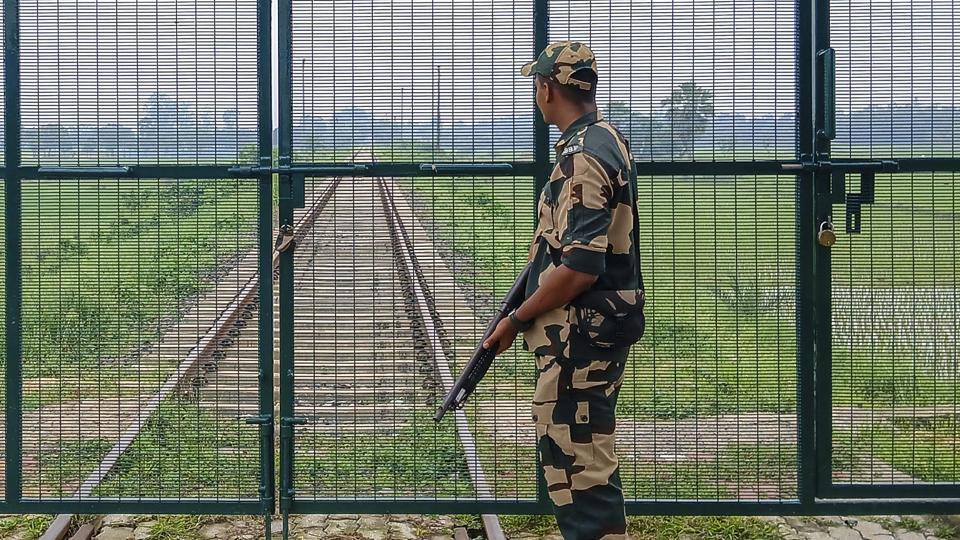
The development came against the backdrop of strained relations between the two countries since the interim government led by Nobel laureate Mohammad Yunus assumed power in August 2024. The two sides have traded charges on a number of issues, including what Bangladesh describes as “border killings”.
External affairs ministry spokesperson Randhir Jaiswal responded to media queries about the incident in Tripura involving Bangladesh nationals by saying that the death of three Bangladeshi smugglers occurred about three kilometres inside Indian territory on October 15.
“A group of three miscreants from Bangladesh crossed the international border and attempted to steal cattle from Bidyabil village in Indian territory. They attacked and injured local villagers with iron dahs and knives, and killed one villager, even as other villagers arrived and resisted the attackers,” Jaiswal said.
When authorities arrived at the spot, two of the smugglers were “found dead”, while the third succumbed to his injuries in hospital the next day. “The mortal remains of all three have been handed over to the Bangladesh side. Police have also registered a case,” he said.
This incident underscored the need for Bangladesh to “undertake necessary measures to uphold the sanctity of the international boundary and support the construction of fencing where needed to prevent cross-border crimes and smuggling”, Jaiswal said.
India has already fenced a little more than 3,000 km of the 4,096-km land boundary with Bangladesh. The Indian side has for long argued that Bangladesh’s opposition to the fencing of the remaining stretch has allowed criminal elements to sneak across the border.
Earlier, the Bangladesh foreign ministry had registered a strong protest and condemned what it said was the “brutal beating and killing of three Bangladeshi citizens by a mob in Tripura”. The ministry said in a statement that the “heinous act is an unacceptable and grave violation of human rights and the rule of law”.
The Bangladesh government called on India to conduct an immediate, impartial and transparent investigation into the incident and to bring those responsible to justice.
During a recent interaction with Bangladeshi journalists, foreign secretary Vikram Misri had responded to Bangladesh’s complaints about the killing of its nationals by India’s border forces by pointing out that these “incidents take place in Indian territory” only after smugglers, criminals, human traffickers, cattle traffickers and arms traffickers illegally cross the border.
“The first place to deal with these is to deal with them upstream, in a sense to prevent illegal border crossings. If there are no illegal border crossings, there will be no border killings,” Misri said.