E-Paper



Migration a looming issue in Odisha CM’s battlegrounds
Though BJD has launched a spirited campaign for the CM in Kantabanji, not many are sure if Patnaik can solve the problem

 Prefer HTon Google


Trilochan Behera, a 34-year-old smalltime trader in Hinjili’s S Chikili village and Kumar Bachha, a 37-year-old marginal farmer in Bhalukana village of Kantabanji, may live 300 km away from each other, but on May 20, the two will determine the fate of chief minister Naveen Patnaik, who is seeking re-election for the sixth term.
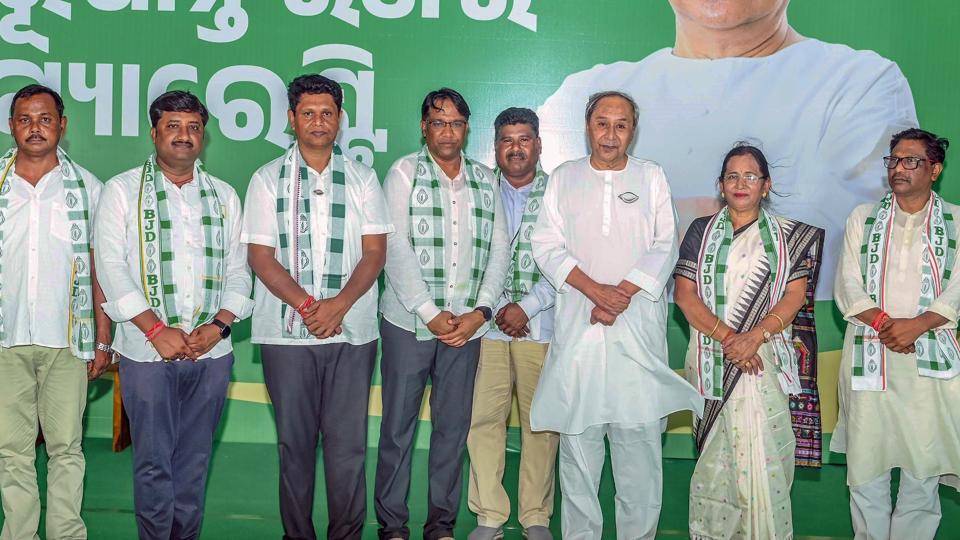
Like 2019, when Patnaik decided to contest from two seats, Bijepur in Bargarh district and his traditional seat of Hinjili in Ganjam district, the five-time CM is contesting from two seats this time too. Apart from his pocketborough Hinjili, Patnaik is contesting from Kantabanji assembly seat in Bolangir district in an effort to stem the tide of BJP in western Odisha.
But there is something else that unites Behera and Bachha — their annual migration to Gujarat and Telangana for livelihood. Behera, a matric pass, goes to Surat every year like many other men from Hinjili, a semi-urban constituency known for its vegetable farmlands, to work in the city’s famed textile looms, while Bachha’s post-monsoon routine is to board a train to Telangana to work in one of the brick kilns there for at least 6 months.
“The moment the young in Ganjam finish their education or drop out of school, they have to migrate out for livelihood. Surat is the destination for most of us,” said Behera. Baccha agrees: “Unless we go out to work in brick kilns of Telangana or Andhra Pradesh, we will die of starvation. There is no work here for us.”
If Hinjili is the migration gateway of south Odisha to the textile looms of Surat and sometimes Mumbai, Kantabanji in Bolangir is the stairway from western Odisha to the brick kilns of Telangana, Andhra Pradesh and construction sites of Tamil Nadu. Every year, thousands of young men from Ganjam, particularly Hinjili, pack their meagre belongings and board trains to Surat , while a similar number of young people from the western Odisha districts of Kalahandi, Nuapara, Bolangir, Sambalpur and Bargarh converge at Kantabanji railway station every autumn before pouring into the unreserved compartments heading for Hyderabad and Vishakhapatnam hoping to payoff the usurious loans that they have taken. The cycle of debt unfortunately does not end for most of them and the migration continues. There are no government statistics to show how many labourers migrate out of Odisha to work in other states every year; but in 2020, a little more than a million migrants registered at the Covid centres set up by the state government. Of the 1 million, Ganjam and Bolangir district alone accounted for around 35%.
Though Odia Asmita(Odia pride) is a dominant theme in this year’s election , migration has found electoral resonance. On Saturday, speaking at a public meeting in Kandhamal district, PM Modi wondered why so many young people from Odisha keep migrating to Gujarat when it had so much of resources and huge coastline.
Hinjili assembly constituency which Naveen Patnaik has been representing since 2000 is predominantly a rural settlement with most villagers taking up vegetable farming. Being the constituency of CM, it has seen development, with wide tarred roads, drinking water facilities, a state-of-the-art indoor stadium, several schools and colleges, and an eye hospital. The developments have seen his winning margin widen every election.
But Behera is not impressed , even though he started voting for Patnaik in 2009 and then again rooted for him in 2014. In 2019, disillusioned by the lack of jobs, he voted for the BJP .
Like him. Sarojkanta Sahu, went to Surat five years ago to work in a textile mill there. After working there for couple of years, the 10th pass youth found a job in a factory in Karnataka. “In Hinjili, you will find people from almost all the 21 grampanchayats going out for work. Most go to Gujarat while others go to Chennai, Bengaluru and Mumbai. If we could somehow earn ₹10-15000 a month here, why would we migrate,” said Sahu.
Tutu Bisoyi in Thirida grampanchayat, worked in a chit fund company in Ganjam that folded up leaving him and others without an option but to leave for Surat. Bisoyi said there isn’t much NREGA (the government’s rural job guarantee scheme that promises at least 100 days of work, at minimum wage, to at least one person in every poor family) work , with the scheme anyway becoming a happy hunting ground for middlemen. “NREGA is a scam in Hinjili. The money for the daily wagers are pocketed by middlemen. The CM could not even set up a safety pin factory in last 24 years,” said Bisoyi.
Women, who have been vocal supporters of Patnaik, concede that migration is going to be a major issue this election. “Though the SHG (self help group) programme has helped us earn , what is the point if our husbands and sons have to go out in search of livelihood,” asked Santoshi Behera.
BJP candidate from Hinjli Sisir Mishra, said that apart from good roads and some infrastructure development, Hinjili does not look like a VVIP constituency. “In the last five years, Naveen babu has come to Hinjili for just about 10 days. He has outsourced the governance of Hinjili to few officers. However, his biggest faikure would be his inability to solve the mass migration of Odia people from Hinjili as well as Ganjam district to Gujarat and other states.”
Meanwhile, among those who stay behind, farmers producing different types of vegetables are unhappy over lack of cold storage. Ami Patra of Govindpur village grows yam. This year he produced 600 kg , but had to sell his produce for less than ₹20 a kg as there is no cold storage in Hinjili. “Even 4-5 cold storages would help us store the yam for weeks and sell it for ₹50-60 a kg.”
BJD leader Pyarimohan Padhi concedes that migration from Hinjili as well as other areas of Ganjam district is a problem, but argues that the Naveen Patnaik government has ushered in development that nobody would have imagined. “Hinjili was a small rural settlement some 20 years ago. Once Naveen babu started representing it, most villages have got electricity connections, drinking water and sanitation facilities.”
In Kantabanji constituency which Patnaik has chosen as his new battlefield in 2024 polls, Barju Baccha of Bhalukana village under Halanbhata grampanchayat has been going to work in the brick kilns of Karimnagar in Telangana since the age of 15. Diagnosed as a diabetic since a year ago, Baccha came back for treatment. But the stress of three unmarried daughters at home has been rankling him.
“I have no other way than to go to work in a brick kiln sooner or later. I have six daughters of whom I have managed to marry off three. There is no work here.”
Baccha took loans for the marriage of his one of his daughters at a huge monthly interest. Desperate to settle his loan, he signed up with a contractor Bansi Sardar who supplied workers to brick kilns in Telangana and Andhra Pradesh. He was paid ₹2.4 lakh. The work was strenuous as working hours stretched for 14-16 hours sometimes into the dead of night. He managed to repay the loan, but had to migrate out again to marry off the second daughter. “There is no escape route, but migrate out,” he said.
Ghanashyam Majhi, a 32-year-old Gond tribal in the same village, first migrated to a brick kiln in Karimnagar 10 years ago. He got married three years ago and now has a 2-year-old daughter.
Though he hoped to find NREGA work in the area, Majhi and his wife Droupadi had to finally migrate to a brick kilns in Telangana in November last year with their daughter in tow.
“There is just no place to sleep at the brick kilns. Many of us fall sick after working for a few months,” said Majhi, who migrated after trying unsuccessfully to get NREGA work around his village.
Migration expert Jyoti Prakash Brahma who works for a NGO said that though the government is pushing NREGA work to stop distress migration, this often doesn’t work out. “Work is not available when people want it and wages don’t come on time. The government is still stuck in the 80s and unable to think out of the box on how to address the migration issue.”
Though BJD has launched a spirited campaign for the chief minister in Kantabanji, in the villages across Kantabanji, not many are sure if Patnaik can solve the problem. They also have a bigger fear -- abadonment. In 2019, Patnaik cavacted the Bijepur seat after winning it.
Babulal Tandi, a 32-year-old in Halanbhata village, said he has been voting for BJD for a decade and “would vote for Naveen Patnaik again, if he promises to set up some factory in Kantabanji or get us work throughout the year. The migration is taking a toll on my health.”
BJP candidate Laxman Bag said people don’t have confidence in Patnaik being able to change things. “As long as the structural reasons of persistence of migration, improving financial access of farmers and skillful implementation of NREGA in line with aspirations of people are not addressed, I don’t think the CM becoming MLA of Kantabanji can effect a miracle. Why would any industrial house set up a factory in Kantabanji?”.