
 E-Paper



PM Modi sets target of providing 1 million government jobs in 18 months
There were 872,243 regular civilian vacancies in various central ministries and departments on March 1, 2020, Jitendra Singh, junior minister for personnel, told the Rajya Sabha on February 3.


All ministries and departments must take measures in a “mission mode” to provide employment to 1 million people in the next 18 months, Prime Minister Narendra Modi ordered on Tuesday after reviewing the status of human resources in government establishments, in an announcement that is clearly aimed at boosting employment at a time when high inflation is threatening a fledgling economic recovery.
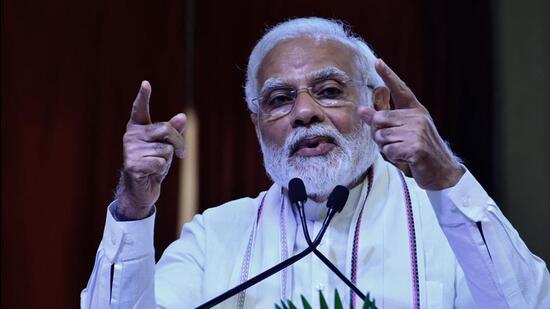
“PM @narendramodi reviewed the status of human resources in all departments and ministries and instructed that recruitment of 10 lakh (1 million) people be done by the government in mission mode in next 1.5 years,” the Prime Minister’s office said in a tweet.
“Giving opportunities to the young in public administration is welcome,” Union finance minister Nirmala Sitharaman tweeted immediately after the announcement.
The recruitment drive will provide jobs to people at a time when global economies, including India’s, are facing headwinds due to high inflation triggered by soaring crude oil prices and squeezed supply chains due to the war in Ukraine.
According to the 2020-21 periodic labour force survey (PLFS), the unemployment rate in India was 4.2%. This number has come down in every PLFS round from 6.1% in 2017-18, 5.8% in 2018-19 and 4.8% in 2019-20. Private analysts Centre for Monitoring of Indian Economy put the latest unemployment rate estimates at 7.12% as on May, 2022.
“The drive will not entail any massive outgo from the budget because about nine lakh (900,000) sanctioned jobs are still vacant,” an official working in an economic ministry said, requesting anonymity. “Besides, it is an expenditure to create value for the economy and drive growth.”
The finance minister did not immediately respond to an emailed query on the financial implications of the recruitment drive.
There were 872,243 regular civilian vacancies in various central ministries and departments on March 1, 2020, Jitendra Singh, junior minister for personnel, told the Rajya Sabha on February 3.
“The vacancies may have gone up further because the recruitment drive was not that aggressive during the Covid-19 pandemic,” a second official aware of the development said on condition of anonymity.
According to the second official, the government’s total expenditure on pay and allowances was around ₹2.90 lakh crore in 2021-22 on about 3.2 million employees.
Latest available data on government’s pay and allowances compiled by the finance ministry reported ₹2,25,744.70 crore expenditure on this head (excluding productivity-linked bonus, earned leave encashments, honorarium and leave travel allowance) in 2019-20 as compared to ₹2,08,960.17 crore in 2018-19.
Out of total pay expenditure in 2019-20, 81.52% was incurred by four departments– railways (35.06% share), defense (28.17%), home (12.69%) and posts (5.6%). Total number of regular central government civilian employees in position on March 31, 2020 (including union territories) was 3.191 million as against sanctioned strength of 4.078 million, according to the data.
The 1 million recruitment target may also include vacancies in defence services, the two officials said.
“The number may cross the 1 million mark in 18 months with the defence ministry’s initiative of Agniveer, which has been announced by the defence minister,” the second official said. The government aims to recruit 46,000 troopers on tour-of-duty assignments of four years, in the current financial year that ends on March 31, 2023.
The Prime Minister’s directive is a positive development that will help in reducing unemployment and aid in India’s economic recovery after the pandemic, experts said. Vacancies at all government establishments, including the public sector, would be three times the 1 million figure, they added.
There are over 870,000 vacancies in central government ministries alone, and some estimates suggest that if you add central ministries, institutions and state governments, these estimates would rise to over three million, said Radhicka Kapoor, senior visiting fellow at the Indian Council for Research on International Economic Relations, a think tank.
“So there is scope to create plenty of jobs. Filling these vacancies is important also because it impacts the functioning of the government,” Kapoor added. “Effective delivery of public services cannot happen unless we fill these vacancies. Leaving these positions vacant to save costs will not be very prudent.”
“In any case, by international standards, India has one of the lower number of public employees per 1,000 population,” she said.
Kapoor appreciated the Prime Minister’s attention to this issue.
“There is a huge clamour for government jobs in India as these provide people with security and stability,” she pointed out. “The huge appetite for government jobs is reflected in the fact that each time there are vacancies in railways, these are oversubscribed. This exercise will definitely help in creating good jobs and go some way in addressing India’s unemployment problem.”


