E-Paper



MP’s Mahua ‘heritage’ liquor: Brewed, bottled, but struggles to sell
Madhya Pradesh in 2021 had announced that liquor locally made from mahua flower would be sold as “heritage liquor

 Prefer HTon Google


Bhopal: Once touted as a probable “game-changer” for Madhya Pradesh’s tribal economy, the Mahua liquor, which is distilled from the Mahua flower, is now a bitter brew for the tribals.
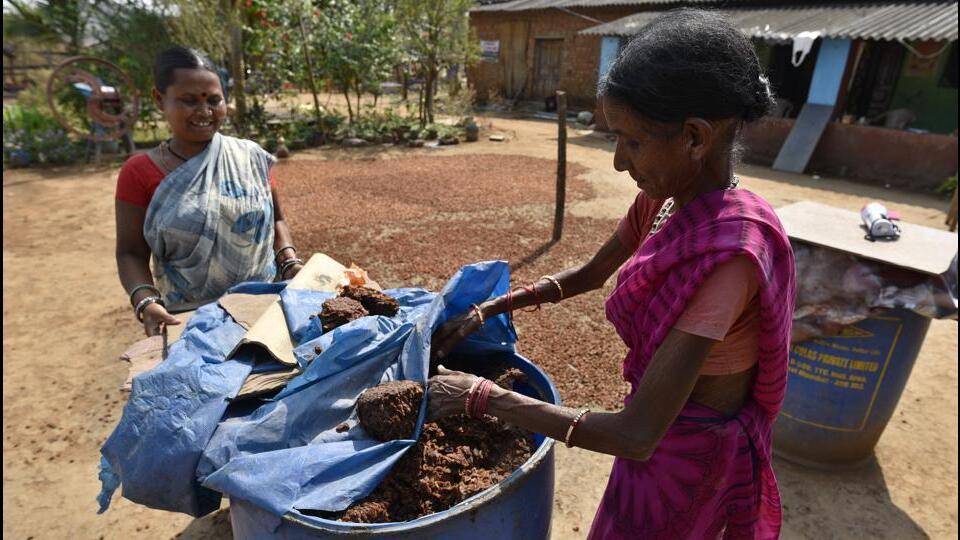
Former Madhya Pradesh Shivraj Singh Chouhan had announced in late 2021 that under a new excise policy of the state government, alcohol made from the flower would be sold as “heritage liquor,” in liquor shops; the sale of the liquor had been banned by the British.
“It will be sold in liquor shops with the name of ‘heritage liquor,’ which would be a source of employment and income for the tribal people who have been making and consuming it,” Chouhan had said.
Mahua flowers are expected to bloom in the next two months, but with distilleries shut, shelves full of unsold inventory, and self-help groups disbanding, the government’s promise of “new employment” seems to have fizzled out. So, why did the Mahua dream —brewed, bottled, but ultimately left to gather dust?
“There is an issue with marketing and promotion of heritage liquor. The state government can only do soft promotion. However, we are trying to involve private partners for marketing and open the possibility of exports. Some policy interventions are required, and we are working on them,” said excise commissioner Abhijeet Agrawal.
The state government had established model women self-help groups in Alirajpur, Amarpur, and Dindori, providing them with training and financial aid. Two distilleries, one in Alirajpur and another in Dindori, were set up for brewing the liquor, with each plant costing ₹54 lakh.
A 22-day training programme on traditional and scientific techniques for Mahua spirit production was conducted at the Vasantdada Sugar Institute in Pune for 13 locals. The self-help groups began procuring Mahua flowers from tribal people at ₹40 per kg, ₹5 more than the minimum support price announced by the government.
However, within two years, production at the plants stopped, and unsold inventory piled up due to the government’s failure to market the liquor, locals claimed.
“Initially, it was sold at hotels like Taj and Marriott and at resorts in tiger reserves, but it lost its appeal due to a lack of promotion,” said 24-year-old Ankita Bhabhar, a resident of Katthiwara in Alirajpur and who was a manager at one of the distilleries.
In April 2023, the Bharatiya Janata Party (BJP) government in the state introduced ‘Heritage Liquor Rules’ in the gazette, designating self-help groups in tribal areas as manufacturers to boost the local economy and generate employment. By August 2023, the liquor, branded as Mond (Alirajpur) and Moholu (Dindori), was introduced at bars in MP Tourism hotels and airport shops.
Despite these efforts, sales remained dismal. In July 2024, the MP excise department held a meeting to promote Mahua liquor in other states, but the initiative failed to sustain the business.
“In the past year and a half, we have sold less than half of our inventory. Poor sales have left us without money, and many people have left the self-help groups for other jobs or migrated to Gujarat,” Bhabhar added.
The distillery at Dindori faced similar challenges. “We sold liquor worth ₹13 lakh, but all the money went toward salaries, branding, and labelling,” said Rajkumar Dhurve, a technician at the plant.
Tribal leader Vikram Achhaliya said the government of making no real effort to promote Mahua liquor. “Apart from a few media articles, there has been no promotion. It should be sold in liquor shops and promoted nationally and internationally. Branding it as heritage liquor is not enough,” he said.
Some locals initially benefited from the project but were left disappointed when the distilleries shut down.
“For the first time, we received payment on time and sold our produce at a higher rate. But now the distillery is closed,” said Kallu Bhilala, a resident of Lakhawat in Alirajpur district, who had sold Mahua worth ₹50,000 in April 2023, compared to ₹26,000 in 2022.
According to a 2019 study by the International Institute for Environment and Development, Mahua flower collection in Madhya Pradesh, amounting to 5,500-6,000 metric tonnes annually, provides employment to over 28,000 families. However, the study highlighted that the potential for employment could be much higher with effective collection and management practices.