
 E-Paper



Navy, Coast Guard test India’s coastal readiness
More than 100 warships, patrol boats of the Indian Navy and Coast Guard, as well as UAVs, were out combing the western and eastern seaboards in search of “the enemy” — small boats carrying terrorists — on Tuesday, as part of “Operation Sea Vigil”.

 Prefer HTon Google


More than 100 large and smaller warships, patrol boats of the Indian Navy and Coast Guard as well as unmanned aerial vehicles (UAV) were out combing the western and eastern seaboards in search of “the enemy” — small boats carrying terrorists — on Tuesday. The action was part of a two-day coastal defence exercise called “Operation Sea Vigil” that was being carried out to test India’s preparedness against any attack through the sea route, like the one carried out by Lashkar-e-Taiba terrorists in Mumbai in 2008.
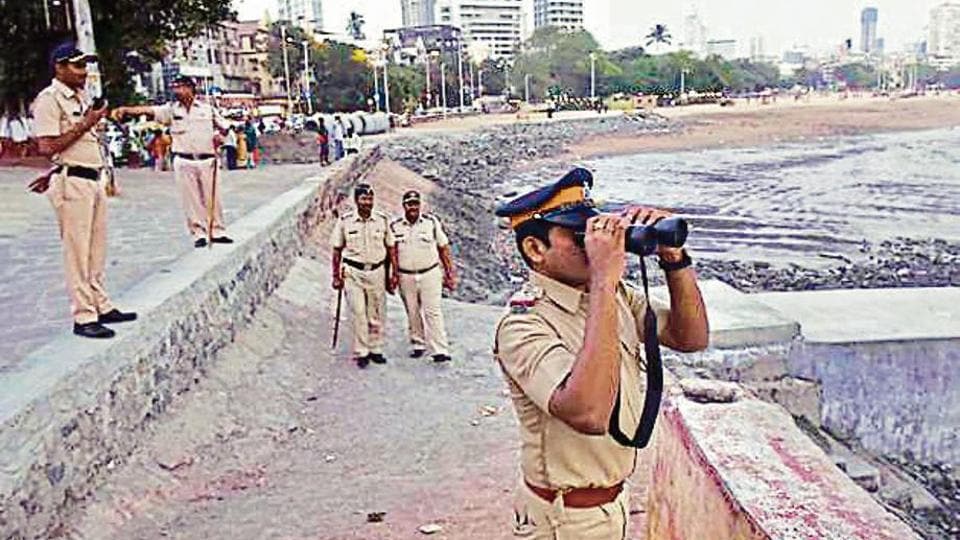
“The exercise will test how quickly the network detects a threat and importantly how it responds,” Rear Admiral Rajesh Pindarkar, chief of staff (operations) of the Western Naval Command, said. “Tango-1 to Tiger-1 we are boarding,” a voice over the radio cracked at the Joint Operation Centre (JoC) in Mumbai.
A few nautical miles away from the Mumbai harbour, a fast interceptor craft (FIC) of the Indian Navy could be seen alongside a “suspicious” fishing vessel. The FIC was relaying back information even as commandos prepared to board the dhow. The JoCs — manned 24/7 by the navy, Coast Guard, intelligence agencies, state fisheries, Customs, among others — is India’s response to 2008 Mumbai attacks, say defence officials. Each JoC gets constant feed from the coastal radar stations, the automatic identification systems (AIS) on boats that display other vessels in the vicinity, and the long-range identification and tracking information system, among others.
“I have sleepless nights,” said Capt Ajay Yadav, Coastal Security Officer of the Western Command peering at a huge blob of blue and green on his computer screen — the real-time picture of all ships in and around Mumbai — at the JoC in Mumbai.
“At times there are multiple alerts,” Rear Admiral Pindarkar said. Last year, schoolchildren reported weapon carrying men near the coast. “For the next three days, every resource at our disposal was thrown in. Thankfully it didn’t turn out to be true,” Pindarkar added. The chinks in the system will be known once the exercise is over.
Preventing terrorists to get to the mainland is only a part of the problem. Underwater threats to the major harbours where warships, submarines are docked have increased manifold. India has recently commissioned Integrated Underwater Harbour Defence and Surveillance System (IUHDSS). It comprises a network of sonar, electro-optical sensors and radars, and gives complete picture especially sub-surface threats.
“Earlier one looked out bubbles on the water, inside the harbour to ensure that a diver hasn’t slipped in. Underwater breathing equipment has improved and so has threat posed by divers. This system gives complete transparency. It will be difficult for an enemy diver now to enter the harbour undetected,” Pindarkar said. The new system is operational in Mumbai, Kochi, Karwar and Visakhapatnam.


