E-Paper



NCERT introduces modules on Operation Sindoor for school students
The Pahalgam terror attack on April 22 that killed 26 people was carried out on “direct orders” by “Pakistan’s military and political leadership, the module said

 Prefer HTon Google


NEW DELHI: The National Council for Education Research and Training (NCERT) has introduced two special modules on Operation Sindoor, describing the military operation that struck at terror infrastructure in Pakistan and Pakistan-occupied Kashmir, “a triumph of bravery, strategy, and innovation”.
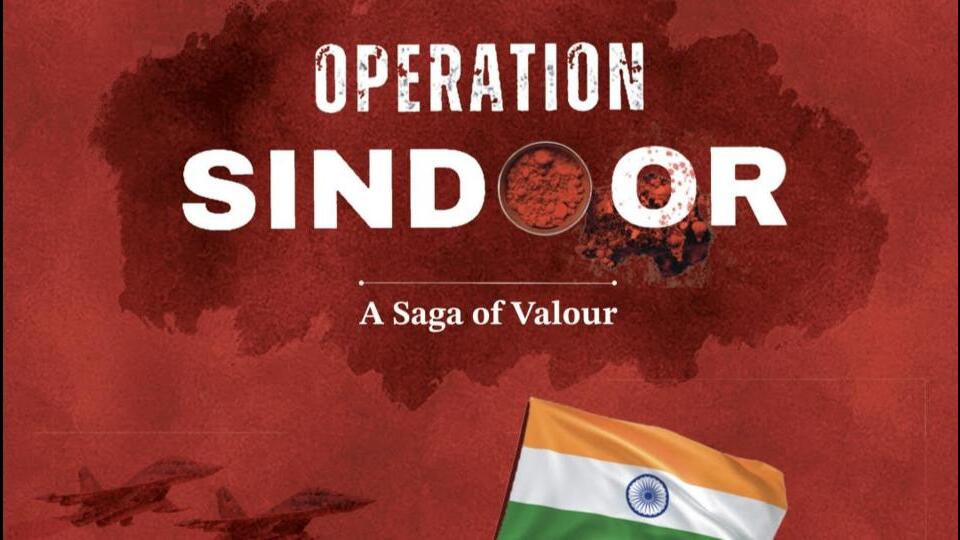
The Pahalgam terror attack on April 22 that killed 26 people was carried out on “direct orders” by “Pakistan’s military and political leadership”, the modules said, giving details of how the operation was planned. They also featured maps of target sites and photographs of destroyed Pakistani drones, and made references to India’s air defence systems, including the S-400, which intercepted and neutralised enemy aircraft and drones.
The module titled “Operation Sindoor — A Saga of Valour” is meant for preparatory and middle stages (Classes 3 to 8), while “Operation Sindoor—A Mission of Honour and Bravery” is for students at the secondary stage (Classes 9 to 12).
NCERT modules are supplementary resources in English and Hindi that cover contemporary and culturally significant topics. They are separate short publications on specific topics that are not part of the textbooks but taught through projects, posters, discussions, and debates.
India launched Operation Sindoor on May 7, targeting terrorist infrastructure in Pakistan with missiles and long-range weapons in retaliation for the Pahalgam terror attack. This triggered four days of hostilities that ended after the two sides reached an understanding on ending military actions on May 10.
The module for the secondary stage said the country reacted in “a very united way” after the terror attack in Pahalgam. “Candlelight marches were held from across the country. Muslim communities in Hyderabad, Lucknow, and Bhopal wore black armbands and openly denounced the attack. In Kashmir, shopkeepers closed their shops in protest. Villages near the border demanded strong action and supported the Armed Forces,” it said.
It added that the local population in Kashmir “stood up and spoke against terrorists. Their response breaks stereotypes and shows the real voice of peace-loving people.”
The modules also cite India’s strong military responses — from the wars of 1947, 1965, 1971, and 1999 to the 2019 Balakot strikes and Operation Sindoor after the Pahalgam attack — describing the latest Operation Sindoor as a decisive move against terrorism backed by the Jaish-e-Mohammed, Lashkar-e-Taiba, and Pakistan’s ISI.
In June, defence minister Rajnath Singh said Operation Sindoor was the natural progression of the 2016 surgical strikes and the 2019 Balakot airstrikes in Pakistan, and it was conducted in a manner that forced Islamabad to ask for a ceasefire, articulating India’s firm resolve against terror.
Both modules start with quotes from Prime Minister Narendra Modi. In one, he described Operation Sindoor as “a confluence of India’s policy, intent, and decisive capability.” In the module for the secondary stage, PM Modi spoke about how Indian forces attacked terror hideouts in Pakistan and their training centres with precision. “The terrorists had never imagined that India could take such a big decision. But when the country is united, endowed with the spirit of Nation First and national interest is paramount, then strong decisions are taken and results are achieved.”
Former Northern Army commander Lieutenant General DS Hooda (retd) said, “It is good that students, from an early age, learn about what the military has done—its achievements and how it has responded to the challenges we face. This will give them better exposure to the era, a deeper understanding of what we have been doing, and how India’s independent history has evolved.”