
 E-Paper



Nepal PM Deuba says his govt will defend disputed territories: Report
Nepal's Prime Minister Sher Bahadur Deuba, while addressing the country's parliament, said the border issue was sensitive and the same can be resolved through dialogues and talks through diplomatic channels.

 Prefer HTon Google


Nepal's Prime Minister Sher Bahadur Deuba on Saturday told the country's parliament his government was ready to defend its territories and the areas of Limpiyadhura, Lipulekh and Kalapani belonged to the nation.
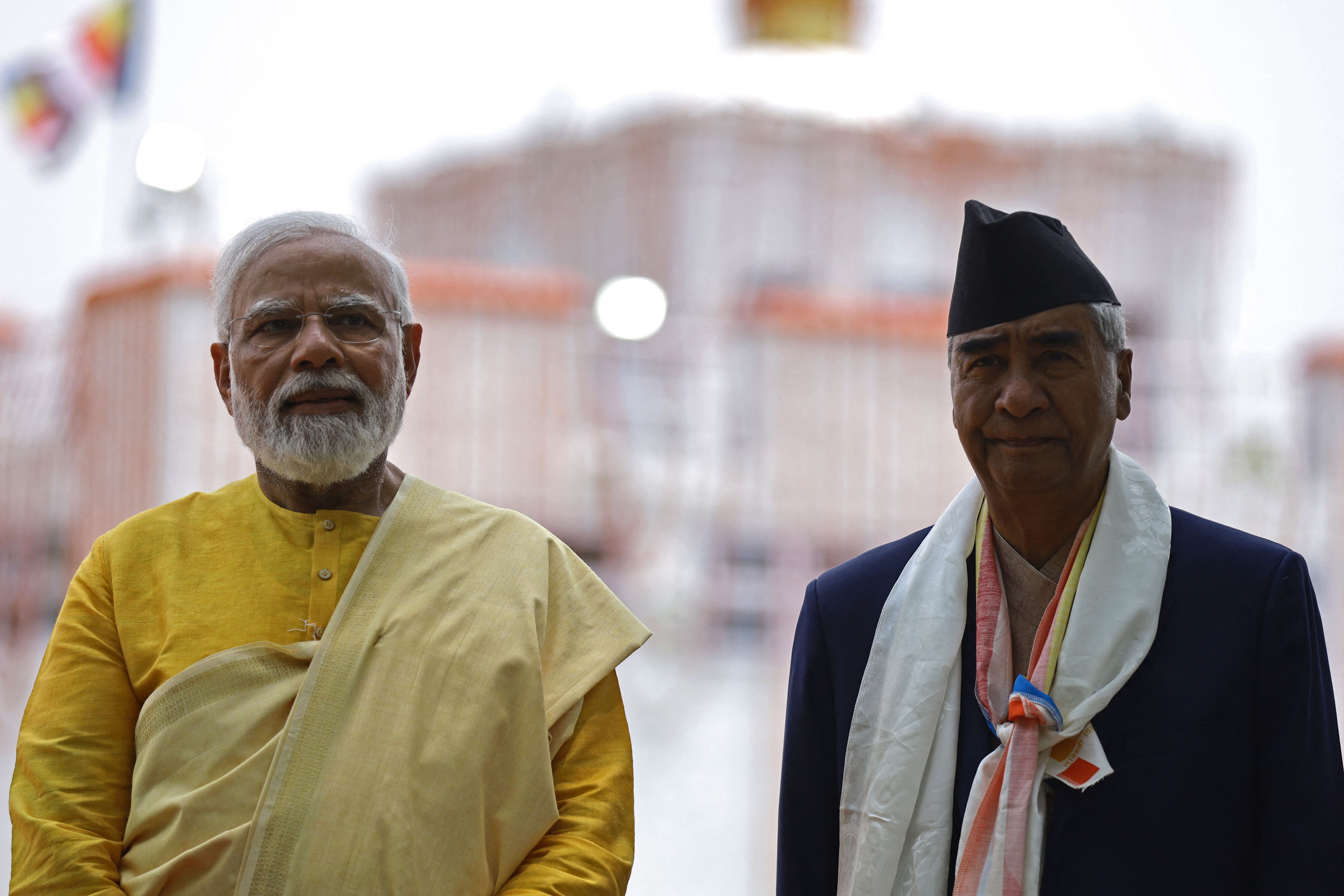
Hindustan Times could not independently confirm the statements made by Deuba.
Nepal's ties had strained with India in 2020 after Kathmandu published a political map that showed the three Indian territories - Limpiyadhura, Kalapani and Lipulekh - as part of the Himalayan country. Leaders of the two nations had agreed to resolve the issues during a couple of visits over the past few months.
According to inputs shared by news agency ANI, Deuba, while addressing the Nepal parliament, said the border issue was sensitive and the same can be resolved through dialogues and talks through diplomatic channels.
Also read | Modi-Deuba talks positive, covered security and trade: Foreign secy Shringla
“The Nepal government is ready to defend its territories. The areas of Limpiyadhura, Lipulekh and Kalapani are Nepali and the government has firm understanding about it. The issue of border is sensitive and we understand that this can be resolved through dialogues and talks through diplomatic channels,” he said.
Deuba further said the government of Nepal had always kept national interest as priority and worked on issues of mutual benefits when it came to its neighbours and other countries. “Nepal has been adopting non-aligned foreign policy,” he added.
“Acting on it, we have been making our efforts through diplomatic channels. This issue has been given proper space in the plans and polices introduced by the government,” the Nepal PM further said.
Earlier this month, Prime Minister Narendra Modi paid a visit to the Himalayan nation when the two nations signed six major deals, one among them being building a 695 MV hydropower plant in the country.
In April, Deuba had come to India when several developmental initiatives were launched even as the Nepalese PM urged his Indian counterpart to establish a mechanism to resolve the contentious boundary issue.
In his statement to the media, Deuba had then said the boundary issue was discussed and that he had urged Modi to resolve it through the establishment of a bilateral mechanism.
(With inputs from agencies)


