A new import ban imposed by the government on hundreds of military sub-systems and components has brought India’s quest for indigenisation into sharper focus, set goals for the local defence manufacturing industry and turned the spotlight on the journey so far and the long road ahead for attaining meaningful self-reliance, officials tracking the development said on Monday.
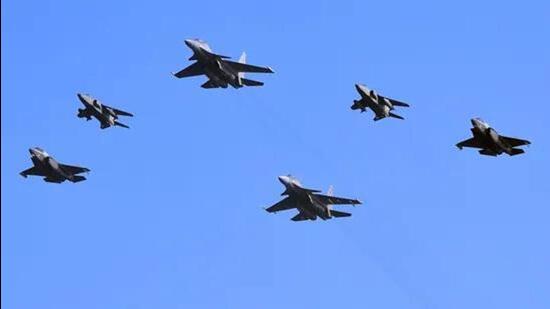
India’s military imports dropped 21% between 2012-16 and 2017-21 while the country’s military exports touched the ₹13,000-crore mark in 2021-22, up from ₹1,520 crore in 2016-17. (Representative Image/PTI)
The main steps taken to inject momentum into the self-reliance drive include bringing out a series of ‘positive indigenisation lists’ (six lists have been published so far to ban the import of major weapons, platforms, sub-systems and components), creating a separate budget for buying locally made military hardware, earmarking research and development budget for the private industry and start-ups and raising foreign direct investment (FDI) in defence manufacturing.
The government is also taking simultaneous measures to boost defence exports and has set a target of selling military hardware worth $5 billion to other countries by 2024.
India on Sunday published a list of 780 weapon sub-systems and components that will come under a phased import ban between December 2023 and December 2028, the third such list in nine months. In all, the three lists cover around 4,000 items used in fighter planes, aircraft, helicopters, submarines, tanks, infantry combat vehicles, electronic warfare systems, missiles, smart ammunition, rockets and bombs.
Close to 2,700 items on these lists have already been indigenised while the rest will be manufactured in India in phases between December 2022 and December 2028, according to defence ministry data.
Indigenisation of main weapons and equipment -- ranging from light weight tanks to naval utility helicopters and missiles to artillery gun systems -- that figure on the three other lists will be the real test for the domestic defence industry over the next five to six years because of the complexities involved in producing full-fledged systems, the officials said. These three lists encompass 310 different types of weapons and platforms.
A multi-pronged strategy to attain self-reliance is at play, said Air Marshal Anil Chopra (retd), director general, Centre for Air Power Studies.
“Indigenisation of full-fledged systems will happen when their sub-systems and components are produced in India. Thus, the government is publishing separate lists periodically to set goals for the industry, which now has to rise to the occasion. This may require some hand-holding by the government,” he added.
On its part, the government has earmarked ₹84,598 crore -- 68 % of the military’s capital acquisition budget for 2022-23 -- for purchasing locally produced weapons and systems. The allocation for local defence purchases has climbed steadily over the last three years – the Centre had earmarked 64% (or ₹70,221 crore) of military’s capital acquisition budget for the domestic sector in 2021-22 and 58% (or ₹51,000 crore) of the capital budget in 2020-21.
India’s military imports dropped 21% between 2012-16 and 2017-21, according to a report published by Stockholm International Peace Research Institute in March. Developing hardware locally has sharpened export prospects too - India’s military exports touched the ₹13,000-crore mark in 2021-22 (up from ₹1,520 crore in 2016-17), according to official data.

 E-Paper