
 E-Paper



New world order emerging, India ready to lead the world as growth engine, says PM Modi
“India is contributing more than 16% in the global growth, and this contribution is going to go up,” PM Narendra Modi said.

 Prefer HTon Google


NEW DELHI : In this decade of the 21st century, India is riding the “reform express” and the reforms are being driven not by compulsion, but with conviction and commitment, Prime Minister Narendra Modi said on Friday, pointing out how the government’s vision and intent are strengthening domestic policies and international trade ties. He also attributed the recent free trade deals signed between India and countries such as the United States as an outcome of India gaining confidence and being ready to compete with the world.
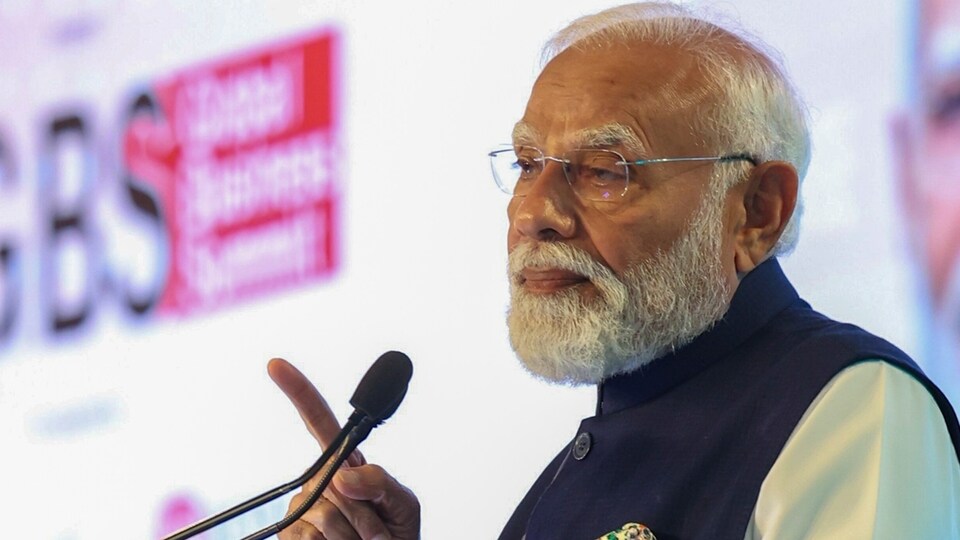
Addressing the ET NOW Global Business Summit, the PM said India’s resilience remained unshaken despite a “decade of disruption”, which included a global pandemic and disruptions in the supply-chain, and the nation is now rapidly moving from being the 11th largest economy to becoming the world’s third largest.
“India is contributing more than 16% in the global growth and this contribution is going to go up,” he said.
Pointing out that a new world order is now emerging, the PM said with India having shown leadership and development during this decade, it is poised to lead the world as a growth engine.
“At the end of World War II, a new world order was set up which after 70 years is changing because it was based on the principle of one size fits all…” he said.
Comparing the decision making and the development that took place during the UPA era and the current NDA rule, the PM said reforms are now being made with conviction.
He said 1991 economic reforms took place when the country was on the verge of bankruptcy, and India had to pledge its gold as collateral.
“It used to take months to draft a cabinet note in the previous government… how could the country have progressed? We changed the process and made decision-making time bound and technology driven,” he said.
The PM went on to cite the example of how clearances for rail and road projects required laborious clearances and permits before 2014, which has now been dispensed with. He said the current government empowered the local administration which in turn has given a fillip to infrastructure development.
“One reform that has created disturbance in the global order is UPI, the digital payment system. This is not just an app, it is the convergence of policy, process and delivery,” he said.
The PM also credited this change in the approach and the focus on reforms for more countries signing free trade deals with India. While the opposition has accused the government of overlooking India’s interests while signing deals with the United States and the European Union, the PM said the NDA’s rule was marred by scams and policy paralysis.
“Has anybody wondered why so many FTAs are being signed with developed countries? Why couldn’t this be done before 2014? It is the same country and the government system is the same, so, what has changed? The change is in the vision, the neeti and neeyat (policy and intent) of the government,” he said.
He said India which was among the fragile five economies pre-2014, was not an investment destination and other countries did not have faith in India.
Referring to the government’s ambitious Viksit Bharat or developed India plan, he said instead of asking why he keeps talking about 2047 (deadline for Viksit Bharat), people should ensure that the generations to come are secure.
“Our thinking is clear, our vision is clear, we have to make the country developed. Whether we are there or not till 2047, this country and its generations will survive. Therefore, we have to work hard today so that the future generations are safe and the future is bright,” he said.


