Sign in

NGT seeks explanation on green exemption for construction projects

The National Green Tribunal (NGT) on Wednesday sought the environment ministry’s explanation for exempting construction projects, except townships, from environment appraisal and said it will scrutinise all projects approved under the new rule.

Updated on: Dec 22, 2016, 07:51:39 IST
New Delhi, Hindustan Times | By
Share
Share via
  • facebook
  • twitter
  • linkedin
  • whatsapp
Copy link
  • copy link

The National Green Tribunal (NGT) on Wednesday sought the environment ministry’s explanation for exempting construction projects, except townships, from environment appraisal and said it will scrutinise all projects approved under the new rule.

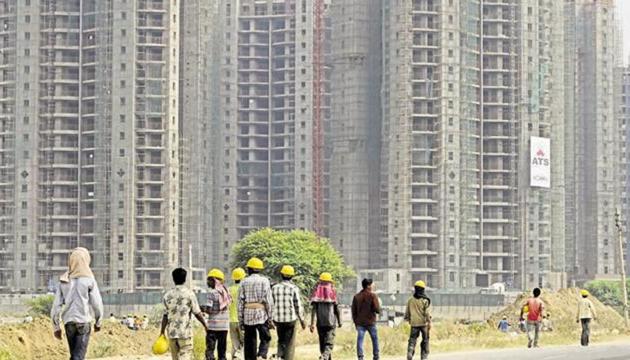
The National Green Tribunal (NGT) on Wednesday sought the environment ministry’s explanation for exempting construction projects, except townships, from environment appraisal. (HT Representational Photo)

The ministry amended its environment appraisal rules on December 9, allowing building of residential complexes without any environment impact assessment in the name of “ease of doing business” and providing “housing for all”. The rules provided for integrating the green norms, especially on water harvesting, waste segregation and planting of trees in the building bye-laws of the municipal bodies, thereby exempting home projects having built up area of up to 1,50,000 sq meters from any environment appraisal process, called environment impact assessment (EIA). These projects were earlier approved by the state environmental appraisal authorities.

Read | Green tribunal temporarily halts all construction work at Aarey in Mumbai

The builders would have to get a certificate from an environment auditor that all environmental conditions stipulated in by-laws have been met. The new rule provides for an inspection by a municipal officer before issuing a completion or occupancy certificate to the builder.

The logic for issuing the rule put forth by the ministry was that environment appraisal of building projects consumed a lot of time, leading to inordinate delay in execution of the project and litigation. The government also believes that the rule change will give impetus to the real estate sector, which has witnessed a slowdown in recent years.

With this, the onus of ensuring that the construction sector — considered the biggest contributor to air pollution — meets the environment norms now rests with the municipal bodies, said to be ill-equipped to assess environment impact of such projects.

Taking note of the concern raised by green activists, a bench headed by NGT chairman justice (retd) Swatanter Kumar asked additional solicitor general Tushar Mehta about the “rationale” behind the exemptions. Kumar also said all projects approved under the new rule would be open for its scrutiny. Mehta had told the tribunal that the exemption was given to speed up construction of housing projects for the poor and the middle class in the urban areas. He, however, was not able to provide answers to the questions raised on impact on environment because of the new norms.

The petitioner, however, said that the notification to exempt the construction projects from the State Pollution Control Board for residential projects up to 1,50,000 sq mts under the Water and Air Act was bad in law.

  • Chetan Chauhan
    ABOUT THE AUTHOR
    Chetan Chauhan

    Chetan Chauhan is the National Affairs Editor looking into all aspects of news and features from across India. A Chevening scholar with over three decades of experience in reporting and news management, Chetan has extensively covered all important aspects of the social sector, political economy, environment and climate change nationally and internationally. He did a journalism course at the Reuters Institute of Journalism in Oxford and Digital Media training at Nanyang Technological University in Singapore. He started as a reporter with The Statesman in 1996 and joined the Hindustan Times in 2000 in the metro bureau covering environment, crime and Delhi politics. He covered hot local news, from the Jessica Lal murder case to the rebellion of Delhi Congress MLAs against then Chief Minister Sheila Dikshit, to the replacement of toxic vehicle fuel with cleaner compressed natural gas (CNG) in the national capital. Some of his stories on air pollution became part of the Supreme Court’s landmark MC Mehta versus Government of India case in the National Capital Region (NCR), forcing the government to take corrective measures. As part of the national political bureau since 2004, he covered important central sectors such as environment, education, social justice, labour, rural development, water resources, renewable energy, agriculture, broadcasting and the Planning Commission for more than a decade producing several exclusive and investigative breaking stories. His specialisation is the environment, having covered at least a dozen United Nations global conferences on climate change, biodiversity and wildlife including climate summits in Paris, Copenhagen and Bali. He also covered India’s two five-year plans ---11th and 12th and reported on drafting and execution of right based laws such as Right to Education, Right to Information and rural job guarantee law, MG-NREGA, now being introduced in new format as VG-RAM-G Act. He has in-depth knowledge of social sector issues. He was one of the first to report on tigers vanishing from Sariska and Panna wildlife reserves in 2004 and 2008, respectively, leading to the setting up of the National Tiger Conservation Authority (NTCA) and the introduction of stringent penal provisions for poaching. He has written extensively on the rising human-animal conflict in India and the degradation of India’s biodiversity hotspots because of mining and other activities. Since 2004, Chetan has covered Parliament comprehensively and participated in training on the nuanced coverage of Parliament proceedings. He has travelled extensively across India to cover national and provincial elections since 1998, especially in the Hindi heartland states, considered India’s road to power. He writes a regular column for Hindustan Times, Ecostani, on important national politics, economy, Himalayan ecology and environmental issues. His other responsibilities include providing inputs for edits and edit page articles for the publication, apart from managing news flow from across India.Read More

Check India news real-time updates, latest news on Hindustan Times and more across India.