
 E-Paper



'Night curfew, restricted seating in cinemas': Punjab imposes stricter Covid-19 norms
In districts apart from the worst-hit ones, Punjab chief minister has ordered reinforcement and strict monitoring of the strategy of micro-containment and containment zones.


The Punjab government on Friday brought more districts under night curfew and also ordered a fresh set of curbs due to the huge increase in cases of the coronavirus disease (Covid-19) since last month.
Chief minister Captain Amarinder Singh has ordered the closure of educational institutions till March 31 and restricted the occupancy in cinema halls and malls. The state has also banned social gatherings except for funerals, cremations, and weddings that can at max be attended by 20 people.
The decision came after the chief minister chaired a meeting of the Covid task force with top officials. The situation will be reviewed after two weeks, Singh asserted.
Follow latest updates on Covid-19 here
As of Thursday, Punjab logged 2,387 fresh Covid-19 cases with the tally soaring past 2.05 lakh. The toll from the disease has increased to 6,204, according to the state health department.
Here’s a look at key points discussed in Punjab Covid-19 review meet
- Ludhiana, Jalandhar, Patiala, Mohali, Amritsar, Hoshiarpur, Kapurthala, SBS Nagar, Fatehgarh Sahib, Ropar and Moga are districts of the northern state where restrictions on gatherings have been imposed. In these 11 worst-hit districts, a complete ban has been ordered on all social gatherings Sunday onwards. These districts will remain under night curfew from 9 pm to 5 am.
- All educational institutions, other than medical and nursing colleges, will remain closed till March 31, with a restriction of 50% capacity in cinema halls and not more than 100 persons in a mall at any time.
- The chief minister has also ordered cinemas, multiplexes, restaurants, malls etc to remain closed on Sundays, though home deliveries will be allowed subject to night curfew. Only industries and essential services shall be allowed to function, the CM has ordered.
- Singh has appealed to the people to keep social activity at their houses to the bare minimum for the next two weeks to break the transmission chain of the virus. Not more than 10 visitors must be entertained in homes, he urged.
- In districts apart from the worst-hit ones, the chief minister has ordered reinforcement and strict monitoring of the strategy of micro-containment and containment zones where there are evident clusters. Strict curbs will also be imposed in other districts if the situation worsens and Covid-19 protocols and norms are not adhered to by the people, he said.
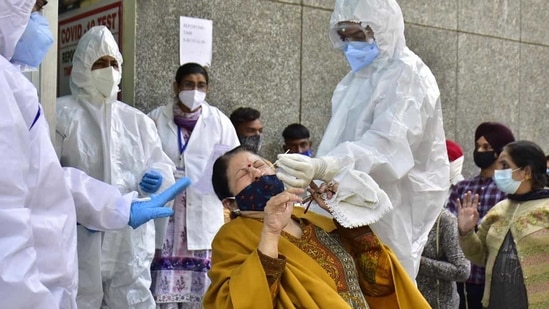
- It is mandatory for all citizens to wear face masks in the state. The chief minister has directed police and health authorities to take all those moving around and loitering in public areas without masks to the nearest RT-PCR testing facility for taking nasopharyngeal swabs to ensure that they are not asymptomatic.
- Health officials have been directed to ramp up testing per day to 35,000. The chief minister has also asked officials to lay special focus on super spreaders. Directing contact tracing and contact testing to be taken up to 30 per positive person, he added. He has also asked for government employees, teachers in educational institutions, etc. to be tested routinely.
- CM Singh has directed all private, government hospitals and health facilities to offer vaccination services for at least eight hours daily throughout the week till March 31. There should be no requirement of a separate certificate if an eligible 45+ years person brings the medical record regarding co-morbidities, he said during the Covid-19 review meeting.
- The Punjab government has put off the procurement operations and will now begin from April 10. Food, civil supplies and consumer affairs minister Bharat Bhushan Ashu said that the department needed more time to make arrangements to ensure safe procurement amid the surge in Covid-19 cases.
- “We have to be prepared for this second surge,” the chief minister said, stressing that the 1918 Spanish flu had four spikes. “We have to be prepared for a long battle,” he warned.


