E-Paper



Niti Aayog’s AI roadmap proposes mission to help 49 crore informal workers
The roadmap suggests building a digital system that helps workers prove their skills, get paid on time and access benefits

 Prefer HTon Google


A new report by Niti Aayog has proposed a national mission to use artificial intelligence (AI) and other new technologies to improve jobs, incomes and social security for India’s 49 crore informal workers. Called the Digital ShramSetu Mission, the plan is part of the premier think tank’s ‘Roadmap on AI for Inclusive Societal Development’ report, released on Wednesday.
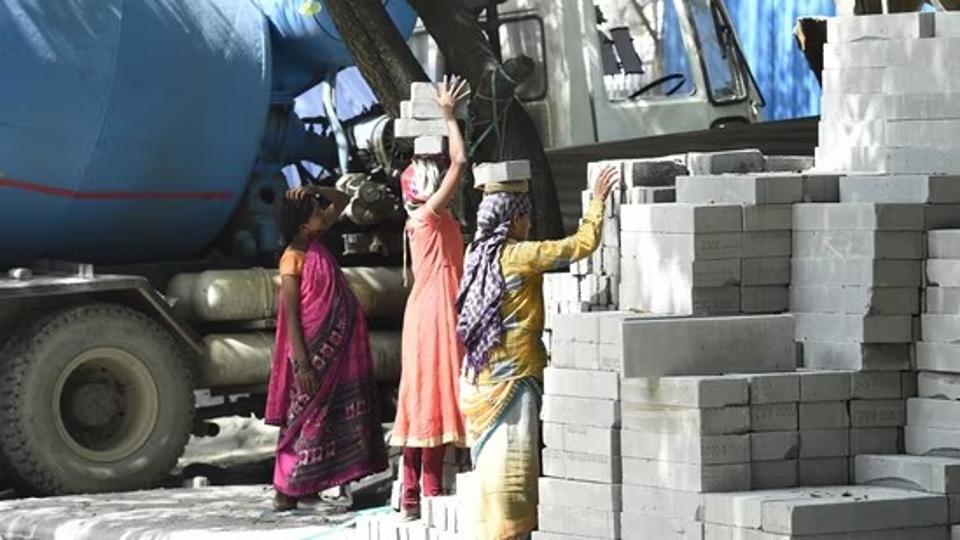
It lays out a 20-year plan to make small and informal work, such as farming, construction, driving or home-based jobs, more productive and secure. At its core, the roadmap suggests building a digital system that helps workers prove their skills, get paid on time and access benefits. It compares this to how the Unified Payments Interface (UPI) made sending money simple and trusted.
Minister of state (MoS) (independent charge) for Skill Development & Entrepreneurship and Education Jayant Chaudhary along with Niti Aayog’s vice chairperson Suman Bery launched the report developed in partnership with Deloitte.
Under the proposed mission, every worker could have a digital ID and wallet showing their verified skills, work record and entitlements. Payments could be made through smart digital contracts that release money automatically once work is completed, helping reduce delays and disputes.
The report recommends that the mission be led by the Prime Minister’s Office, with different teams working on technology, data, policy and training. States would carry out programmes locally through district-level centres. The rollout is planned in four stages. Orientation in 2025-26, setting up institutions in 2026-27, pilot projects by 2029, and a national rollout after 2030. By 2035, the plan hopes to raise worker incomes, increase women’s participation, and expand access to insurance and other benefits.
As per the mission’s targets, India’s per capita income is expected to rise from $1,800 in 2025 to $5,500 by 2035, and reach $14,500 by 2047. Female labour force participation is projected to grow from 15% to 25% by 2035, and 42% by 2047, marking a steady growth towards a greater number of women in the workforce.
The mission envisions universal welfare coverage, with social security expanding from 48% in 2025 to 80% by 2035, and 100% by 2047. Labour productivity is targeted to jump from $5 per hour to $15 per hour by 2035, and $49 per hour by 2047.
“For India to achieve its $30 trillion Viksit Bharat 2047 aspiration, we cannot leave behind the 490 million workers who power our economy every day,” said Debjani Ghosh, Distinguished Fellow, NITI Aayog. “AI will not transform their lives on its own—it requires us to deliberately build the roadmap and ecosystem that make these technologies accessible and affordable. This roadmap is unique because it finally puts their voices, challenges, and aspirations at the centre of the AI conversation and lays out a mission mode approach as the pathway to turn this promise into reality.”