
 E-Paper



No effort to frame UCC despite orders, rues Supreme Court
A bench of justices Deepak Gupta and Aniruddha Bose made this remark in their judgment on a civil suit, ruling that the Portuguese Civil Code, 1867 shall govern the rights of succession and inheritance even in respect of properties of a Goan domicile situated outside Goa, or anywhere in India.


The Supreme Court on Friday rued the fact that despite its orders, “there has been no attempt (by the government) to frame a Uniform Civil Code applicable to all citizens of the country”.
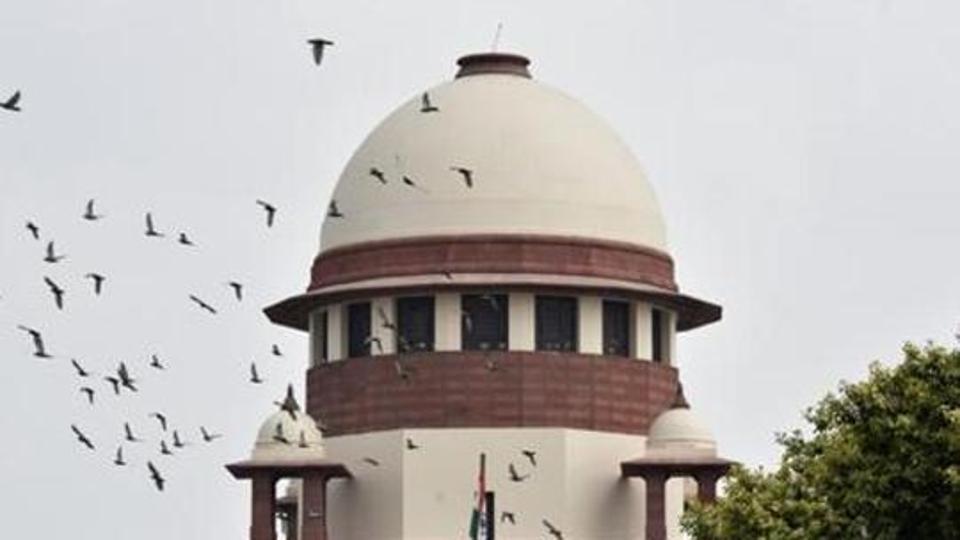
A bench of justices Deepak Gupta and Aniruddha Bose made this remark in their judgment on a civil suit, ruling that the Portuguese Civil Code, 1867 shall govern the rights of succession and inheritance even in respect of properties of a Goan domicile situated outside Goa, or anywhere in India.
Praising the state of Goa and the Portugese Civil Code that governs the laws of succession in the state, the bench said, “Goa is a shining example of an Indian state which has a uniform civil code applicable to all, regardless of religion.”
The court also said that “whereas the founders of the Constitution in Article 44 in Part IV dealing with the Directive Principles of State Policy had hoped and expected that the State shall endeavour to secure for the citizens a Uniform Civil Code throughout the territories of India, till date no action has been taken in this regard. Though Hindu laws were codified in the year 1956, there has been no attempt to frame a Uniform Civil Code applicable to all citizens of the country despite exhortations of this Court.”
Lauding the features of the Portuguese Civil Code, the court said that under this code, a married couple jointly holds the ownership of all the assets owned before marriage or acquired after marriage by either spouse.
“Therefore, in case of divorce, each spouse is entitled to half a share of the assets. The law, however, permits pre-nuptial agreements which may have a different system of division of assets,” the judgment reads.
The court also said that under the code, “Muslim men whose marriages are registered in Goa cannot practise polygamy. Further, even for followers of Islam there is no provision for verbal divorce.”
The court observed that there is a conflict between the Indian Succession Act, the Hindu Succession Act, the Muslim Personal Law (Shariat) Application Act, 1937, etc. and the Portuguese Civil Code with regard to the laws of inheritance “but this conflict has to be resolved”.


