
 E-Paper



No headway on LAC disengagement in India-China talks
The disengagement and de-escalation process between India and China has been deadlocked since the two sides pulled back frontline troops from the north and south banks of Pangong Lake in February last year and from Gogra in August 2021


India and China didn’t make much headway in another round of diplomatic talks on Tuesday on the standoff at the Line of Actual Control (LAC), agreeing only to continue discussions on outstanding issues and to convene the next meeting of senior military commanders at an early date.
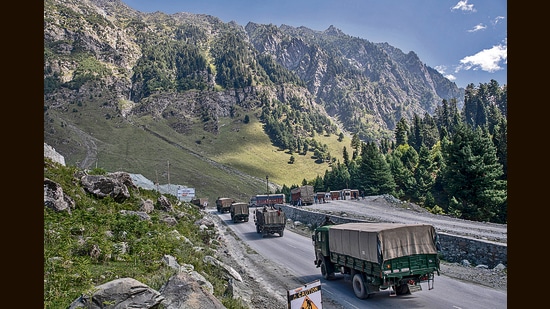
The Working Mechanism for Consultation and Coordination (WMCC) on India-China border affairs, which met virtually for the first time since November 2021, reviewed the situation along the LAC in the western sector in Ladakh, and both sides agreed to continue diplomatic and military talks.
The disengagement and de-escalation process between India and China has been deadlocked since the two sides pulled back frontline troops from the north and south banks of Pangong Lake in February last year and from Gogra in August 2021. There has been no forward movement on disengagement at key friction points such as Hot Springs and Depsang.
The two sides agreed that, as instructed by the two foreign ministers, they “should continue the discussions through diplomatic and military channels to resolve the remaining issues along the LAC at the earliest so as to create conditions for restoration of normalcy in bilateral relations”, the external affairs ministry said in a statement.
They further agreed to hold the next or 16th round of talks between senior military commanders at an early date to “achieve the objective of complete disengagement from all friction points along the LAC in the western sector in accordance with the existing bilateral agreements and protocols”, the statement added.
A similarly worded readout in Mandarin from China’s foreign ministry spoke of maintaining communications through diplomatic and military channels and holding the next round of military talks “as soon as possible”. The readout added that the remaining issues in the western sector should be resolved “under the principle of mutual and equal security”.
The Indian side at the WMCC meeting was led by additional secretary (East Asia) Naveen Srivastava, and the Chinese side was led by Hong Liang, director general of the department of boundary and ocean affairs in the foreign ministry.
Since the WMCC’s last meeting in November 2021, the 14th and 15th meetings of senior military commanders were held in January and March this year. China’s foreign minister Wang Yi visited New Delhi in March and held talks with external affairs minister S Jaishankar and National Security Advisor Ajit Doval.
A senior diplomat from the external affairs ministry is now part of the senior commanders’ meetings, which is perceived as the more important format for tackling the outstanding friction areas on the LAC.
India and China have been locked in a standoff in Ladakh sector since early May 2020, sending bilateral ties plummeting to their worst in decades, and both sides have arrayed close to 50,000 troops each along the LAC. A deadly clash at Galwan Valley in June 2020 left 20 Indian soldiers and at least four Chinese troops dead – the first fatalities along the LAC since 1975.
During their meetings with Wang in March, both Jaishankar and Doval pushed for speedy disengagement at all friction points to set the stage for de-escalation along the LAC. They also made it clear the disturbed situation was holding up the normalisation of bilateral ties.
Wang, on the other hand, reiterated China’s stated position that the LAC standoff should be placed in its “proper position” while the two sides take forward ties in other spheres.
Former ambassador Rajiv Bhatia, distinguished fellow for foreign policy studies at Gateway House, said, “Given the complexity of border issues, it is obviously important from the Indian point of view to continue the dialogue. The fact that China continues to remain engaged gives a small ray of hope that better sense will prevail on their side sooner or later.”


