
 E-Paper



No immunity for cash for vote: Centre clarifies its stand in Supreme Court
The top court, by 3-2, decided that MPs who took the bribe and voted in the House could not be prosecuted as they enjoyed immunity under Article 105(2).

 Prefer HTon Google


The immunity available to members of Parliament and state legislatures under the Constitution cannot shield them from prosecution under the Prevention of Corruption (PC) Act if lawmakers accept bribes to vote or ask questions on the floor of the House, the Union government submitted in the Supreme Court on Wednesday.
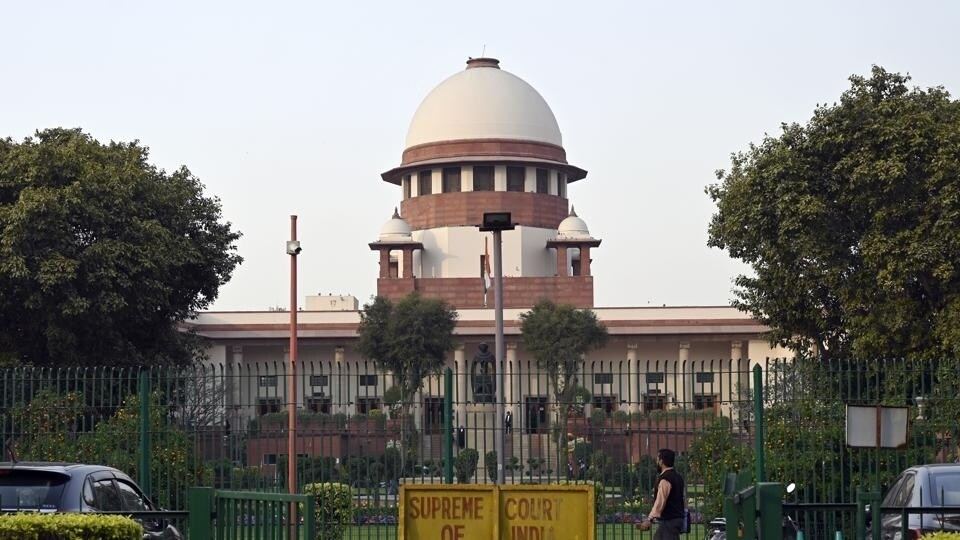
Clarifying its stand before a seven-judge Constitution bench, the Centre maintained that the parliamentary privilege available to MPs and MLAs inside the legislative Houses cannot extend to an act of accepting bribery outside Parliament or state assemblies.
Read here: Cannot arrest for not responding to questions: Supreme Court tells ED
Solicitor general Tushar Mehta, appearing for the Centre before the bench led by Chief Justice of India Dhananjaya Y Chandrachud, said that the question of immunity under Articles 105(2) and 194(2) of the Constitution will not arise in cases where a bribe is offered, and it is accepted by a legislator.
“Whether the legislator fulfils his part of the bargain or not; or whether there is a vote cast or a question asked, is immaterial the moment the offence of bribery is complete outside the legislative House. The same is for the reason that if the said offence is complete outside the legislative House itself, the House of any privilege which exists for functions within the halls of the House, does not arise whatsoever,” Mehta told the bench.
Attorney general R Venkataramani, also appearing for the Centre, weighed in to say: “We are not to be heard saying that bribery is condonable.”
The Centre’s submissions came on a day the Constitution bench, which also included justices AS Bopanna, MM Sundresh, PS Narasimha, JB Pardiwala, Sanjay Kumar and Manoj Misra, set about to examine the correctness of a 25-year old decision by a five-judge bench, which by majority, had held that MPs and MLAs accepting bribes and voting or asking questions in the House will enjoy immunity under the Constitution.
The bench was dealing with the issue of whether immunity granted to lawmakers is available if there was criminality attached to their acts and the Centre’s statement made it clear that it would not press for any parliamentary privilege in cases of bribery.
On September 20, the top court had decided to have a relook at the 1998 Constitution bench decision in PV Narasimha Rao v State after the judgment was relied upon by a former member of the Jharkhand assembly, Sita Soren of the Jharkhand Mukti Morcha (JMM), who allegedly accepted a bribe from an independent candidate for voting in the Rajya Sabha elections of 2012. The 1998 judgment, curiously, protected those lawmakers who vote or ask questions after receiving bribes, but it did not protect those who received bribes but did not keep their end of the bargain.
Article 105(2) lays down that no member of Parliament shall be liable to any proceedings in any court in respect of anything said or any vote given by him in Parliament or any committee thereof. A corresponding provision giving immunity to members of state legislatures is contained under Article 194(2).
On Wednesday, as the seven-judge bench commenced the hearing, S-G Mehta stood up to convey the Centre’s stand in the matter. While it is necessary to protect legislators in the discharge of their legislative and deliberative functions, Mehta argued, the act of bribery is a distinct offence and punishable under the PC Act.
“The real issue is not the contours of legislative privileges in relation to the Parliament or state legislatures, rather the short question on which the present reference can be decided is - Whether the offence of bribery is complete outside the legislative House? If the offence is committed outside, no question of parliamentary privilege arises at all,” he said.
Citing Section 7 of the PC Act, the S-G added the offence of bribery can be said to be complete independent of, and without reference to, “anything said or any vote given” in Parliament or state legislature, no question of any legislative privilege being attracted can arise if the member is prosecuted for taking a bribe for the speech or vote. Section 7 prescribes a punishment up to seven years in jail.
Read here: Court sets the course, mind your language
As Mehta said that the controversy in the present case is more to do with the PC Act than the question of parliamentary privilege, the bench pointed out that the issue of immunity to lawmakers would still remain a point to be deliberated.
“The majority judgment held that irrespective of criminality, the immunity attaches. And the only exception was for the person who does not fulfill his part of the bargain. We will have to ultimately deal with the issue of immunity as well,” the CJI told the S-G.
Responding, Mehta said that the question of privilege may not arise at all since the alleged act is committed outside the House.
“You are right. Then, you will have to say immunity does not attach,” the bench asked Mehta, who responded in agreement. “So, the controversy narrows down. We don’t have to say whether there is immunity or not. We will have to say that when the offence is committed outside, there is no question of immunity attaching under Article 105 or 194. Immunity can never attach when there is an element of criminality,” the court added.
At this point, the S-G requested the bench not to broaden the scope of the matter by revisiting the constitutional protection to lawmakers afresh, pointing out that there has been a line of jurisprudence in the matter outlining the privilege available to MPs and MLAs.
Accepting Mehta’s request, the bench replied: “You are entirely right. We should not be entering into issues that do not strictly arise before us. The law on this point has evolved in our country by way of interstitial steps...So, we will not revisit all that except in cases of bribery.”
It also acknowledged Mehta’s submissions that the legislature must have independence inside the House. “The whole purpose of the constitutional provisions is to encourage free speech and unrestrained dialogue in Parliament and state legislatures. And that, we must preserve. It’s a very important part of our nation and democracy,” said the bench, as it started hearing the matter.
Senior advocate Raju Ramachandran, appearing for Sita Soren, opposed review of the 1998 judgment, contending that issues of constitutional privileges and immunities are not in derogation to the rule of law but a distinct pillar in constitutional edifice to protect lawmakers who are also prone to political persecution.
The bench, however, replied that the constitutional immunity will have to be read with what the Constitution intended, and it could be in two parts – First, immunity from prosecution to a vote or a speech; and second, criminal liability with respect to an illegal act done irrespective of the bargain. “Should we grant immunity to political corruption on an apprehension of a misuse of law? Because an apprehended misuse of law is always amenable to protection from court,” it added.
During the day, senior advocate PS Patwalia, who appeared in the matter as amicus curiae, also supported the view that there must not be any immunity for a legislator accepting bribes. Senior counsel Gopal Sankaranarayanan, representing intervenor in the case, advocate Ashwini Upadhyay, echoed Patwalia’s view. The bench will continue hearing the case on Thursday.
The 1998 judgment had come in the backdrop of the Jharkhand Mukti Morcha bribery scandal that rocked the Congress government, headed by PV Narasimha Rao in 1993. The Narasimha Rao government allegedly bribed several parliamentarians across parties to defeat a no-confidence motion.
The top court, by 3-2, decided that MPs who took the bribe and voted in the House could not be prosecuted as they enjoyed immunity under Article 105(2) of the Constitution. However, such protection will not be available to an MP who received a bribe but abstained from voting or making a speech, the judgment added. It was this anomaly that led the court to order prosecution of then MP Ajit Singh, who allegedly took a bribe but abstained from voting.
Before it agreed to reconsider the 1998 verdict, the apex court had on two previous occasions refused to do so. A review petition filed by the Central Bureau of Investigation (CBI) challenging the majority view of the judgment was dismissed in 2001 on grounds of delay. In July 2002, a writ petition filed by NGO Centre for Public Interest Litigation (CPIL) questioning the decision was not entertained as only a curative petition would lie after dismissal of review petition.
Read here: At Manish Sisodia’s bail hearing, Supreme Court has a new AAP question for ED
But on September 20, a five-judge bench of the Supreme Court, headed by the CJI, noted that the object of Articles 105(2) and 194(2) does not prima facie appear to be to render immunity from the launch of criminal proceedings for a violation of the criminal law, which may arise independently of the exercise of the rights and duties as a Member of Parliament or of the legislature of a state. It further noted the anomaly of the majority judgment in 1998 that protected such lawmakers who took a bribe and acted as per the bargain but left others to fend for themselves if they did not vote or ask question in a particular manner.
“Prima facie, at this stage, we are of the considered view that the correctness of the view of the majority in PV Narasimha Rao should be reconsidered by a larger bench of seven judges,” the September 20 order on reference said.



