
 E-Paper





Follow the latest breaking news, major developments and agenda-setting stories from India and around the world with the newsdesk at Hindustan Times. Operating round the clock, the desk brings together experienced editors, reporters and correspondents to deliver fast, accurate and contextual reporting across subjects that influence public policy, governance, business, society and international affairs. The HT News Desk covers politics, elections, government policies, the economy, business and markets, science and technology, the environment, law and order, infrastructure, education, climate issues and geopolitics, while closely tracking developments across states, institutions and global capitals. The team also leads coverage of major breaking news events, policy announcements, court proceedings, natural disasters, public emergencies and significant international developments. Reports published by the newsdesk are based on information gathered from reporters on the ground, official statements, government agencies, court records, regulatory filings, recognised institutions and other authoritative sources. Stories undergo editorial scrutiny and verification processes to ensure accuracy, fairness and relevance, and are updated as events evolve and additional information becomes available. Whether covering a key political decision in New Delhi, an economic policy shift affecting millions, a landmark court ruling or a major global event, the HT News Desk aims to provide readers with reliable, fact-based journalism that delivers not only the latest developments but also the context and analysis needed to understand their wider implications.
No winter session of Parliament due to Covid, says govt to Cong demand to discuss farm agitation
Adhir Ranjan Chaudhary had asked for a short winter session to discuss issues such as the farmers’ agitation, preparation of Covid-19 vaccine, economic slowdown and the stand-off along the India-China border.


There will be no winter session of Parliament due to the coronavirus pandemic, the government has said, rejecting a demand from Congress leader Adhir Ranjan Chaudhary to convene Parliament to discuss the new farm laws that have triggered massive protests. Parliamentary affairs minister Pralhad Joshi communicated the decision to Chaudhary in a letter on Monday, according to news agency ANI.
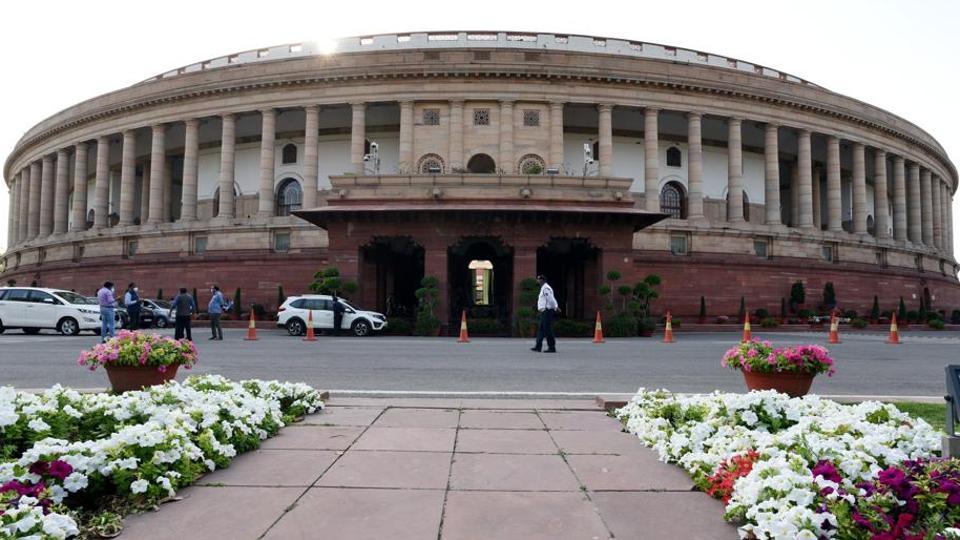
The minister said he had informally contacted floor leaders of political parties and they were in favour of skipping the winter session, which normally begins in November and ends in December. “Winter months are very crucial for managing the pandemic because of the recent spurt in cases during this period, particularly in Delhi. At present, we are in the middle of December and a Covid vaccine is expected very soon,” Joshi said, according to his letter put out by NDTV.
“The government is willing to have the next session of Parliament at the earliest; it would be appropriate to have the Budget session 2021 in January 2021 keeping in mind the unprecedented circumstances created by Covid-19 pandemic,” he said, responding to Chaudhary’s 3 December letter.
Chaudhary had asked for a short winter session to discuss issues such as the farmers’ agitation, preparation of Covid-19 vaccine, economic slowdown and the stand-off along the India-China border.
As news of the government’s decision emerged, Congress leaders took swipes at the government on social media, linking the decision to the demand to repeal the three farm laws. They recalled that Parliament’s Monsoon session was held in September when the number of Covid cases was at its peak.
To be sure, the plan to scrap the winter session had been proposed much before thousands of farmers started their agitation on the outskirts of Delhi against the laws that allow agribusinesses to trade with minimal regulation, permit traders to stockpile large quantities of food commodities for economies of scale and lay down new contract farming rules.
Farmers insist the new laws favour big corporations to whom they will lose business and gradually end the system of state-set minimum prices.
The Hindustan Times had first reported the plan to scrap the winter session on November 16.
The monsoon session, which started on September 14 when new daily cases in Delhi averaged 4,001,, was cut short by eight days after at least 50 people connected to Parliament tested positive. The plan to skip the winter session was drafted when the daily average stood at 6,670. On Monday, Delhi reported over 1,300 Covid cases, the lowest in over three-and-a-half months.


