E-Paper



‘Normal’ monsoon at 99% of LPA likely this year, says IMD
Monsoon rainfall is likely to be “normal” at 99% of long period average (LPA) with an error margin of +/-5%, India Meteorological Department (IMD) said in its long-range forecast on Thursday.


India’s weather office has predicted a normal monsoon, the fourth consecutive one, in 2022, a projection that, if it pans out, could cool inflation and also provide a boost to the rural economy.
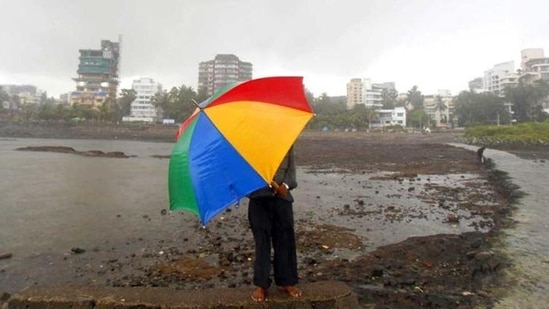
Monsoon rainfall is likely to be “normal” at 99% of long period average (LPA) with an error margin of +/-5%, India Meteorological Department (IMD) said in its long-range forecast on Thursday.
This monsoon is likely to be the fourth consecutive one when it has been in “normal” or “above normal” range. Last year monsoon rainfall was 99% of LPA (normal); in 2020, monsoon was 109% of LPA (above normal); in 2019 monsoon was 110% of LPA (above normal). The last time India saw four consecutive years of normal or above normal monsoons was 14 years ago, between 2005 and 2008, according to IMD officials.
The June-to-September rain-bearing system is often called the life-blood of the country’s economy as half of all Indians depend on farm-derived income and nearly 40% of India’s net-sown area does not have access to irrigation.
A normal monsoon this year is critical as global food prices have hit record highs due to food shortage amid the Ukraine conflict. A sub-par monsoon cuts farm yields, output and farm incomes, increasing India’s dependence on food imports.
A robust monsoon will help put a lid on food inflation by increasing domestic output of a variety of goods and commodities. Millions of farmers await the rainy season to begin summer sowing of key crops, such as rice, sugar, cotton, coarse cereals, lentils, gram and edible oils.
Domestic retail inflation quickened to 6.95% in March, a 17-month high, driven by a sharp jump in food prices, official data released on Tuesday showed. Food prices jumped 7.68% in March, against a rise of 5.85% in February.
Half of India’s farm output comes from summer crops dependent on the monsoon. For good farm output, the rains have to be not just robust but also evenly spread across states.
The new LPA for the monsoon season (June to September) is the average for the period between 1971 and 2020 which is 868.6mm. It will replace the earlier normal of 880.6mm based on 1961 to 2010 period. The new all India annual rainfall based on the 1971 to 2020 period is 1160.1mm compared to the earlier normal of 1176.9mm.
There is a 40% probability of a normal monsoon between 96% and 104% of LPA this year, a 15% probability of an above-normal one; a 5% probability of excess rainfall; a 26% probability of below normal monsoon; and a 14% chance of a deficient monsoon (rains less than 90% of LPA).
Currently, La Niña conditions are prevailing over the equatorial Pacific region and the latest Monsoon Mission Coupled Forecasting System (MMCFS) indicates that it will continue during the monsoon season.
La Niña refers to the large-scale cooling of the ocean surface temperatures in the central and eastern equatorial Pacific Ocean, coupled with changes in the tropical atmospheric circulation, namely winds, pressure and rainfall. It usually has the opposite impacts on weather and climate as El Niño, which is the warm phase of the so-called El Niño Southern Oscillation (ENSO).
Meanwhile, neutral Indian Ocean Dipole (IOD) conditions are present over the Indian Ocean and the latest MMCFS forecast indicates that they are likely to continue until the beginning of southwest monsoon season. Thereafter, there is a higher probability for negative IOD. IOD is the difference between the temperature of the ocean in two parts – in the Arabian Sea on the west and the Bay of Bengal in the east. A neutral IOD doesn’t affect the monsoon but a negative one is bad for it.
“La Nina conditions are favourable for monsoon. Most La Nina years are associated with normal or above normal rain. On the other hand, negative IOD is associated with reduced rainfall during monsoon. So with both conditions in sight, our models are showing that we are likely to see a normal monsoon this year also,” said M Mohapatra, director general, IMD.
IMD’s forecast suggests normal to above normal seasonal rainfall over many areas of northern parts of Peninsular India and adjoining Central India, over foothills of the Himalayas and some parts of northwest India. Below normal rainfall is likely over many areas of northeast India, some areas of northwest India and southern parts of the peninsula.
Wet epoch of monsoon to start from 2031
There is a decrease of 12.0mm in monsoon and 16.8 mm in annual rainfall between 1961-2010 and 1971-2020. The decrease is part of natural multi-decadal epochal variability of dry and wet epochs of all India rainfall, IMD said in a statement.
“The southwest monsoon is passing through a dry epoch which started in the decade of 1971-80. The decadal average of all India southwest monsoon rainfall for the decade 2011-20 is -3.8% of the long-term mean. 2021-30 is expected to be come closer to neutral and southwest monsoon will enter the wet epoch from the decade, 2031-40,” IMD said.
The rainfall “normal” is prepared based on the data for the period of 50 years and is updated periodically once a decade by incorporating the latest data from rain gauge stations, IMD said. The new updated rainfall normal has been prepared based on data of 1971-2020 and will replace the existing rainfall normal based on 1961-2010 with effect from this monsoon season. During monsoon, India receives about 868.6mm rainfall which is about 75% of the annual rainfall (1160.1mm). Out of 12 months, July receives maximum rainfall of 280.4mm followed by August (254.9mm). Konkan and Goa receive highest rainfall of more than 300cm annually followed by subdivisions in the northeastern India which have annual rainfall normal between 200 to 280cm. West Rajasthan receives lowest annual rainfall of about 33cm.
“Since 1980s we have been seeing a below normal phase of monsoon. Before that it was in the above normal epoch for a few decades. This is decadal variation in monsoon rain. Now, we are gradually turning towards a period when we can expect normal monsoon rain and above normal thereafter. So we should expect more rainfall,” explained DS Pai, former scientist at the weather bureau, and now director at the Institute of Climate Change Studies, Kerala. “The frequency of heavy rainfall events is increasing so more rain can be detrimental. For example, if there is extremely heavy rain during sowing the seeds can wash away or in other times fertilisers can wash away. The timing is important,” he added.
Zia Haq contributed to this story