E-Paper



Northeast elections: 75% polling in Nagaland, one killed in clashes; 77% turnout in Meghalaya
Polling was delayed in nearly three dozen booths across Meghalaya due to malfunctioning of EVM and VVPAT machines.

 Prefer HTon Google


A man was killed and three others injured in separate incidents of poll-related violence in Nagaland on Tuesday while Meghalaya witnessed a comparatively peaceful election day. Polling in the two Christian-majority states began at 7am. Although it was supposed to end at 4pm, officials permitted those in queue to cast votes after that.
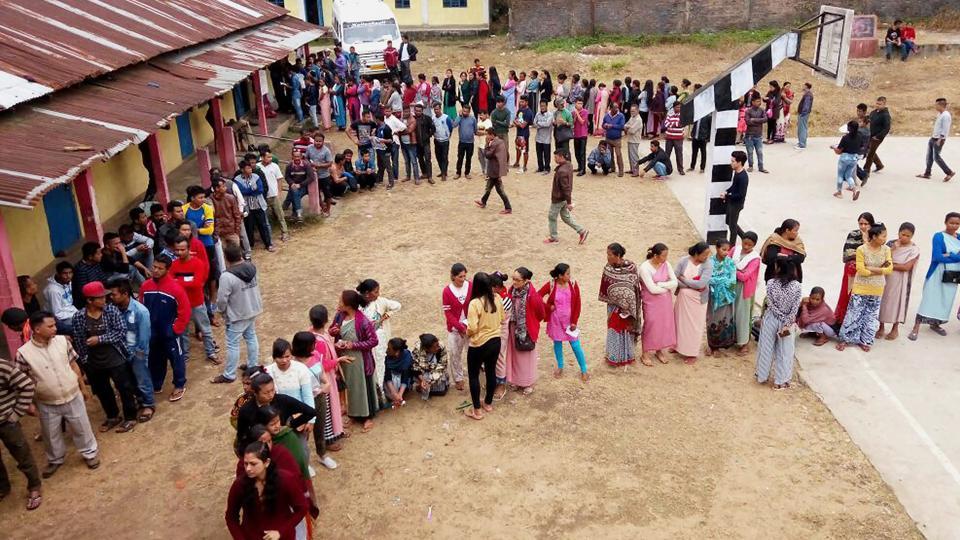
While 75% voting was reported till 5pm in Nagaland, the figure for Meghalaya stood at 77% at 11 pm. The poll percentage is expected to rise higher once inputs from remote areas are added. Nagaland and Meghalaya registered 90% and 88% voting respectively in the 2013 polls.
Polling took place in 59 of the 60 seats in each state this time. While the electoral process was cancelled in Meghalaya’s Williamnagar following the death of NCP candidate Jonathone N Sangma and four others in a bomb blast, Nagaland’s northern Angami-II was spared a contest after Nationalist Democratic Progressive Party (NDPP) leader Neiphiu Rio benefited from a walkover. The counting of votes for the two states will happen along with Tripura on March 3.
The day began with a crude bomb explosion near a polling booth at Tizit town in Nagaland’s Mon district around 5.45am. Mon superintendent of police Vechipa Vise said that although a village council member sustained injuries, polling was unhindered.
At 11.10am, a man was killed and two others injured in clashes between supporters of the NDPP-BJP alliance and the ruling Naga People’s Front (NPF) at Akuluto in Zunheboto district. Security personnel opened fire to disperse the mob. “The NPF is confident of returning to power. Talks are also on with the Janata Dal (United) and the National People’s Party to form a coalition,” chief minister TR Zeliang said.
The BJP, which had broken its 15-year-old alliance with NPF to join hands with the NDPP before the polls, believes differently. “We expect to get more than 10 seats and form the next government with NDPP,” said V Lhoungu, chief of the party’s Nagaland unit.
Polling was delayed in nearly three dozen booths across Meghalaya due to malfunctioning of EVM and VVPAT machines. “Nearly 88 VVPATs developed technical problems, but the problem was sorted out soon,” said Meghalaya chief electoral officer FR Kharkongor.
“People across Meghalaya came out in large numbers to vote for change. We are confident of a non-Congress government this time,” said Shibun Lyngdoh, the party’s Meghalaya unit president. But the Congress hopes to stay in power. “We will turn out to be the single-largest party and form a government on our own,” said Vincent H Pala, party working president for Meghalaya.