E-Paper



Now-deleted NCERT chapter on judiciary was a collective effort, Professor tells Supreme Court
In an affidavit to the Supreme Court, Michel Danino said the chapter was the result of a “collective and collaborative” process with no individual authorship.

 Prefer HTon Google


Professor Michel Danino, educator Suparna Diwakar and legal researcher Alok Prasanna Kumar defended their role over the now-withdrawn Class 8 social science chapter on judiciary. In an affidavit to the Supreme Court, Danino said the chapter was the result of a “collective and collaborative” process with no individual authorship, and that there was no intent to malign the institution, and contested claims made by NCERT director Dinesh Prasad Saklani.
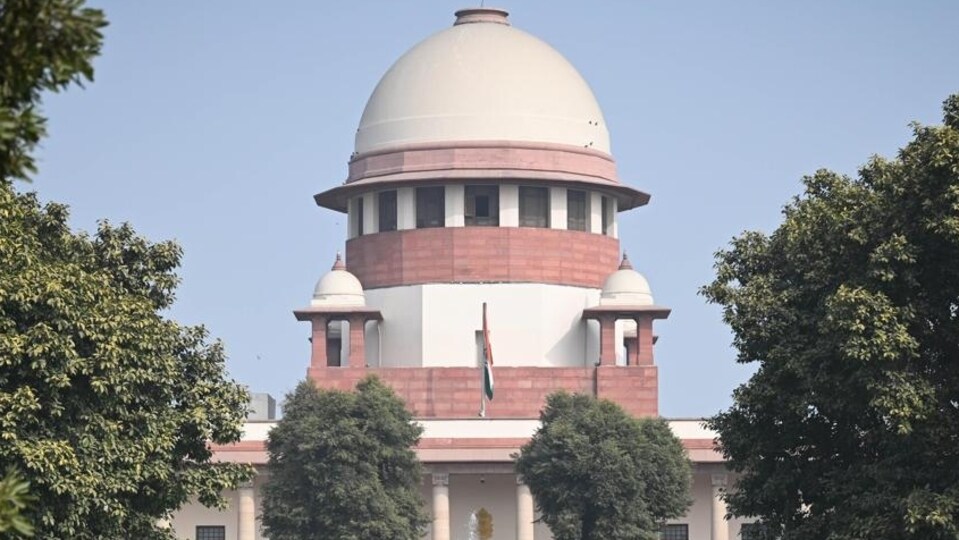
The three filed separate affidavits on Saturday ahead of Monday’s hearing and said the chapter was the outcome of an exercise by a 51-member Textbook Development Team (TDT), with 15 active contributors, and not the work of three individuals as suggested in Saklani’s March 11 submission.
Danino also disputed the claim that drafts were shared “only amongst a few members digitally”, stating they were circulated through a Google group of over 40 members. He termed it “factually erroneous” to name Diwakar as a drafter, with her affidavit clarifying that her role as chief consultant in the programme office of the National Syllabus and Teaching Learning Material Committee (NSTC) was limited to coordination and facilitation, with no authorial or evaluative responsibility.
In its March 11 order, the top court directed the Centre, states and publicly funded institutions to disassociate the three from curriculum development and textbook preparation, observing that the three either “do not have any reasonable knowledge about the Indian judiciary” or had “deliberately and knowingly misrepresented the facts”. It, however, allowed them to seek modification, following which they approached the court.
Defending the chapter, Danino said there was “no intention whatsoever to malign the judiciary” and that the content aligned with the National Education Policy 2020 and the National Curriculum Framework-School Education 2023, aimed at promoting critical thinking among students. He said the textbook followed a uniform pedagogical approach across the executive, legislature and judiciary, discussing both their roles and challenges. “It was also in line with various global research recommending that students from the age of 11 should be progressively engaged in discussing such real-life issues and challenges, rather than such situations being withheld from them,” affidavit states.
Kumar said he was “surprised” at the three of them being “unjustifiably singled out”, stressing that NCERT policy does not recognise individual authorship. He has in the past said he was the only legal expert among the 15 contributors in the 51-member team.
Detailing the process, Danino said drafts of the chapter were shared repeatedly between September and December 2025 through a Google group comprising over 40 members. “This group was used to share successive versions of the chapter on the Judiciary on September 1, October 23, November 4, and December 3, 2025,” his affidavit states, adding that Saklani, in his capacity as NCERT director and member convenor of the National Oversight Committee (NOC), was copied on these communications.
He said eight members of the National Syllabus and Teaching Learning Material Committee (NSTC), including its chairperson Prof. M C Pant and co-chair Manjul Bhargava, and five members of the NOC, including its chairperson Prof. Jagbir Singh, were also kept informed and invited to comment. The final content of the chapter, he added, was discussed with Bhargava, who expressed satisfaction with it in late November 2025.
Meanwhile, Diwakar in her affidavit has stated that her role was limited to “liaising and facilitation within the institutional process….and [Has] no employer-employee relationship with NCERT..and that no authorial or evaluative responsibility could be attributed to her”.
HT reached out to Bhargava and Saklani for a comment but they did not respond.
Senior Advocates Gopal Sankarnarayanan, Aravind Datar, and J. Sai Deepak, representing Kumar, Danino, and Diwakar respectively, appeared before the bench on Monday led by CJI Surya Kant and requested that the applications be listed and taken up at the next hearing after two weeks. Supreme Court said revisions on legal and judiciary content should extend beyond Class 8 to all classes.
The textbook was released on February 23 but withdrawn a day later, with 38 sold copies later retrieved following the court’s intervention. On March 16, the education ministry set up a three-member oversight committee led by Justice (retd) Indu Malhotra, in collaboration with the National Judicial Academy, Bhopal, to revise and finalise the curriculum. On April 2, NCERT also reconstituted the NSTC.