
 E-Paper



NSG seeks nod to support forces in J-K counter-terror operations
National Security Guards is doing this in order to maintain its cutting edge as well as acquire much-needed on-field operational experience for its experts, say officials.

 Prefer HTon Google


With a motive of remaining battle-ready and at the forefront of counter-terrorist (CT) operations, the elite National Security Guards (NSG) has approached the home ministry and top national security planners for permission to send its “house intervention teams (HIT)” in support of counter-terrorism operations conducted by the army and security forces in Jammu and Kashmir.
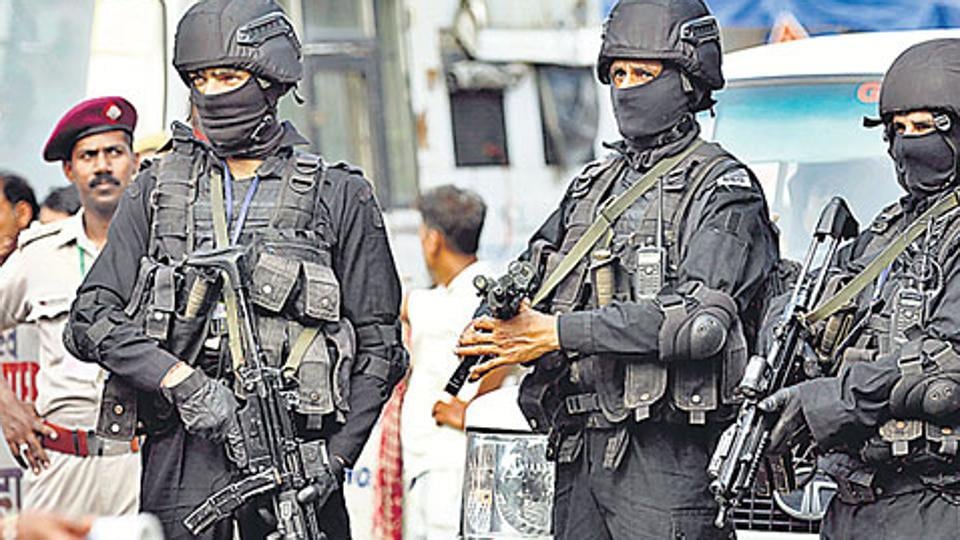
North Block officials confirmed this and said NSG is doing this in order to maintain its cutting edge as well as acquire much-needed on-field operational experience for its experts.
The NSG proposal comes in the wake of security forces losing troopers in high-risk house intervention operations, used to neutralise holed up terrorists or fidayeens (suicide attackers) in densely populated localities of the valley.
Normally, security forces try to tire out the terrorists by constantly firing at the adversary with high caliber weapons. The rate of firing is often such that the structure collapses or catches fire with the holed up terrorists being collateral damage.
The NSG HIT teams use state of the art Heckler and Koch MP5 sub-machine guns, gas guns, M 107 Barret sniper rifles, through-the-wall radars, corner shot rifles and C-4 explosives to neutralize holed-up terrorists with minimum casualties and damage to the structure. A typical NSG HIT team has six troopers led by a non-commissioned officer along with demolition experts and crack marksmen.
While the Modi government is considering NSG’s proposal positively, the elite force has also offered to let its HIT teams serve under the command and control of the army in special counter terrorism operations in the Valley. A similar offer has been made by NSG to CRPF, a paramilitary force involved in counter-insurgency activities in the restive state.
Another reason why NSG wants to test its skills in live operations is for battle inoculation as the 10,000 strong force is only involved in simulated exercises.
The last time NSG was successfully used in live operations was when it neutralized four Pakistani Jaish-e-Mohammed terrorists in the Pathankot air base attack in January 2016. It was also used to tackle terrorists involved in the 26/11 Mumbai attack and the September 24, 2002 Akshardham temple attack in Gandhinagar in Gujarat.


