E-Paper



Number Theory: Behind the challenges of civic governance in India
Local bodies such as municipal corporations and municipalities are critical in urban governance and the provision of last-mile services to people
Published on: Oct 20, 2023, 10:43:47 IST

 Prefer HTon Google
Share via


Copy link

The quality of civic amenities provided in Indian cities is dependent on the strength and reliability of city administrations. The Annual Survey of India’s City-Systems (ASICS) report by Janaagraha, a not-for-profit think tank working in the area of urban administration and governance, which was released on October 17, has studied the state of city systems and governance. Here are four charts based on the report which explain the challenge of urban governance in India.

Behind the challenges of civic governance in India
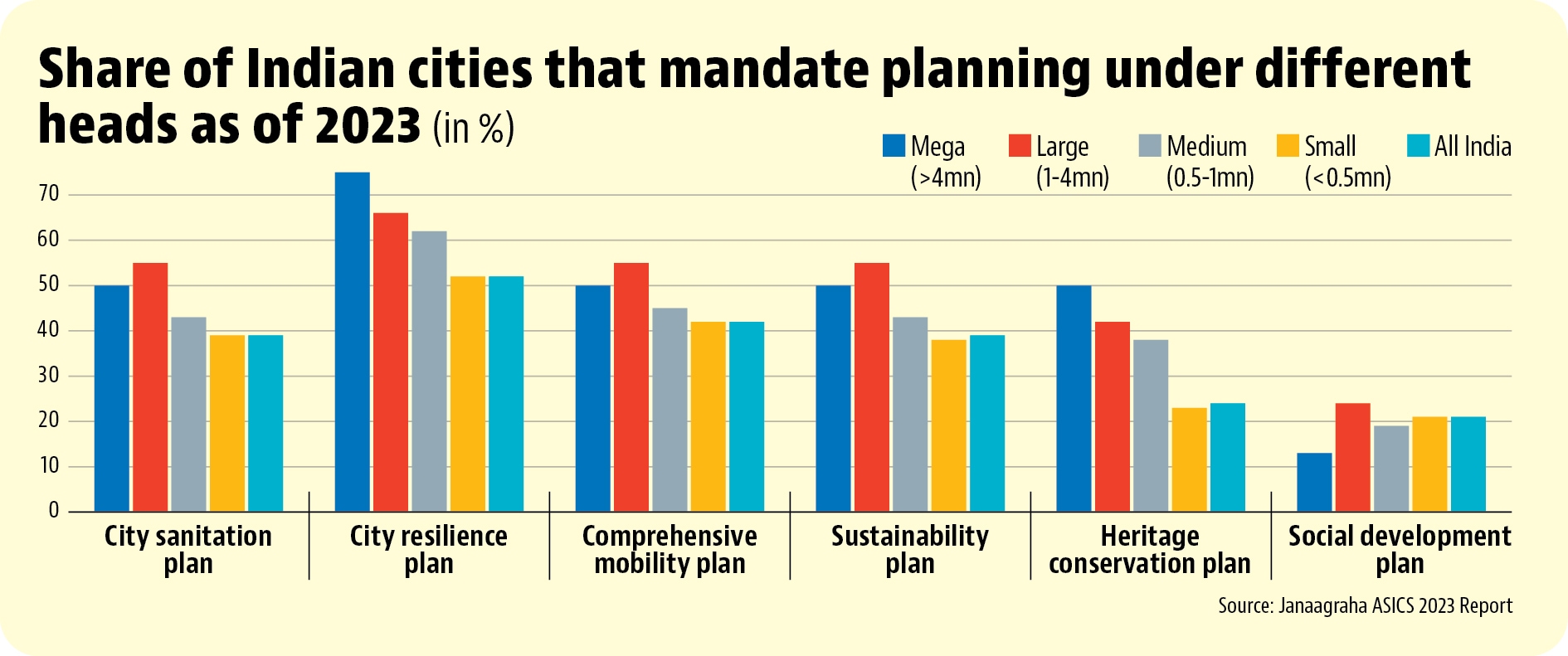
 Lack of planning is a major problem in urban governanceLong-term and decentralized planning is key to urban governance. While the former depends on master plans, the latter is a function of tier-wise governance in cities down to the ward level. The ASICS report finds many loopholes on this front. 13 state capitals in India had inactive master plans. Just half of the megacities – cities with a population of four million or more – had a city sanitation plan. Of all cities covered in the ASICS report, only 39% had a city sanitation plan. A little less than a quarter of the large cities, with a population between one and four million people, had social development plans; among megacities, this proportion was only 13% . Among smaller cities –defined by the report as those with a population of less than 500,000 people -- only 21% of them had a social development plan. To be sure, the population numbers used in the report are based on the 2011 census and are likely to be obsolete now. But these numbers confirm the anecdotal wisdom that India’s urban governance is severely lagging when it comes to the plan for the country’s rapidly growing urban population.
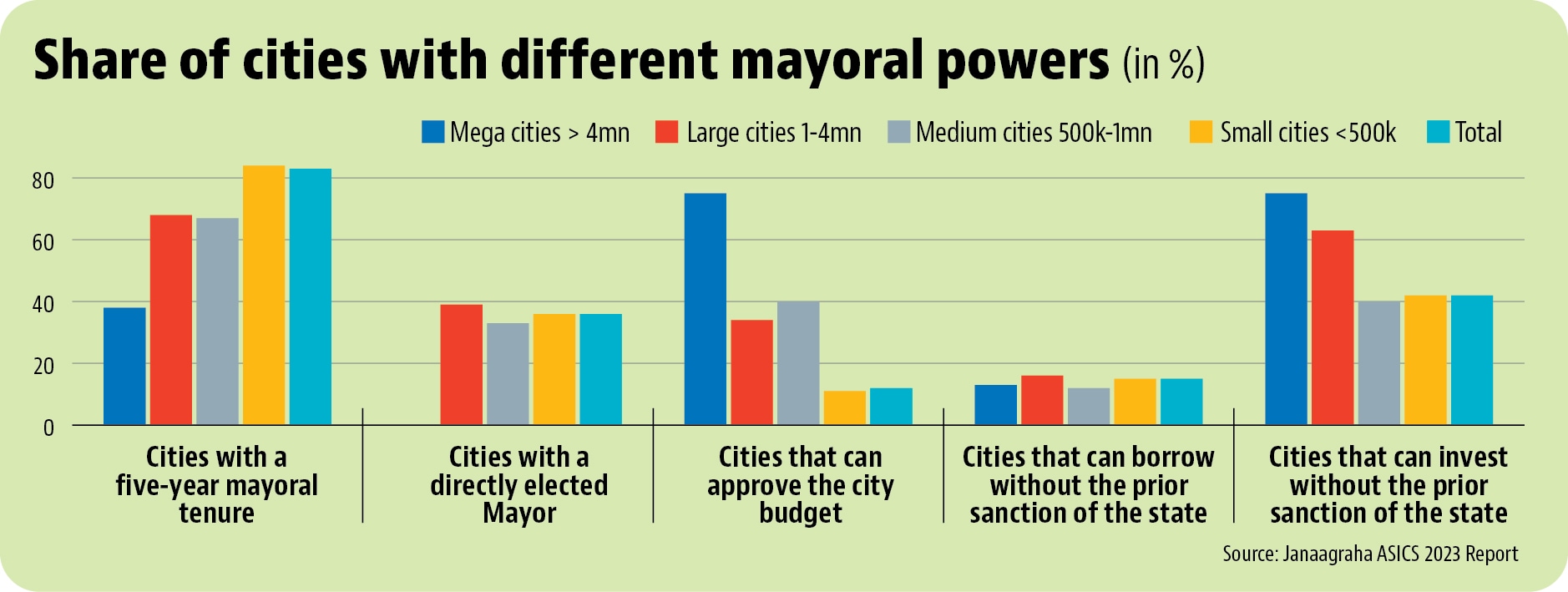
- Inadequate planning in cities co-exists with inadequate power for local government heads…Mayors are political heads of a city, responsible for its planning and development. The mayor, despite being an elected figure often has very little control over the implementation of city plans. The ASICS report shows that none of the mega cities in India has a directly elected mayor. Only 38% of cities that the report categorizes as megacities have a five-year term for their mayors. The rest have mayoral terms ranging from 1 year in New Delhi to 2.5 years in Bangalore. When it comes to financial powers, only 15% of India’s city administrations have the power to borrow without a state government sanction. Only 2% of Indian cities have the power to levy key taxes, which include property, professional, entertainment, and advertisement taxes, according to the report.
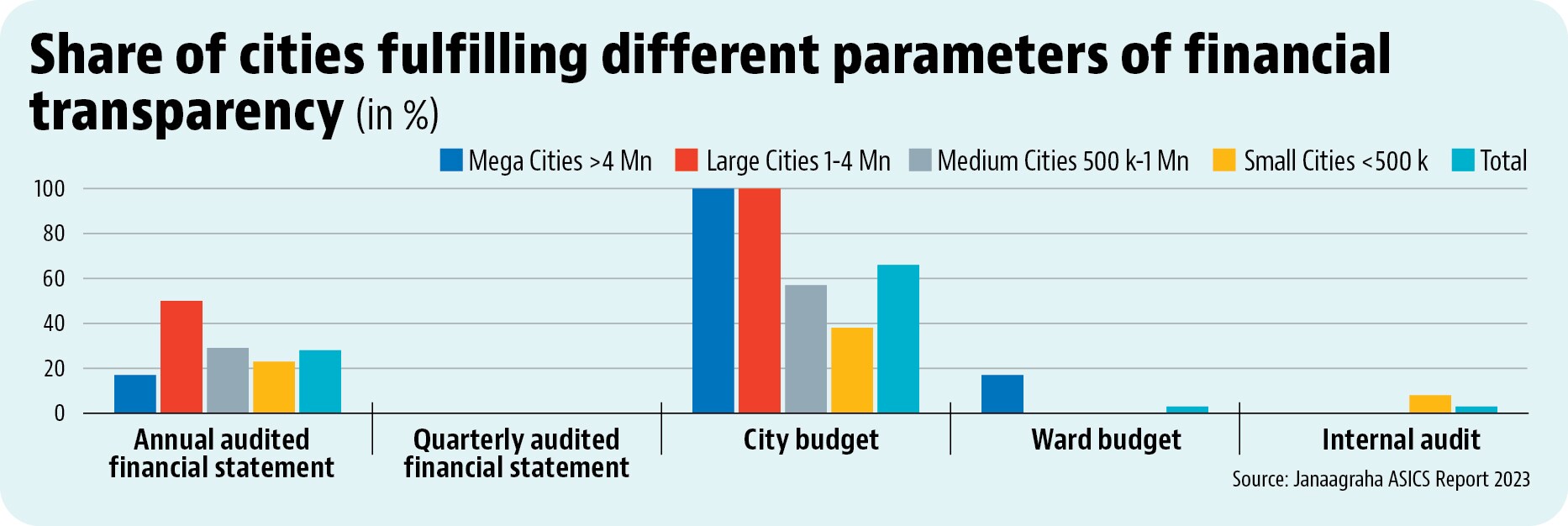
- …and lack of financial and fiscal transparency in city governmentsThe ASICS report studied the financial transparency of urban local bodies on parameters that include the frequency at which the administrations publish their financial statements, draw budgets, and conduct audits. Information collected from websites of city governments of 35 state capital cities as of 31st July 2023 shows that smaller cities have a worse problem of fiscal transparency, but that even larger cities flounder when it comes to releasing regular financial statements, conducting audits, or preparing budgets at the ward level. Another way this problem manifests itself is a large variance in the budgets of city governments. “Our analysis of the receipts and expenditure of 12 cities in India over three years shows that cities on average have a budget variance of 43% in terms of receipts and 45% in expenditure. Cities such as Patna, Kochi, and Hyderabad perform the worst with budget variances significantly higher than the average”, the report says.
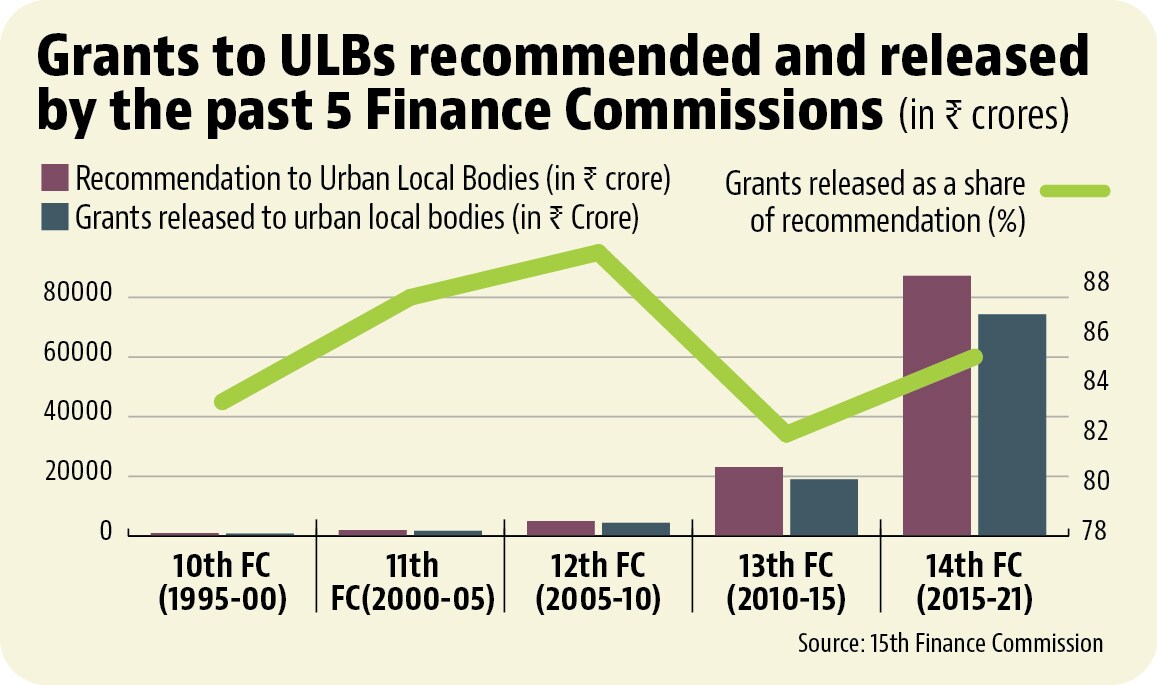
- Poor governance is also depriving cities of their legitimate resourcesThis is the biggest irony in the crisis of urban governance in India. While most cities are struggling to find resources to solve their problems, the 15th Finance Commission report shows that urban local bodies were unable to receive the entire amount that should have been transferred to them in the past five Finance Commission awards. “The shortfalls – which were the highest for rural local bodies under the FC-X and for urban local bodies under the FC-XIII – were because of failure of the local governments to meet the conditionalities attached to the performance grants by the Commissions. Sometimes the concerned Union ministries had also added to these conditionalities”, the 15th Finance Commission report said. The ASICS report makes it clear that unless planning, leadership, and accountability improve at the level of urban governments this problem will persist.