
 E-Paper



NYT calls Chandrayaan-3 success sweeter amid India’s push as ambitious power on rise
The Guardian said India chose one of the moon’s poles as its destination – a tougher prospect than landing near the equator – which makes the success that much sweeter

 Prefer HTon Google


The Chandrayaan-3 mission’s success hit the headlines globally with the New York Times (NYT) saying the achievement “may be even sweeter, as it comes at a particularly important moment in the South Asian giant’s diplomatic push as an ambitious power on the rise.”
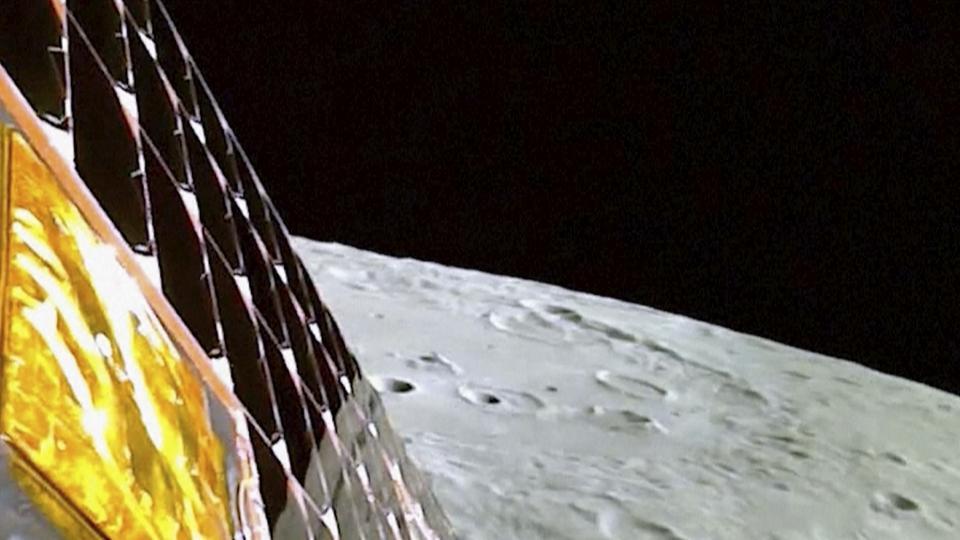
Lander Vikram and rover Pragyan landed on Wednesday in the southern polar region of the moon, making India the first country to do so. India is the fourth country ever to land on the moon after the United States, the erstwhile Soviet Union, and China.
In a report titled ‘India Is on the Moon’, NYT said the success moves India to the next space chapter. It said the success adds to India’s achievements in the country’s homegrown space programme.
NYT noted the Indian public takes great pride in the accomplishments of the nation’s space programme, which has orbited the moon and Mars and routinely launches satellites above the Earth with far fewer financial resources than other space-faring nations. It added that Indian officials have been advocating in favour of a multipolar world order in which New Delhi is seen as indispensable to global solutions.
“In space exploration, as in many other fields, the message of Prime Minister Narendra Modi’s government has been clear: The world will be a fairer place if India takes on a leadership role, even as the world’s most populous nation works to meet its people’s basic needs.”
NYT said that assertiveness on the world stage is a central campaign message for Modi, who is up for re-election to a third term early next year. “He has frequently fused his image with that of India’s rise as an economic, diplomatic and technological power.”
The Washington Post underlined India landed the robotic spacecraft on the moon days after a Russian vehicle crashed into the surface after firing its thrusters for too long. It said the Indian spacecraft landed near the moon’s south pole, which several nations covet because it contains water in the form of ice in permanently shadowed craters.
The post said the successful touchdown was a triumph for a country with growing ambitions in space. It echoed NTY saying Modi has sought to bolster India’s space agency as a symbol of the country’s stature on the global stage. “Its space program is being used as a way to boost its economy and growing tech sector, analysts say. It has also sought to keep up with China, which has big ambitions in space and has already landed on the moon. India has also flexed its military space capabilities; in 2019, it hit a satellite with a missile, demonstrating its ability to target adversaries’ space assets.”
The Guardian said it may be half a century since the last Apollo crewed mission to the moon, but landing there remains a huge technical feat. It added that India chose one of the moon’s poles as its destination – a tougher prospect than landing near the equator – which makes the success that much sweeter.
The Guardian noted there is more to the achievement than the technical feat. “The landing boosts the prestige of the Indian Space Research Organisation (Isro) less than a week after a Russian probe spun out of control and crashed into the moon’s surface. The ill-fated Luna-25 mission was Russia’s first attempt to land on the moon in 47 years.”
French daily Le Monde reported the Indian space mission, which cost only $75 million – less than the budget of the film Gravity, estimated at $100 million – has succeeded where Russia failed four days earlier.


