E-Paper



Odisha government moves to raise wages of prisoners by four fold
BHUBANESWAR: Six months after the Odisha government marginally hiked the daily wages of the convicts and undertrial prisoners in 87 jails of the state, the prisons directorate has proposed to raise the daily wages by at least four times after deduction of maintenance cost of each convict

 Prefer HTon Google


BHUBANESWAR: Six months after the Odisha government marginally hiked the daily wages of the convicts and undertrial prisoners in 87 jails of the state, the prisons directorate has proposed to raise the daily wages by at least four times after deduction of maintenance cost of each convict.
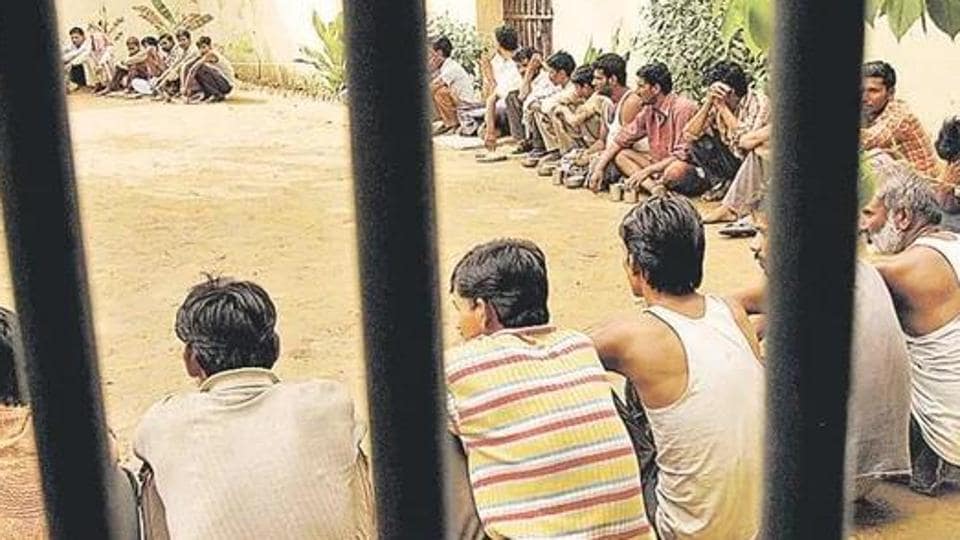
The directorate of prisons in a letter to the state home secretary proposed that the daily wages be hiked as per the orders of the Orissa high court passed in December last year which advised the state government to adopt the best practices of Bihar, Jharkhand, West Bengal, Telangana and Chhattisgarh in the matter of prisoners’ wages and issue a circular within a period of two months.
In its letter, the prisons directorate also referred to the minimum wages for unskilled, semi-skilled and skilled labourers notified by the Odisha labour commissioner in November last year, fixing the daily wages of unskilled, semi-skilled and skilled labourers to Rs. 315, Rs. 355 and ₹405 respectively. The prisons directorate said the convicts and under-trial prisoners can be given ₹234, ₹274 and ₹324 for unskilled, semi-skilled and skilled convicts respectively after deductions of cost of upkeep/ maintenance of Rs. 81.49 per day.
In its December judgement, the Orissa high court asked the state government to revise wages to all inmates referring to the best practices in Bihar, Jharkhand, West Bengal, Telangana and Chhatisgarh in regard to wages of prisoners.
“The practice in jails in Odisha is that while convicts are engaged in activities of carpentry, farming, etc., it is voluntary when it comes to undertrials. The Court finds that the rate of wages offered to prisoners, when compared to the best practices elsewhere in the country, is abysmally low,” the HC said in its order while referring to a 1998 judgement which said “it is not only the legal right of a workman to have wages for the work, but also a social imperative and an ethical compulsion”.
Quoting the SC judgement, the high court had said “extracting somebody’s work without giving him anything in return is only reminiscent of the period of slavery and the system of beggar”.
In June last year, the Odisha government marginally hiked the daily wages of convicts from ₹40 to ₹50 for unskilled prisoners, ₹50 to ₹60 for semi-skilled ones and ₹60 to ₹70 for and skilled convicts.
While welcoming the move of the prisons directorate to raise the daily wages, human rights activists said the state government should immediately implement it instead of subjecting it to routine examination. “The HC has clearly given a timeline and so the government should not delay its implementation as it would amount to contempt of court. But what is surprising is the government move to deduct ₹81.5 a day towards upkeep and maintenance cost from their due wage. It’s the duty of the state to maintain the convicts and they should not be charged anything. Besides, the jails also earn a handsome amount from what the convicts make while serving their sentence,” said Omkar Devdas, a human rights lawyer.
The Orissa High Court judgement came in response to two writ petitions filed by one Krushna Prasad Sahoo, a convict in Balasore district jail in 2006 and 2014 highlighting various issues in Odisha jails such as violation of human rights in custody, treatment of prisoners and maintenance of good sanitation inside jails, payment of compensation to prisoners who die in custody due to medical negligence and whether first time offenders, under trials, life convicts, other convicts, women and children need to be completely segregated from each other.