
 E-Paper



Of Lalu's two sons, Tejashwi may meet 2020 fate, Tej Pratap far behind in Mahua
Tejashwi looked set to retain Raghopur, Tej Pratap Yadav's initial charge seemed to have waned in Mahua. Both would stay out of power anyhow, trends showed

 Prefer HTon Google


RJD patriarch's declared heir Tejashwi Yadav and estranged elder son Tej Pratap Yadav were staring at very different fates in their constituencies as result trends started coming in for the Bihar assembly election 2025 on Friday, November 14. But one thing looked common: they were going to stay out of power.
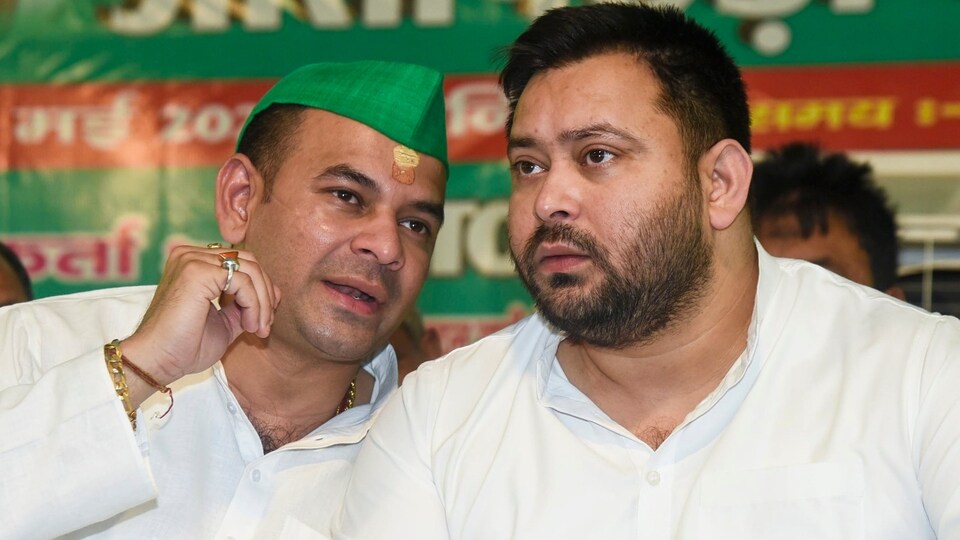
Tejashwi looked set to retain Raghopur seat with a third consecutive win. He was leading throughout till the latest trends came in from PValue, as of 10 am.
Tej Pratap Yadav's initial charge seemed to have waned quickly. RJD's Mukesh Kumar Raushan had taken the number 2 position from him, with him third or beyond. LJP(RV)'s Sanjay Kumar Singh from the NDA was leading, as per ECI data.
Tej Pratap Yadav, having been thrown out of the party and the family over his romantic relationship, was attempting to turn over a leaf by contesting the polls by forming the Janshakti Janata Dal (JJD), even as his father's party fielded a candidate against him.
The Mahua assembly constituency thus saw a multi-cornered contest among Tej Pratap Yadav representing his Janshakti Janata Dal (JJD) party, sitting legislator Mukesh Raushan representing Lalu Yadav's RJD, and LJP(RV)'s Sanjay Kumar Singh.
It was a high-stakes bid for Tej Pratap who's been looking to redeem himself months after being expelled by his father Lalu Yadav after his post making his 12-year relationship public on social media blew up, even as he deleted it later. The outrage was also caused because the post surfaced even as Tej Pratap's divorce petition with his estranged wife was still pending in court.
Much like the Mahagathbandhan, that his father's party is part of, Tej Pratap also believed that Nitish Kumar won't retain the Chief Minister post again.
What seemed like an advantage for Tej Pratap was that he was elected from the Mahua seat in 2015 during his electoral debut. However, five years later, he was shifted to Hasanpur in Samastipur district, reportedly because the Mahua seat was considered “unsafe” for him. He won Hasanpur. And now he came back to Mahua.
His RJD rival candidate Mukesh Raushan has been a staunch loyalist of his younger brother, Tejashwi Yadav, who was also the Mahagathbandhan’s chief ministerial face in Bihar. Mukesh Raushan was elected from the Mahua seat in 2020 after defeating the JD(U) candidate. However, he was reportedly upset when Tej Pratap announced his “return to Mahua” even before Lalu Prasad Yadav had expelled him from the party.
Another rival for the seat was Ashma Parveen, a 50-year-old doctor, considered a close friend of Misa Bharti, Lalu Yadav’s daughter. Her political journey has been varied: while her father, Ilyas Hussain, is a senior RJD leader and former state minister, she contested the Mahua seat in 2020 on a JD(U) ticket but was unsuccessful. She entered the poll fray again in 2025, but as an independent candidate.


