
 E-Paper





Follow the latest breaking news, major developments and agenda-setting stories from India and around the world with the newsdesk at Hindustan Times. Operating round the clock, the desk brings together experienced editors, reporters and correspondents to deliver fast, accurate and contextual reporting across subjects that influence public policy, governance, business, society and international affairs. The HT News Desk covers politics, elections, government policies, the economy, business and markets, science and technology, the environment, law and order, infrastructure, education, climate issues and geopolitics, while closely tracking developments across states, institutions and global capitals. The team also leads coverage of major breaking news events, policy announcements, court proceedings, natural disasters, public emergencies and significant international developments. Reports published by the newsdesk are based on information gathered from reporters on the ground, official statements, government agencies, court records, regulatory filings, recognised institutions and other authoritative sources. Stories undergo editorial scrutiny and verification processes to ensure accuracy, fairness and relevance, and are updated as events evolve and additional information becomes available. Whether covering a key political decision in New Delhi, an economic policy shift affecting millions, a landmark court ruling or a major global event, the HT News Desk aims to provide readers with reliable, fact-based journalism that delivers not only the latest developments but also the context and analysis needed to understand their wider implications.
Old vehicles can now get electric, hybrid makeover
Such modification can potentially help turn old petrol- or diesel-run vehicles into more eco-friendly versions, although experts warn that the retrofits may be expensive.


The Union government has made changes to the law in order to allow people to convert conventional vehicles into electric vehicles or hybrids, a decision that officials said could help fight air pollution.
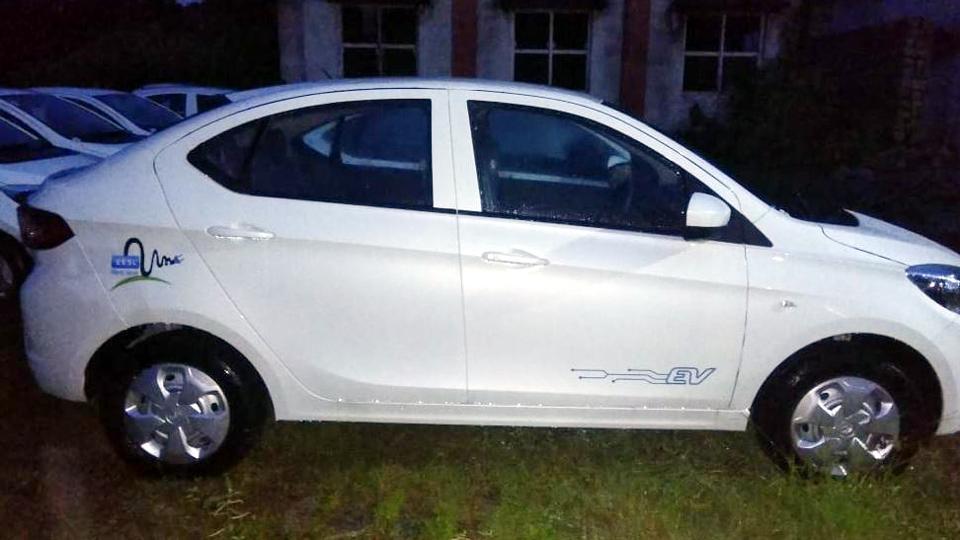
Such modification can potentially help turn old petrol- or diesel-run vehicles into more eco-friendly versions, although experts warn that the retrofits may be expensive.
“In order to give a boost to hybrid electric and electric vehicles, we have issued a notification providing specifications and a better mechanism for all cars to be converted. It will also help in reducing vehicular emissions,” a senior official at the ministry of road transport and highways said, adding that the ministry had laid down retrofitting specifications for vehicles with hybrid electric or pure electric systems. The official asked not to be named.
According to the notification, seen by HT, the ministry amended the Central Motor Vehicles Rules, 1989, to enable retrofitting of existing vehicles with electric kits or electric battery-operated systems.
The move comes against the backdrop of the government’s aim to move 25% of transportation to electric vehicles by 2030 in a bid to reduce air pollution, blamed on a combination of factors including vehicular emissions and stubble burning by farmers in the countryside.
The Cabinet Committee on Economic Affairs (CCEA) is also likely to meet on Thursday to clear the Centre’s much-awaited electric vehicle policy titled “Strategy for Transformative Mobility and Battery Storage”. The policy, delayed by four years, was steered by the government’s apex think tank NITI Aayog, which was tasked with rolling out the ambitious electric vehicle plan in 2018.
A conventional vehicle can be turned into a hybrid or fully electric one by replacing components of the engine or the drivetrain. A hybrid vehicle, several of which are in the market, uses both – a petrol or diesel engine and an electric motor.
The notification lays down guidelines and specifications that the modifications will need to conform to. These guidelines and specs are divided into three categories: hybrid conversions for vehicles weighing up to 3.5 tonne; hybrid conversion for vehicles above 3.5 tonne, and pure electric conversions for all classes of vehicles.
According to an expert, this policy change will complement the recent unveiling of phase II of the Faster Adoption and Manufacturing of (Hybrid) Electric Vehicles (FAME) policy, which offers subsidies and incentives for electric vehicles in the public transport sector. “Under FAME II, subsidy has been provided only for vehicles used for public transport and vehicles using advanced battery like a lithium ion battery. In terms of retrofitting from conventional vehicles to full electric, this has its own legal and commercial issues, as also specialised skill set required for conversion,” said Pranavant, a partner at the consulting firm Deloitte India.
The Centre had also permitted private charging of vehicles at residences and offices. The government plans to set up charging stations every 25 km on both sides of highways and roads.
On December 14, the power ministry issued guidelines for setting up charging infrastructure across the country’s major corridors.


