
 E-Paper



Why is Omicron more transmissible and have milder symptoms than Delta? Doctors decode
India has so far reported 216 Omicron cases, with Maharashtra and Delhi accounting for the most number of infections.

 Prefer HTon Google


Doctors in Delhi said patients infected with the Omicron variant of the coronavirus have milder symptoms in terms of severity in comparison to Delta strain and some of them didn't complain of fever.
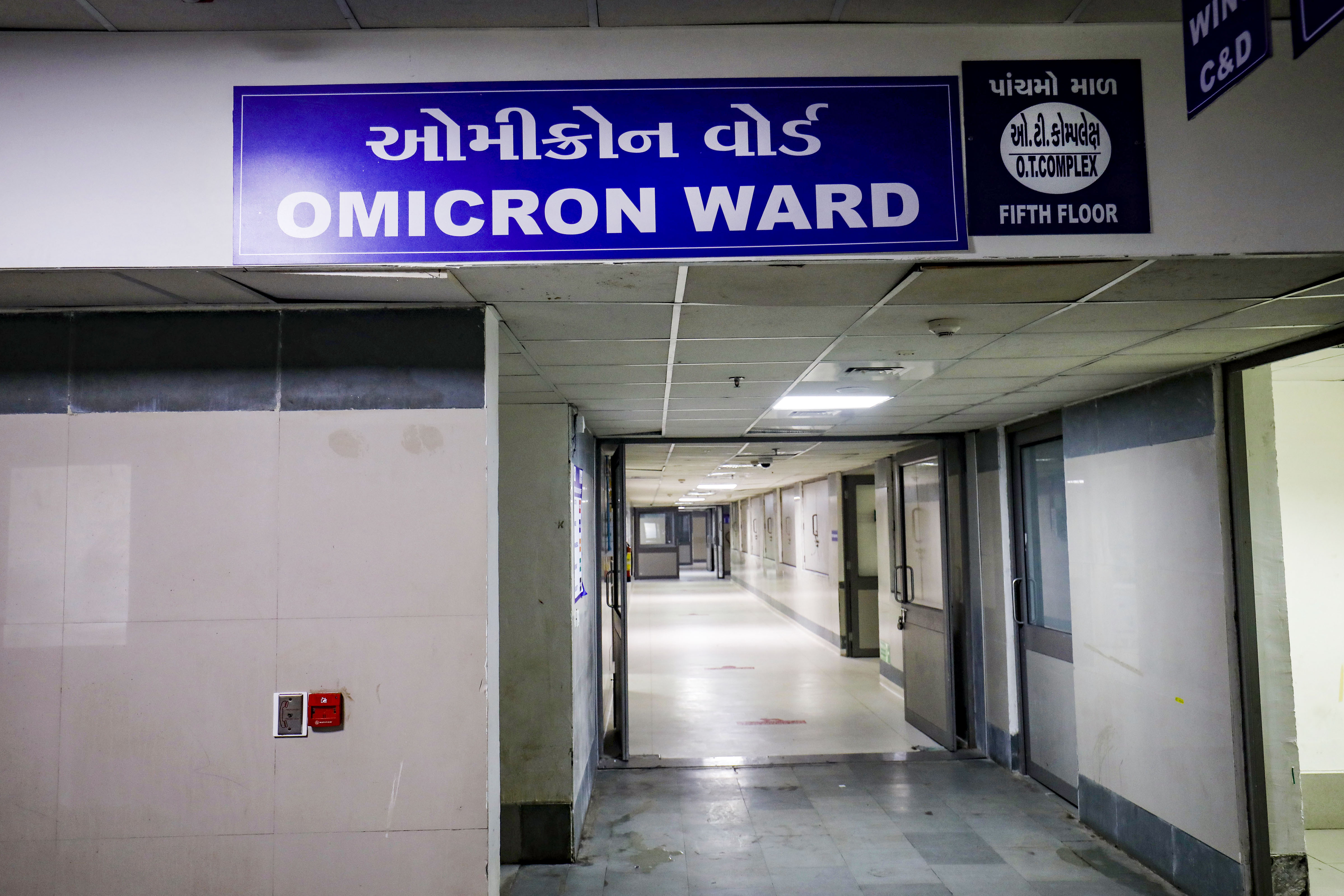
Dr Suresh Kumar, the medical director of Lok Nayak Jai Prakash Narayan (LNJP) Hospital, said of the 34 Omicron patients they have treated so far, most were asymptomatic.
“One patient was having low-grade fever, one complained about body ache and the rest of them were having cold-like symptoms,” he told news agency ANI.
Dr Kumar said all the patients were given symptomatic treatment only and none of them required steroids, oxygen or antiviral. “We are giving paracetamol tablets only if somebody has a fever,” he said.
Also Read | Three times more transmissible than Delta: Govt warns states, UTs on Omicron
Dr Manoj Sharma, a senior consultant of internal medicine at Delhi's Fortis Hospital, also said Omicron is milder than the Delta variant, which was discovered in India last year and caused panic across the globe, in terms of severity. “Although it is a very early stage to generalise about the symptoms of Omicron,” he told ANI.
Dr Sharma pointed out that data from across the world also suggests the severity of illness in Omicron patients is less than those who were infected with the Delta variant. “In the older age population or those with comorbidities, any disease is more severe,” he said, adding it's “too early” to certainly state anything on the severity of Omicron.
Omicron, which has been classified as a ‘variant of concern’ by the World Health Organization (WHO) similar to the Delta strain, has been triggering worrying signals due to its high transmissibility. To explain this, former head of epidemiology and communicable diseases division at the Indian Council of Medical Research (ICMR), Dr Lalit Kant referred to a study conducted in Hong Kong.
The experiment was conducted outside the human body by taking tissues from the bronchus of patients during surgery and using it to grow the virus in the laboratory.
Also Read | Do existing Covid-19 vaccines work on Omicron? Govt's reply
Dr Kant said the study showed after 24 hours, the Omicron variant replicated nearly 70 times more than Delta or the original strain that was found in Wuhan in China. "This could lead to people shedding more viruses and infecting others more easily," he was quoted as saying by ANI.
Dr Kant said as per the study, the Omicron replicated “10 times slower” in the lung tissue, which could be a probable explanation for it exhibiting milder symptoms as opposed to the Delta strain.
Also Read | 3 Omicron cases confirmed in Jammu, officials says no abroad travel history
Dr Kant, however, cautioned against drawing conclusions with certainty as the study has been published online and is yet to be peer reviewed.
India has so far reported 216 Omicron cases, with Maharashtra and Delhi accounting for the most number of infections.


