E-Paper



SC orders national digital net to record road crashes, curb fake accident claims
The directions seek to create a national digital trail for each road crash that can both speed up compensation for genuine victims

 Prefer HTon Google


The Supreme Court has directed all states to promptly upload road-accident data on the Electronic Detailed Accident Report (eDAR) portal and interlink VAHAN, SARATHI, eDAR, and the Insurance Information Bureau (IIB) databases to allow seamless cross-verification of accident reports, vehicle and insurance records, and past claims.
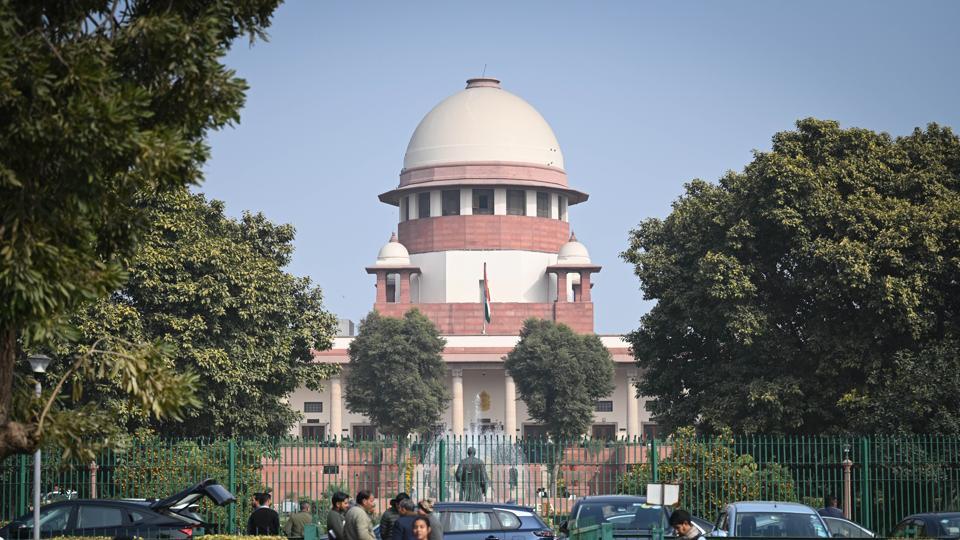
The directions seek to create a national digital trail for each road crash -- one that can both speed up compensation for genuine victims and expose fake, duplicate or collusive insurance claims before they reach the tribunal stage.
A bench of Justices Ahsanuddin Amanullah and PB Varale said the integrated system must also cover hit-and-run cases and the PM-RAHAT scheme, enabling insurers to receive early alerts of accidents.
It gave the Centre, states and other authorities four weeks to complete the exercise and file compliance reports. The order is part of the court’s continuing proceedings on alleged large-scale fraud in motor accident insurance claims, for which it had earlier directed every state to establish a dedicated special investigation team (SIT).
The court order, released on Thursday, aims to turn fragmented databases maintained by the police, transport authorities, insurers and other agencies into an integrated digital trail for each accident. This could enable real-time matching of an accident claim with police records, the vehicle’s registration details, the driver’s licence particulars, insurance coverage and prior claims history.
The eDAR portal, operated by the National Informatics Centre, has been created to digitise detailed accident reports and facilitate motor-accident compensation claims. But the court noted that only a few states had begun uploading data on it. It ordered all states to ensure data concerning the issue before it is uploaded on eDAR “without any delay”.
It directed that eDAR be linked to the IIB, which functions under the insurance regulator, IRDAI, and said the portals of all concerned ministries must be interlinked.
The integration of VAHAN -- the national vehicle-registration database, SARATHI, which carries driving-licence information, eDAR and IIB claims data could make it harder to sustain fabricated, duplicate or collusive claims.
A claim could be checked against the original police-recorded accident particulars, including the vehicle, location, date, driver and victims. It could also be cross-verified with the relevant insurance policy and with claims history across insurers. Discrepancies, such as the same vehicle repeatedly cited in unrelated accidents, a mismatch in the identity of the driver or vehicle, or an accident claim unsupported by a contemporaneous eDAR record, could be flagged early for investigation.
The court earlier made insurers responsible for forwarding all claims indicative of fraud to the state SITs, cautioning against a “pick and choose” approach. It had also required insurers to examine whether their own employees had facilitated or participated in fraudulent claims.
The wider linkage with the hit-and-run compensation mechanism and PM-RAHAT -- the cashless-treatment scheme for road-accident victims, could also speed assistance for genuine victims. PM-RAHAT is implemented through a technology framework that uses eDAR and is meant to provide cashless treatment of up to ₹1.5 lakh per victim for up to seven days after an accident.
The bench also issued contempt show-cause notices to the heads of several insurance companies over their failure to comply with earlier orders or enter appearance in the proceedings.
A contempt notice was issued to Vaibhav Goyal, managing director and chief executive officer of Navi General Insurance Ltd. The company said a Supreme Court notice received on April 18 had not been brought to the attention of its officers and that some responsible persons had been suspended. But the court rejected the apology as “cosmetic and not heartfelt”, noting that no action had been taken against the persons allegedly responsible.
The court said it was “shocked” that the managing director had described the lapse as a bona fide error without even issuing notices to the employees concerned. Goyal has been directed to file a personal affidavit explaining why contempt action should not be taken.
Contempt notices were also issued to The New India Assurance Company Ltd, Zuno General Insurance Ltd and the General Insurance Corporation of India. Liberty General Insurance’s whole-time director and chief executive, Parag Ved, was also asked to show cause after the court found his explanation, that he was unaware when notice had been served, showed “total casualness and lack of responsibility”.
The court granted Zuno General Insurance’s managing director and chief executive, Shubhdarshini Ghosh, a final opportunity to file a fresh affidavit after taking exception to her explanation that pre-scheduled official commitments in Mumbai prevented her from being physically present despite being informed five days in advance. She has been directed to be personally present at the next hearing.
By way of “last indulgence”, the bench directed states that have still not formed SITs under its earlier order to do so within four weeks. The matter will next be heard on November 27.