
 E-Paper



On electoral bonds, Supreme Court tells parties to name donors, detail amounts
Opposition parties praised the interim order, which came in response to a petition filed by the Association for Democratic Reforms (ADR), a non-government research organisation.


The Supreme Court on Friday declined an interim stay on the sale of electoral bonds, but ordered all political parties to provide details of the amounts they had received and identities of the donors in a sealed cover to the Election Commission of India by May 30, in a move towards greater transparency in political funding.
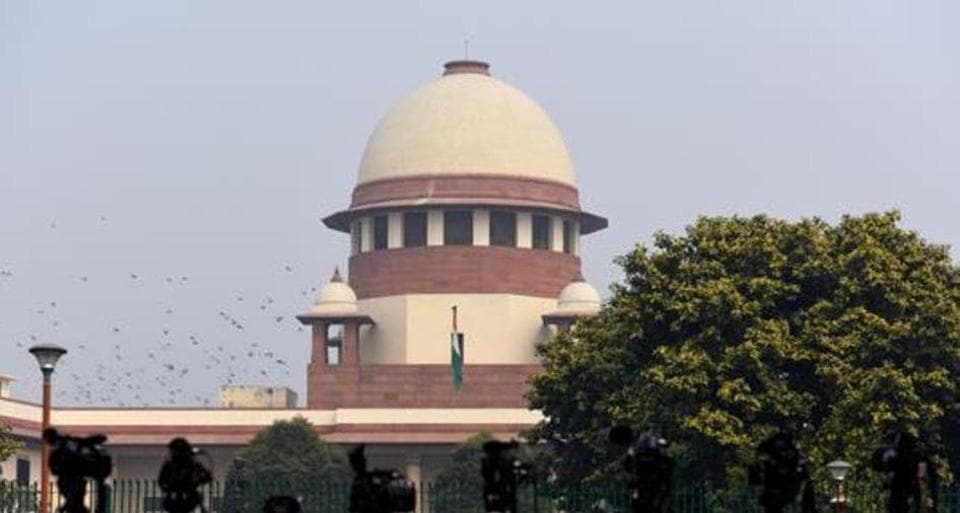
A submission by the Centre that the apex court should not interfere with the scheme at this stage and wait until after the 17th general elections that are underway to examine whether it has worked or not was ignored by a three-member bench comprising Chief Justice of India (CJI) Ranjan Gogoi and justices Deepak Gupta and Sanjiv Khanna, who delivered the ruling a day after the first phase of polling .
Opposition parties praised the interim order, which came in response to a petition filed by the Association for Democratic Reforms (ADR), a non-government research organisation. Funding through electoral bonds has been tilted heavily in favour of the ruling Bharatiya Janata Party (BJP) since this form of political funding took effect in January 2018. The Bahujan Samaj Party (BSP) said the court order was a defeat for the BJP.
ADR claimed that electoral bonds promoted opacity in political funding by letting donors remain anonymous, and sought a stay on their sale.
The top court, while declining a stay, said the question of transparency required a detailed hearing to finally settle it.
“The rival contentions give rise to weighty issues which have a tremendous bearing on the sanctity of the electoral process in the country.
“Such weighty issues would require an in-depth hearing which cannot be concluded and the issues answered within the limited time that is available before the process of funding through the electoral bonds comes to a closure, as per the schedule noted earlier,” it said, putting off the matter for final disposal at a later date.
Electoral bonds are issued by State Bank of India (SBI), for specific amounts ranging from ~1,000 to ~1 crore, for a certain number of days in a year. The donor, either an individual or a local or foreign company, buys the bonds and transfers them to the account of a political party, where they are converted into donations.
Only political parties registered under section 29A of the Representation of the People Act, 1951, and which have secured not less than 1% of votes polled in the last general election to the House of the People or the Legislative Assembly of the State, shall be eligible to receive electoral bonds.
The electoral bonds are valid for only 15 days from the date of issue. No payment is to be made to any payee political party if the bond is deposited after expiry of the validity period. The bond deposited by an eligible political party in its account is to be credited the same day.
On Thursday, the top court said it would examine in detail the changes made in income tax, electoral and banking laws to bring them in consonance with the electoral bond scheme and ensure the balance does not tilt in favour of any political party.
It also directed the finance ministry to reduce the window for purchasing electoral bonds from 10 days to five days in April-May and said it would fix a date later for final disposal of ADR’s petition.
“It’s a halfway house order, considering that the petition was filed 18 months ago and it came up for hearing now. As the court could not have had a full hearing, it has salvaged whatever is possible by ensuring that EC has the data on political donors and the commission can act upon the data if so ordered at a later date,” said Sanjay Hegde, a senior advocate at the Supreme Court
The BJP-led National Democratic Alliance (NDA) government and the election commission have submitted divergent views in writing to the court on the subject of electoral bonds. The government justified the bonds on grounds that they promoted transparency in political funding.
The commission said the legal changes made to enable the sale of the bonds would have “serious repercussions”, making election funding opaque, and Indian elections vulnerable to foreign interference. Through its lawyer, Rakesh Dwivedi, it said secrecy allowed in the electoral bonds scheme “legalises anonymity”.
The Communist Party of India (Marxist), in a petition, claimed that the non-disclosure clause would undermine Indian democracy.
The government on Thursday told the court, through attorney general KK Venugopal, that it is not necessary for voters to know the identities of political donors. “In my opinion, voters have the right to know their candidates. Why should they know where the money of political parties is coming from,” he argued.
Donors have the right to privacy upheld by the courts, the government’s top legal officer said, arguing that the main purpose of electoral bonds was to curb black money, or untaxed, unaccounted-for wealth .
The BJP was the biggest beneficiary of electoral bonds in 2017-18, receiving bonds worth around ~210 crore of the ~215 crore sold .The Congress, which earned ~199 crore of income in 2017-18, received only ~5 crore in the form of electoral bonds.
“The BJP should reveal the murky flood of money which it earned through the 95% electoral bonds having gone to one party. Financial dominance of the single party decimates the very concept of a level playing field and, as I told you the other day, a level playing field is the heart of free and fair elections,” said Congress leader Abhishek Manu Singhvi.
BSP chief Mayawati called the Supreme Court’s interim ruling “a shameful defeat” for the BJP which it said will now have to reveal from where it gets its major donations. The BJP has suffered “another major jolt and a shameful defeat,” she wrote on Twitter.
Congress spokesperson Priyanka Chaturvedi took a swipe at the BJP and said the ruling would expose the “nexus” between the saffron party and its “suited-booted friends”.
“We welcome this judgment coming from the Supreme Court. We have always maintained that transparency in political funding, transparency in governance must be adhered to,” she told reporters.
The BJP said on Friday that it would wait for the final judgement of the Supreme Court on electoral bonds. “Whatever is the order of the Supreme Court, it has to be complied with and it is always complied with. As far as issues raised by the government are concerned, they have been placed before the court for its consideration. And we will await the final judgment,” BJP spokesperson and Supreme Court lawyer Nalin Kohli said.


