E-Paper



Only tough, long-term policies can unclog Delhi roads, clean city's air: OP Agarwal
Can Delhi genuinely address its mobility crisis, which contributes substantially to poor air quality and traffic congestion?

 Prefer HTon Google


Can Delhi genuinely address its mobility crisis, which contributes substantially to poor air quality and traffic congestion? Not if it focuses solely on short-term fixes, cautions OP Agarwal, the principal author of the National Urban Transport Policy-2006. Instead, he calls for long-term strategies, involving subject matter experts and decisive decision-making.
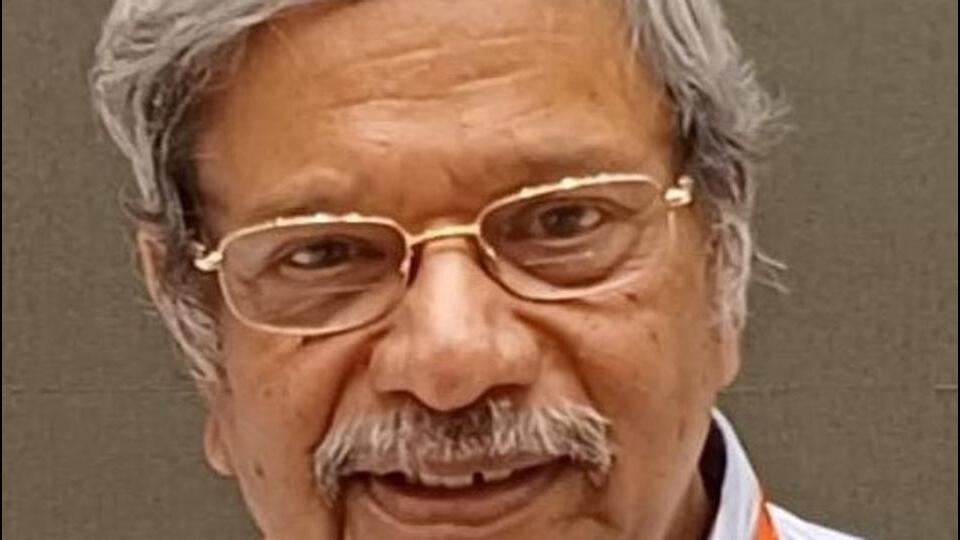
Former CEO of the non-profit WRI-India, Agarwal chaired the panel that drafted Delhi’s 2019 parking policy. Earlier, as an Indian Administrative Service officer, he worked on investment approvals for the Delhi Metro in the mid-1990s.
Agarwal’s recent book, Urban Transport: The India Story, is a reflection on the country’s transport journey. In an interview with HT, he discussed the necessary course correction for Delhi to encourage private vehicle users to shift to public transportation. Edited excerpts:
Is there a historical context to Delhi’s mobility crisis?
Historically, Delhi had a fairly good bus service. But when the Metro was introduced, there was a growing belief that it would address transportation needs and that buses were not that important. This was a wrong impression.
Also, Delhi’s public transport system was unable to keep pace with the city’s exploding population. People shifted to two-wheelers, especially after 1991 (post-economic liberalisation), when many sleek and fuel-efficient foreign models entered the market. Once this shift to two-wheelers occurred, pulling people back to public transport proved difficult.
Around the 2010 Commonwealth Games, Delhi introduced low-floor and air-conditioned buses. However, as these buses aged and replacements were slow to arrive, ridership declined. Now that the fleet is updated, can it regain lost ridership?
Motorbikes are faster, and operating costs are often lower than buying a bus ticket. To restore ridership among this segment, Delhi needs to introduce a high-quality bus service in which passengers are picked up near their homes, dropped near their workplaces, are assured of a seat, and experience no crowding. They would be willing to pay a higher fare because even if two-wheelers are cheaper and faster, they are not safe.
Simply adding more buses will not increase the number of passengers; it will just spread the same number of passengers across more buses. By premium service, I don’t mean fancy AC buses, but a service that is more convenient. You can have smaller buses on an app-based service.
Would Delhi car users choose buses over cars?
They would, but for an even better quality service. As driving in congestion and finding a place to park is very difficult, many car users are shifting to Uber. But if you give an Uber-like bus service, they will shift to it.
Buses would need to operate at higher speeds, but exclusive bus lanes are unappealing after Delhi’s BRT experience in the mid-2000s.
BRT was not given a fair chance. However, a long-term solution could be to build elevated bus tracks. An elevated Metro line costs about 300-350 crores per km. Can we think of a network of elevated viaducts that serve only buses? It would cost about 40-50 crores per km, which is much cheaper.
Can there be a short-term plan to boost ridership?
Everyone is looking for short-term solutions, which are given up the moment the problem eases a bit. Odd-even (road rationing arrangement) is an example. It has not solved the problem of congestion or pollution. We must consider long-term solutions, and once we have them, we should consider short-term (actions).
What are the long-term solutions that other cities have tried?
Increasing the supply and improving the quality of public transport are supply management measures. But both Singapore and Seoul have demand-side management -- managing demand in a way that fits into the available supply. To own a car in Singapore, you must pay nearly three times the car’s cost. They have tried to restrict car ownership. But they have excellent public transport and taxi service.
In Seoul, they invested heavily in public transport but have restricted road space. A 27-km flyway running across the city and some 42 flyovers in the city have been removed. They are widening footpaths, restricting the space for cars and encouraging people to shift to public transport or walking. Delhi must consider demand management.
But demand management is politically sensitive.
If you are going to be politically sensitive to everything, then let’s (continue) to breathe foul air. The previous government in Delhi only thought of shortcuts. This doesn’t work and you’ll never get proper solutions.
There are different ways to enforce these measures. Beijing has banned two-wheelers in certain core parts of the city, so people must use public transport to get there. Connaught Place is the hub of the Delhi Metro, where all lines converge. Here parking (rates) should be increased to, say, R500 to deter people from bringing cars so they use the Metro instead.
How can the Metro be used optimally?
A standalone Metro is of no use. It needs to be integrated with bus systems and several other forms of feeders such as park and ride facilities and also footpaths. The (existing) Metro feeder services are extremely poor.
My suggestion is to examine how people living in different locations, at varying distances, access their nearest Metro stations. And provide them with feeder systems accordingly. For that, we need a higher-level body for coordination and integration. A body that takes a comprehensive responsibility for transport.
Is it possible to decongest Delhi’s roads and improve the city’s air quality?
Instead of a committee comprising (just) officials in different positions, it requires the right subject experts and politically tough decisions. There is a new government in Delhi, and it is positioned well to decide on a three- or four-year timeframe. The good thing is that buses are going electric. Until the end of the current government’s term, all buses, taxis, auto-rickshaws, and freight vehicles will become electric.
What about private vehicles that pollute?
The segment of vehicles I mentioned comprises those that require charging facilities at a few concentrated locations. Private vehicles require distributed charging facilities across the city. It is often not viable for an investor to set up charging facilities across the city because it requires a large network, yet there are only a few vehicles per station. So, they end up losing money. Electrification of personal vehicles is happening at its own pace, and two-wheelers are easy to charge at homes. Let us focus on vehicles that travel large distances in a day and require charging at limited locations.
Parking is a mess throughout Delhi, but the policy to manage and regulate it wasn’t implemented wholeheartedly. How to refocus on this issue?
The parking policy alone can be a powerful demand-management measure, and the parking policy didn’t fully account for its potential. There are two dimensions of parking. One, how much parking do I provide at a particular place? Second, how much should I charge for that parking? You must consider how much parking should I provide at a particular location, such as a school, hospital, office complex, or in places connected to public transport and those that are not; look at the difference between off-street and on-street parking. Then think about how much parking to provide and how much to charge for it.
For example, ₹500 parking fee in Connaught Place could be a way of telling people to take the Metro, don’t bring your car. In other markets, charging less for the first 30 minutes of on-street parking and increasing the rate exponentially thereafter would signal that, if you want to stay longer, you should park off-street.
Will congestion pricing work in Delhi?
Connaught Place is the only area that is mature for congestion pricing. Ideally, fast tags (that could be used for charging) lanes should not have barriers, and cameras should catch violators and send challans to their homes. Because if barriers don’t open or there is a delay, it will hold up traffic and cause congestion. It already happens at toll plazas on highways. Enforcing a variable parking fee based on location, day, and time would be preferable.